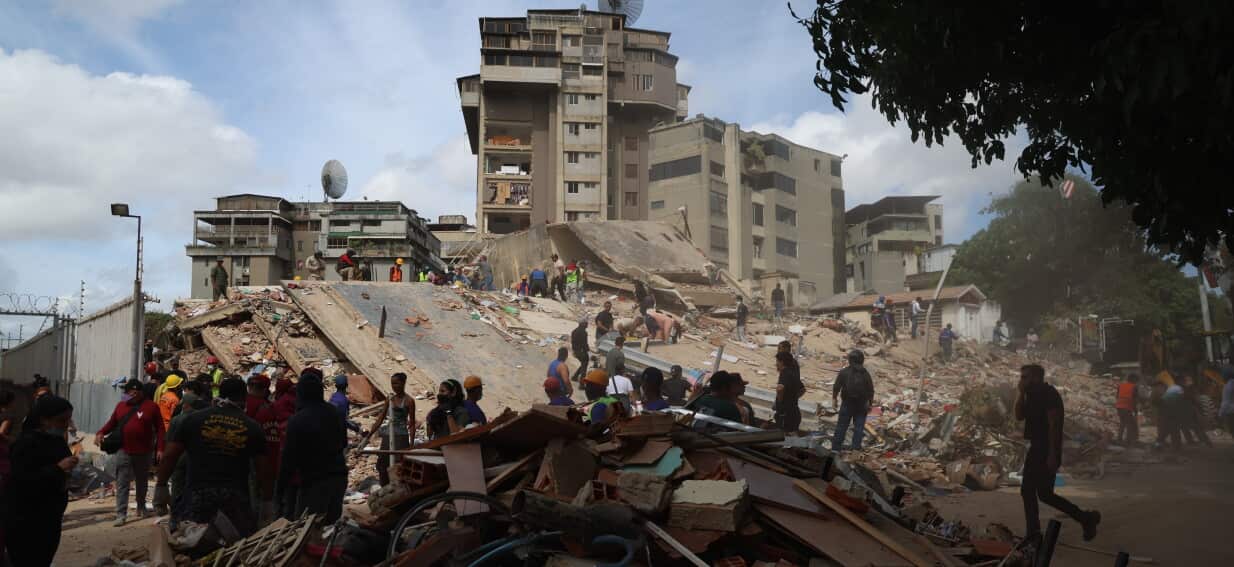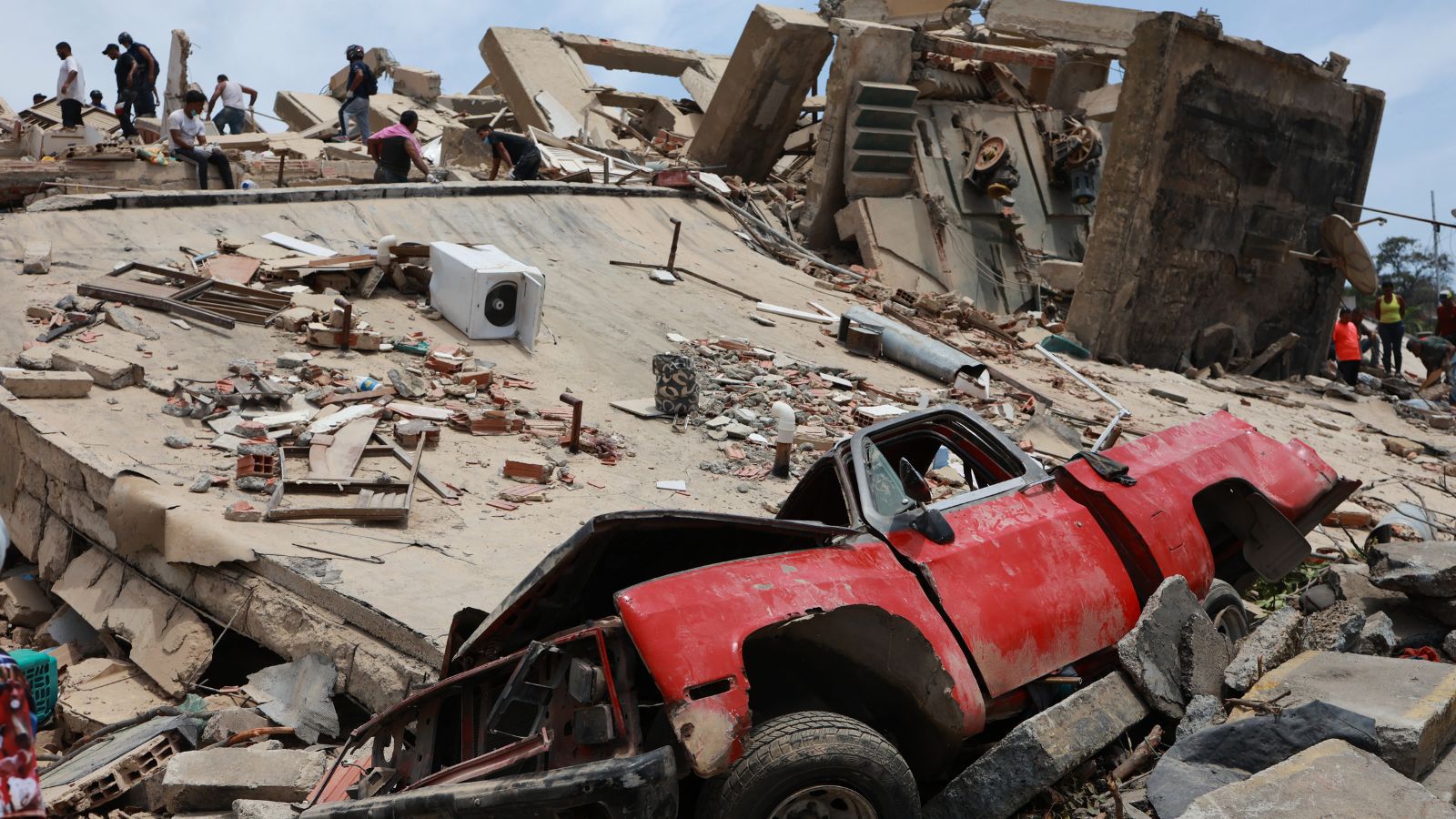
A devastating doublet of shallow, high-magnitude earthquakes struck north-central Venezuela on Wednesday evening, collapsing high-rise residential blocks, shattering key public infrastructure, and leaving a rapidly mounting toll of at least 235 confirmed dead and more than 4,300 injured. The consecutive tremors, measuring 7.2 and 7.5 in magnitude, hit within 39 seconds of each other near the town of Morón in Yaracuy state, triggering widespread destruction that reached far into the capital of Caracas and the northern coastal disaster zone of La Guaira. Tens of thousands remain unaccounted for as local communities and rudimentary rescue teams dig through concrete slabs with bare hands and shovels.
While the catastrophic seismic event is a natural disaster by geological definitions, the scale of the human tragedy unfolds against a dark background of institutional decay, systemic economic collapse, and political upheaval. The country was already sitting on a knife-edge before the ground tore open.
The Science of a Double Strike
Geophysicists tracking South American tectonic activity note that northern Venezuela rests along the complex boundary where the Caribbean and South American plates grind past one another. Major tremors are less frequent here than along the Pacific coast of South America, making this particular sequence the most violent event to shake the nation since 1900.
What occurred on Wednesday was not a standard mainshock followed by distant aftershocks. It was a structural doublet. The initial magnitude 7.2 earthquake ruptured along the San Sebastián fault system at a shallow depth of roughly 22 kilometers. Before the shockwaves from that initial break could even dissipate, a second, more powerful magnitude 7.5 tremor triggered just 10 kilometers beneath the surface, slightly southwest of the first epicenter.
The immediate proximity in both space and timing meant that buildings already weakened by the first set of violent vibrations were instantly hammered by an even stronger wave of energy. Civil engineers describe the phenomenon as a compounding stress load. A structure designed to sway and absorb a single major shock cannot recalibrate its weight distribution when a second, shallower impact occurs less than a minute later. The second strike effectively sheared structural columns that were already holding on by exposed rebar.
Predictive models run by global seismic monitoring agencies initially estimated that a double strike of this magnitude in a densely populated corridor carries a high probability of causing deaths in the thousands. The current official death count of 235 represents only those casualties processed through functional medical facilities. The final assessment will take weeks to determine because entire apartment complexes in eastern Caracas and La Guaira have pancake-collapsed, trapping massive percentages of their occupants beneath layers of compacted concrete floors.
Why the Concrete Failed
To understand the sudden collapse of high-rise structures in affluent Caracas neighborhoods like Altamira and Los Palos Grandes, one must look closely at the history of Venezuelan construction over the past quarter-century. Caracas was once celebrated for its daring mid-century modernist architecture, built during an oil boom that spared no expense on concrete quality and structural engineering expertise.
The reality shifted dramatically over the last two decades. As economic instability took hold, inflation spiraled out of control, and state monopolies took over critical industries like cement production, the structural integrity of newer developments plummeted.
Contractors faced a choice between halting construction entirely or cutting corners on materials. High-grade rebar became a black-market luxury. Portland cement was frequently diluted with unwashed marine sand hauled from the beaches of Vargas, a cheap substitute filled with corrosive salts. Over years of tropical humidity, these salts slowly ate away at the internal steel skeletons of thousands of buildings from the inside out.
When the ground rolled on Wednesday, the concrete did not just crack. It shattered into dust because the internal steel reinforcement had long since oxidized into brittle rust. In Altamira, a 22-story residential high-rise dropped vertically into its own footprint, reducing hundreds of modern apartments to a heap of grey gravel within seconds.
The situation is entirely different but equally lethal in the informal settlements, the barrios, that cling to the steep mountainsides surrounding Caracas. Millions of people live in self-built brick structures stacked precariously on top of each other without any engineering oversight or structural foundations. These neighborhoods did not experience isolated building collapses. Instead, entire hillsides gave way, sending avalanches of red brick, tin roofing, and loose earth cascading down onto the communities below, burying narrow access roads and cutting off any hope of immediate rescue.
A Paralyzed Rescue Operation
The immediate response to the disaster has exposed a complete absence of state readiness. In a functional nation, a major earthquake triggers the rapid deployment of specialized heavy machinery, acoustic listening devices, canine search units, and mobile field hospitals. In Venezuela, the state apparatus is hollowed out.
Faced with thousands of missing citizens, the administration has resorted to asking private businesses to voluntarily donate bulldozers, excavators, and heavy cranes to help clear the ruins. In the absence of a coordinated governmental effort, the burden of rescue has fallen squarely on the shoulders of ordinary citizens. Neighbors form human chains to pass chunks of concrete by hand. Families use car jacks and crowbars to lift collapsed walls, listening for the muffled screams of children trapped deep within the dark voids of ruined basements.
The logistical nightmare is magnified by the complete failure of basic utilities. Immediately after the tremors, the government ordered the main gas lines turned off across the capital to prevent massive fires from tearing through collapsed blocks. Simultaneously, the electricity grid, which has suffered from chronic neglect and rolling blackouts for years, went entirely dark across northern Venezuela.
Without electricity, water pumps failed, leaving millions without drinking water or fire suppression capabilities. Cellular towers collapsed or lost backup battery power within hours, leaving families unable to confirm if their relatives were alive or dead. For those living abroad, the silence from home has been agonizing as international phone lines and internet routing remain severed.
Transportation infrastructure offers no relief. The Simón Bolívar International Airport in La Guaira, the main gateway for international rescue teams and emergency medical supplies, suffered severe structural damage to its terminals and runways, forcing its total closure. The highway tunnels connecting the coast to the capital are blocked by massive boulders dislodged by landslides, turning what is normally a thirty-minute drive into an impassable barrier of rock and twisted guardrails.
The Complication of Political Chaos
The timing of this natural disaster could not be more treacherous for the political stability of the nation. Venezuela is currently navigating a highly volatile political transition. Following the capture of Nicolás Maduro in January, the government has been led by Acting President Delcy Rodríguez. Her administration is fragile, facing deep internal skepticism regarding its legitimacy and an economy that has lost more than eighty percent of its gross domestic product over a decade of mismanagement.
A crisis of this scale requires absolute administrative focus and the trust of the population. Rodríguez has neither. When she declared a national state of emergency and called for unity, the public response in many hard-hit sectors was marked by open anger and distrust. Citizens digging through the rubble of an apartment building in downtown Caracas openly questioned where the oil wealth of the past went, pointing out that state civil defense units arrived with no fuel for their vehicles and no tools to cut through rebar.
Recognizing the sheer inability of the Venezuelan state to handle the emergency, the international community has moved quickly, though geopolitical friction remains a constant obstacle. The United States State Department announced a temporary, highly specific waiver on economic sanctions until late October, explicitly designed to allow direct financial transactions and the shipment of materials related to earthquake relief efforts. Search and rescue assets from neighboring Colombia and international humanitarian organizations are being mobilized, but getting them past bureaucratic hurdles and into the country through crippled ports of entry remains an ongoing battle.
The Broken Medical Frontline
Even if a survivor is successfully pulled from the rubble, their chances of survival remain precariously low due to the systemic collapse of the public healthcare system. Long before this week, Venezuelan hospitals were notorious for lacking basic antibiotics, sterile bandages, anesthetic drugs, and reliable backup power generators.
The sudden influx of more than four thousand trauma patients has completely overwhelmed the few emergency rooms still operating in Miranda, Carabobo, and the Capital District. Doctors are forced to perform complex orthopedic surgeries and amputations in darkened hallways using the flashlights of mobile phones.
Crush syndrome, a life-threatening medical condition that occurs when muscle tissue is compressed for extended periods under heavy debris, requires immediate, intensive fluid resuscitation and continuous kidney dialysis. Venezuela lacks the operational dialysis machines and the massive volume of intravenous fluids required to treat dozens of crush syndrome cases simultaneously. Many of those rescued alive from the ruins are dying hours later in hospital corridors from acute renal failure and metabolic shock.
Public health experts are also warning of a secondary wave of mortality that could easily eclipse the initial death toll of the earthquake itself. With water mains broken and thousands of decomposing bodies remaining trapped beneath collapsed buildings under the hot tropical sun, the conditions for a major outbreak of waterborne diseases are actively assembling.
Cholera and acute diarrheal illnesses could spread rapidly through the crowded public parks and parking lots where hundreds of thousands of displaced citizens are currently sleeping, terrified to return to any building that survived the initial shocks.
The coming days will decide the true cost of this disaster. The immediate task remains a desperate search for life in the concrete ruins of La Guaira and Caracas, but the underlying lesson is already glaringly clear. Natural forces may have triggered the tremors, but it was decades of institutional corruption, ignored building codes, and structural state decay that turned a pair of earthquakes into an absolute national catastrophe.
To prevent the next inevitable tremor from repeating this script, the country cannot simply rebuild the structures that fell. It must entirely reconstruct the administrative, economic, and civic foundation upon which those structures stand.