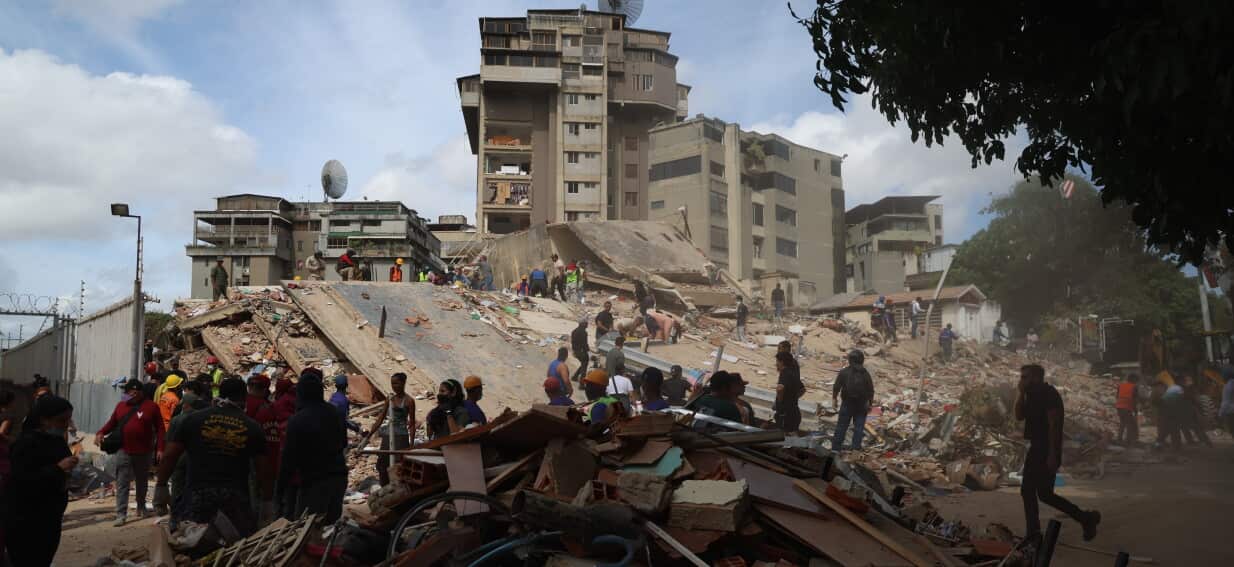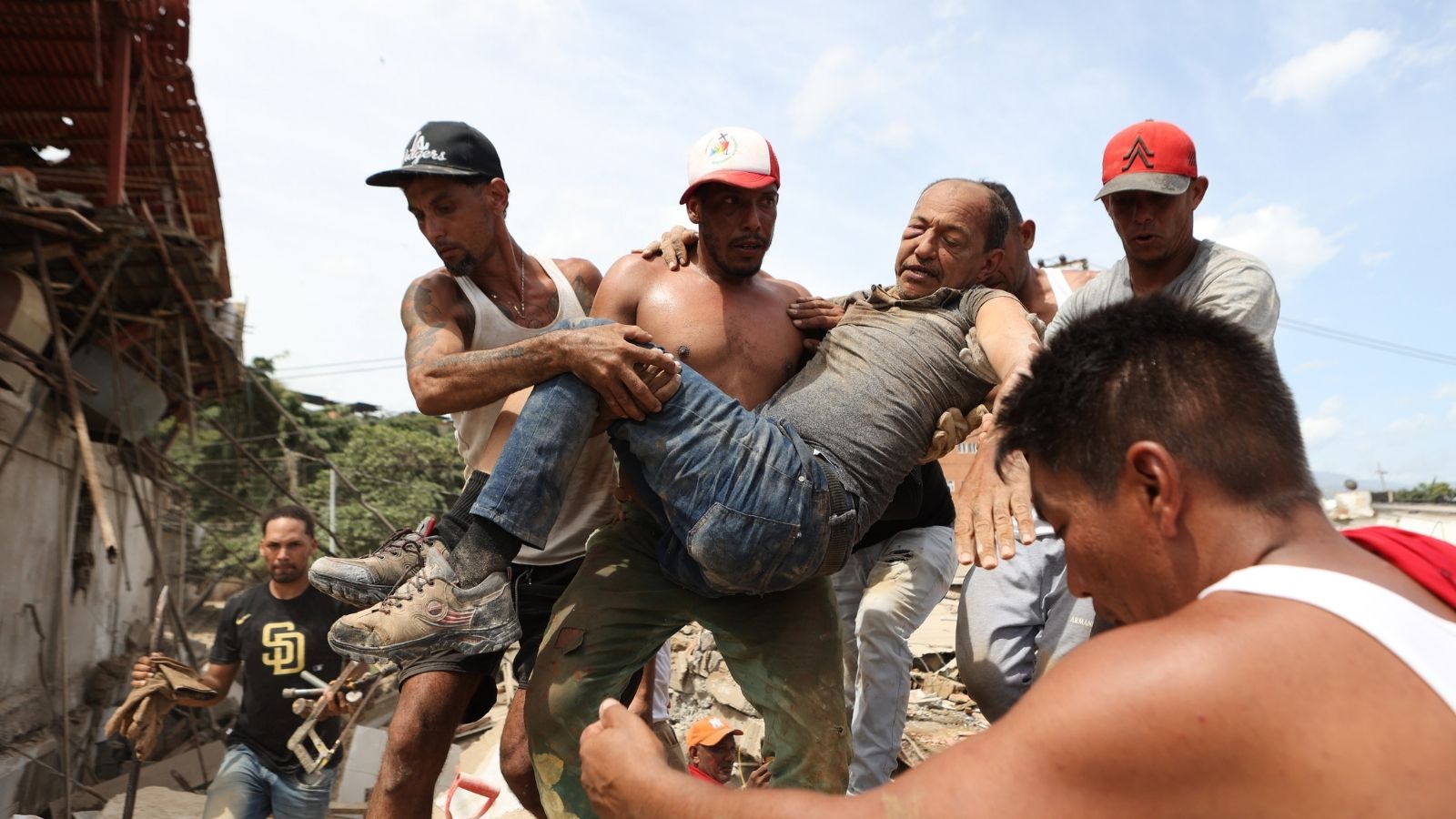
The official numbers are devastating enough. On June 24, 2026, a massive twin earthquake struck northern Venezuela, leaving at least 235 people dead, more than 4,300 injured, and thousands of families displaced. Yet beneath the immediate tragedy of collapsed high-rises and frantic rescue efforts lies a deeper structural catastrophe. This was not just a natural disaster. It was the predictable failure of an urban ecosystem crippled by a decade of economic isolation, neglected building codes, and a fractured emergency infrastructure.
While international headlines focus on the immediate scramble for survivors in the rubble of Caracas and La Guaira, the real crisis is the systemic vulnerability that turned a rare seismic event into an absolute rout.
The Anatomy of a Doublet
The earth fractured in rapid succession. At 18:04 local time, a magnitude 7.2 earthquake struck the northern coast, centered near the Veroes municipality in Yaracuy state. Before residents could even comprehend what was happening, the second blow landed. Just 39 seconds later, a magnitude 7.5 mainshock tore through the exact same region along the San Sebastián fault system.
Geophysicists call this a seismic doublet. The close timing meant the first shock weakened structures, and the second, more powerful shock destroyed them completely. The shallow depth of the mainshock—just 10 kilometers beneath the surface—maximized the energy transferred directly into the foundations of coastal towns and the dense valleys of Caracas.
The physical forces were immense. The San Sebastián fault system accommodates the right-lateral strike-slip movement between the Caribbean and South American tectonic plates. While earthquakes happen along this boundary, events of this magnitude have not been recorded in Venezuela since 1900.
"It is as if I am screaming and then someone starts screaming, too," observed Marcos Ferreira, a geophysicist researching Latin American seismic hazards. "That amplifies the vibration and adds to the potential hazard."
The Collapse of Vertical Caracas
The devastation was uneven. In the upscale Chacao municipality and the neighborhoods of Altamira and Los Palos Grandes, multi-story buildings folded. A 22-story residential tower in Altamira collapsed completely into a mountain of concrete dust and twisted rebar.
Years of hyperinflation and material shortages had eroded construction standards across the country. Buildings constructed during the oil booms of the late 20th century were designed with seismic reinforcement, but decades of unmonitored structural modifications, poor maintenance, and the use of substandard concrete left them brittle.
Structural Failures by Region
| Affected Region | Primary Damage Observed | Estimated Missing Residents |
|---|---|---|
| La Guaira (Disaster Zone) | Over 100 buildings collapsed, airport heavily damaged | Thousands |
| Altamira & Chacao | Multiple high-rise failures, structural fracturing | Hundreds |
| Southeastern Caracas | Widespread high-rise destruction, partial collapses | Unknown due to communications blackout |
| Yaracuy (Epicenter) | Structural collapses, local infrastructure severed | Hundreds |
The coastal state of La Guaira, located just north of Caracas, took the brunt of the devastation. Acting President Delcy Rodríguez declared the area a disaster zone after entire beachfront apartment complexes, including the Ritasol Palace and the seafront Eduard's Hotel, were reduced to skeletons.
The logistical nightmare deepened when the Simón Bolívar International Airport suffered extensive structural damage. Runways cracked and terminals shed heavy debris, forcing an immediate closure. This single failure choked off the quickest route for inbound international search-and-rescue teams, forcing early aid flights from the Dominican Republic and neighboring nations to redirect to distant, less-equipped airfields.
Bare Hands and Broken Grids
Emergency response require tools. In the hours following the twin quakes, those tools simply did not exist for ordinary citizens. In towns like Catia La Mar, local residents became the primary responders, using crowbars, car jacks, and their bare hands to pull neighbors from the rubble.
[Simón Bolívar Airport Closed] ──> [International Aid Delayed]
                                           │
                                           ▼
[Bare Hands & Hand Tools] <── [Lack of Heavy Machinery]
The state's delayed mobilization highlights the hollowed-out nature of Venezuela's civil defense. The government pleaded with private businesses to provide heavy construction equipment, bulldozers, and cranes. A decade of economic depression means much of that heavy machinery sits rusted, stripped of parts, or lacking fuel.
The grid died instantly. Authorities severed gas lines across Caracas to prevent mass explosions, while power lines and cellphone towers snapped across the central northern states. This communications blackout didn't just isolate families; it paralyzed the coordination of fire departments and medical personnel. When Health Minister Carlos Alvarado confirmed the initial death toll of 235, he noted that the number only accounted for patients who arrived at hospitals without vital signs or died shortly after arrival. It did not factor in the immense numbers still trapped beneath the debris.
The Humanitarian Baseline
The disaster did not hit a stable nation. Venezuela was already operating under a prolonged humanitarian strain, with millions of citizens reliant on intermittent public services and fragile healthcare infrastructure.
Hospitals lack basic supplies. Surgeons in Caracas operated using backup generators, facing acute shortages of antibiotics, anesthetics, and sterile bandages even before the influx of 4,300 injured victims. The Venezuelan Red Cross suffered critical damage to its own national headquarters, limiting its initial ability to deploy field hospitals or coordinate logistics.
Water security represents the next major threat. The rupture of primary water mains across the capital and coastal regions means millions are currently without clean drinking water. When water infrastructure fails during a massive urban crisis, the risk of waterborne disease outbreaks increases exponentially within the first 72 hours.
Geopolitics on Fault Lines
International assistance is a political minefield. While countries like Brazil, Mexico, Spain, Portugal, Canada, and Qatar immediately offered aid, the mechanisms for delivering that assistance remain bogged down by years of diplomatic friction.
The United Nations humanitarian agency, OCHA, announced full mobilization, yet field operators face severe hurdles on the ground. The UN human rights mission urged the government to lift restrictions on certain social media platforms and communication channels, emphasizing that access to information during a crisis is literally a matter of life and death. Missing-person databases managed by opposition groups currently list thousands of names unaccounted for, a number the state media has yet to verify or address.
Industrial sites narrowly escaped a worse fate. Workers managed to safely shut down and evaluate the Morón Petrochemical Complex near the epicenter, preventing a secondary chemical disaster. The nearby El Palito refinery remained partially offline due to regional power failure, adding further strain to the country's limited domestic fuel supplies.
The emergency response cannot simply be a matter of pulling people from the wreckage. Reconstruction will require completely rethinking how a financially exhausted state enforces building codes along an active plate boundary. Temporary shelters established in local schools provide immediate relief, but they offer no long-term solution for the thousands of families whose homes are gone forever. The ground continues to tremble with dozens of aftershocks, and each tremor threatens to bring down the cracked concrete structures that still remain standing. Domestic rescue operations must transition from frantic, disorganized digging to a sustained, technically equipped recovery effort if they hope to save any of those still breathing beneath the concrete.