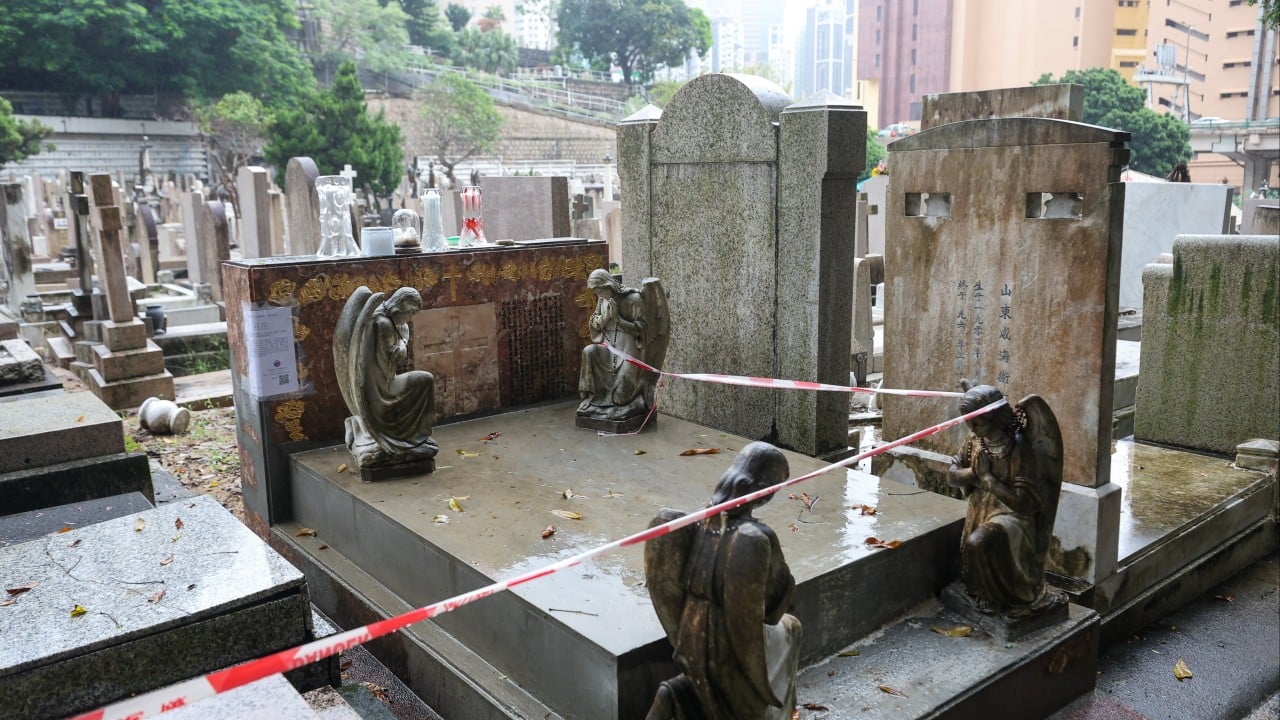
The marble altar at the Happy Valley Catholic Cemetery in Hong Kong was not merely defaced; it was smothered in cement and marked with graffiti, an act of calculated desecration directed at the final resting place of Linda Lin Dai. For anyone who understands the architecture of mid-century Hong Kong cinema, Lin Dai was royalty. Winning four Asia Pacific Film Festival Best Actress awards, she defined the golden era of Shaw Brothers studios before her tragic death in 1964 at the age of 29.
When local authorities arrested an 87-year-old man surnamed Cho in connection with the damage, the news sent shockwaves through cultural preservation circles and the aging communities who still remember the silver screen magnetism of Singing Under the Moon. Yet, reducing this incident to the erratic behavior of an octogenarian misses a much darker, systemic rot. This is not an isolated crime of opportunity. It represents a profound cultural amnesia and the physical vulnerability of historic heritage sites in a hyper-dense urban environment where the dead are increasingly crowded out by neglect and casual malice.
The Anatomy of an Icon and the Weight of Memory
To comprehend why someone would target Lin Dai's tomb, one must first confront the pedestal upon which she was placed. Born Cheng Yueru and the daughter of prominent politician Cheng Siyuan, Lin Dai possessed an electric, cosmopolitan screen presence that bridged Western glamour and traditional Chinese tragedy. Her films were blockbusters of their time, generating massive revenue and turning the Shaw Brothers studio into an international powerhouse.
When she died by suicide in her residence more than six decades ago, over 100,000 mourners choked the streets of Hong Kong to catch a glimpse of her funeral procession. Her grave became a shrine. Generations of cinephiles made pilgrimages to the Happy Valley hillside, leaving flowers and quiet respects.
Gravesites of cultural titans are public touchstones. They anchor collective memory in a city perpetually obsessed with rapid demolition and relentless rebuilding. When a monument like Lin Dai's tomb is attacked, it strikes at the physical artifacts connecting the contemporary populace to its artistic lineage.
The Fragility of Public Memorials in Urban Spaces
Happy Valley Cemetery is a historic sanctuary nestled amidst skyscrapers and high-speed transit corridors. It is an open-air museum housing the remains of colonial governors, tycoons, and artists. However, maintaining security across sprawling, historic burial grounds presents an immense logistical challenge for municipal caretakers.
Cemetery staff discovered the initial graffiti and notified the public via formal notices posted near the site, prompting immediate outrage across heritage-tracking social media pages like HeritageFootprints.hk. The subsequent discovery of cement smeared across the marble altar revealed an escalation from casual vandalism to structural defacement.
Urban heritage management experts have long warned that historic cemeteries are dangerously under-resourced. Unlike commercial museums equipped with biometric access controls and round-the-clock closed-circuit monitoring, historic burial grounds rely heavily on perimeter fencing and infrequent patrol routes. Vandals know this vulnerability. They exploit the open, contemplative nature of these spaces under the cover of quiet afternoons or deep nights.
The Arrest and the Questions Left Unanswered
The apprehension of the 87-year-old suspect brought initial relief to investigators, but it opened a Pandora's box of uncomfortable legal and social questions. Police and district crime branches moved swiftly once cemetery officials filed formal complaints regarding the desecration.
Yet, the involvement of an elderly individual introduces a complex ethical and legal labyrinth. How a man in his late eighties executed structural vandalism involving cement and paint remains a focal point of police inquiry. Investigators are examining whether the suspect acted alone, whether mental health deterioration played a role, or if he was utilized as a proxy by disgruntled elements within the neighborhood.
Age does not exempt an individual from criminal liability, but it forces the justice system to confront the limits of punitive measures versus institutional care. If the suspect suffers from cognitive impairment, his arrest highlights a systemic failure to monitor vulnerable seniors wandering into historic districts. If he acted out of calculated malice, it points toward a deeper, more disturbing animosity directed against historical symbols.
The Broader Pattern of Heritage Decay
This incident is not happening in a vacuum. Across the region, heritage sites face mounting pressures from shifting demographics, real estate development greed, and a generational shift that treats history as disposable data rather than physical heritage.
When historical markers are left unprotected, they become magnets for petty crime, antisocial behavior, and targeted attacks. The public outcry following the news of Lin Dai's defaced tomb demonstrates that citizens still care deeply about preservation. Comments flooding digital forums reflect a visceral anger: people view the destruction of a historic grave as an assault on communal dignity.
Preventing future incidents requires a fundamental shift in how municipalities protect cultural assets. Increased surveillance, stronger legal penalties for desecration, and closer cooperation between heritage societies and local district councils are mandatory prerequisites. Relying on the historic goodwill of visitors is no longer an effective security strategy.
The marble altar at Happy Valley will eventually be cleaned, restored, and cordoned off behind better safeguards. But the cement scraped from Linda Lin Dai's final resting place leaves a permanent scar on the collective conscience of a city struggling to honor its own ghosts.