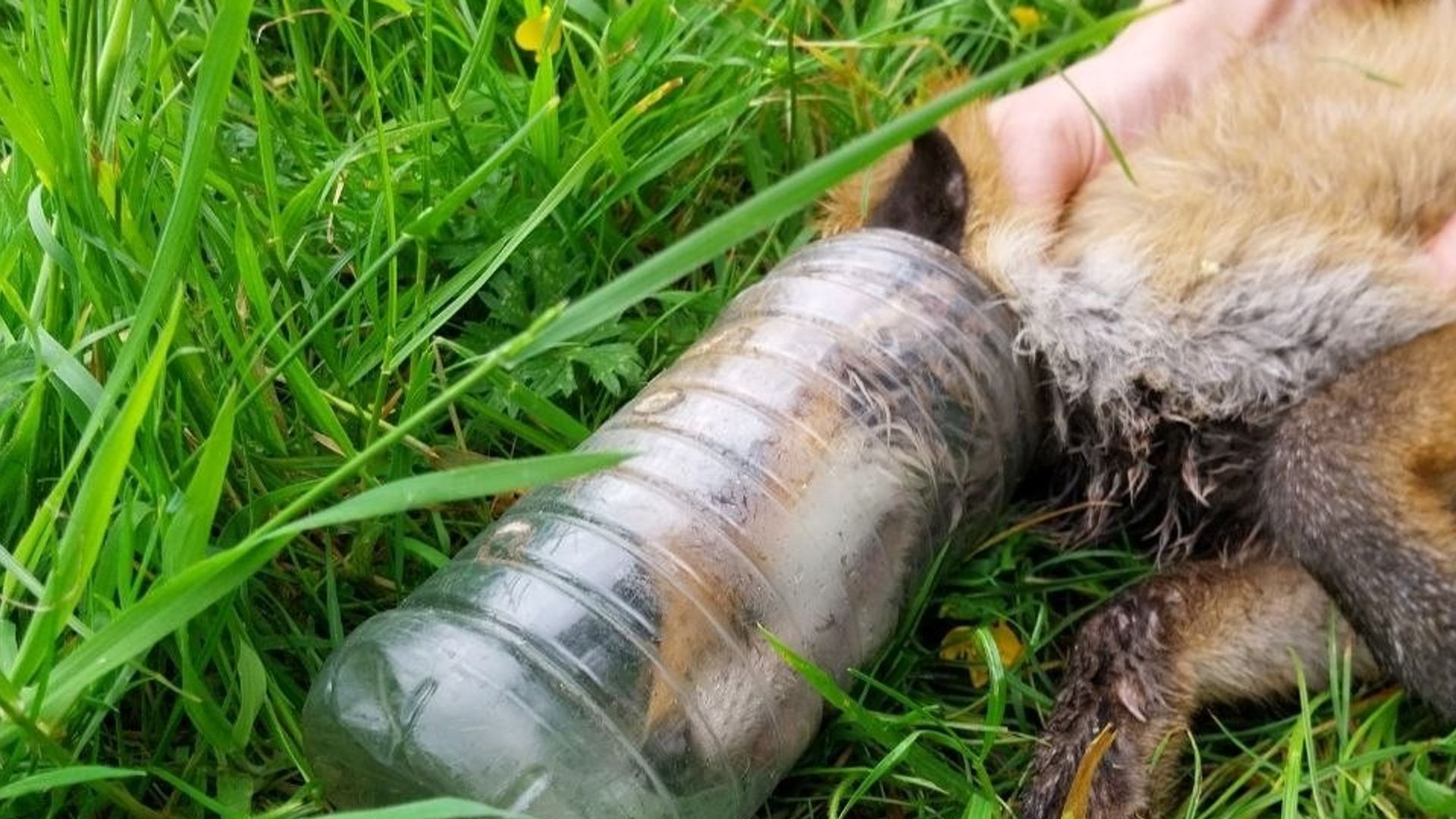
Every few weeks, a video surfaces online showing a distressed red fox with its head wedged tightly inside a discarded plastic jar or peanut butter tub. The narrative follows a predictable script where a compassionate passerby or a wildlife rescue team tracks the animal, coaxes it into range, carefully pulls the plastic container free, and watches the animal sprint back into the brush. These videos rack up millions of views, generating a wave of digital applause and fleeting relief. But these viral feel-good rescue narratives mask a severe ecological crisis. The real issue is that modern consumer packaging has inadvertently evolved into a widespread, lethal trapping system for urban wildlife, and the vast majority of these animals die alone, unseen, from dehydration or suffocation.
We treat these events as freak accidents. They are not. They are the direct, predictable consequence of an urban environment saturated with discarded plastics designed with zero regard for the fauna sharing our spaces.
The Mechanics of a Plastic Death Trap
To understand why animals like foxes, skunks, and raccoons find themselves encased in plastic, you have to look closely at the engineering of modern food containers. Manufacturers design jars to maximize shelf space and structural integrity while minimizing material costs. This means wide mouths, tapered necks, and deep, hard-to-reach corners that retain food residue long after a human has thrown the container away.
When a hungry fox encounters a discarded mayonnaise or peanut butter jar in a trash heap, its acute sense of smell detects the high-calorie fat remaining inside. The animal pushes its snout forward to reach the residue. Its ears flatten against its skull as it forces its head through the narrow opening.
Then, the trap springs.
Once the head enters the wider body of the jar, the ears pop back up into their natural position. The forward-facing fur of a canine acts like a series of microscopic barbs. When the fox attempts to pull backward, its ears and fur catch against the sharp, rigid interior lip of the bottle neck. The container becomes a one-way valve.
The physiological toll begins immediately. Within hours, the microclimate inside the plastic container alters drastically. The animal’s breath creates a high-humidity environment, causing condensation to pool around its eyes and nose. As the fox panics, its respiration rate spikes, rapidly consuming the limited oxygen inside the small vessel while carbon dioxide levels climb.
If the container does not have a small puncture or a cracked seam, the animal can suffocate within a day. More frequently, however, the fit is just loose enough to allow basic respiration but tight enough to prevent any intake of food or water. Dehydration takes over. In the summer months, a trapped animal exposed to direct sunlight can experience fatal heatstroke in less than two hours because the plastic shell acts as a greenhouse, elevating the temperature around the brain to lethal levels.
The Mirage of the Viral Rescue
Public perception of this crisis is heavily warped by algorithmic selection. The media frequently covers the instances where a human intervention succeeds, creating a false impression that the system works and that communities are successfully managing the threat. This is a dangerous comforting myth.
Wildlife rehabilitation centers operate on shoestring budgets and rely almost entirely on volunteer networks. For every fox that is spotted, reported, and successfully freed, dozens of others retreat into inaccessible culverts, abandoned industrial sites, or dense undergrowth to die quietly. Predators that are compromised by a plastic helmet cannot hunt, defend their territory, or protect their young.
Consider the logistical nightmare of a real-world rescue operation. A fox with its head trapped in a bottle loses its primary sensory inputs. It cannot see clearly, and its hearing is severely muffled by the acoustic dampening of the plastic shell. It is terrified. When humans approach, the animal does not recognize them as saviors; it perceives them as apex predators closing in for the kill.
The animal flees blindly. It bolts across multi-lane highways, tumbles into retaining pools, or wedges itself into fences, compounding its injuries. Rescue teams must deploy motion-activated trail cameras, coordinate multi-person sweep lines, and sometimes utilize specialized net guns or darting equipment just to secure a single animal. The expenditure of human hours and material resources for one rescue is immense, making it an unsustainable response to a systemic problem.
The Transformation of Urban Wildlife Habitats
The root of this problem lies in the rapid alteration of our suburbs and cities. Animals are not entering human spaces by accident; they are adapting to a landscape we have fundamentally remade. The red fox is a remarkably resilient opportunist that has figured out that human trash heaps offer more reliable, calorie-dense nutrition than a depleted woodland.
As we pave over natural hunting grounds, we concentrate wildlife populations into fragmented green spaces, parkways, and suburban backyards. This forced proximity alters natural foraging behaviors. A healthy fox in a pristine environment spends hours hunting rodents, insects, and wild berries. An urban fox can meet its entire daily caloric requirement in twenty minutes by cleaning out a single unlatched dumpster behind a fast-food restaurant or commercial strip mall.
This shift creates a dangerous behavioral dependency. The animals become habituated to human scents and objects. They no longer associate plastic, glass, or metal with danger; instead, they view these materials as wrappers for a meal. This lack of aversion is passed down generationally. Vixens teach their pups to forage in suburban trash bins, ensuring that the next cycle of urban wildlife is even more exposed to the hazards of consumer waste than the last.
Our municipal waste infrastructure is completely unequipped to handle this biological reality. Most public trash bins are open-topped cylinders or boxes with large side openings designed for easy human access. They offer absolutely no barrier to a climbing raccoon or an agile fox. Even commercial dumpsters often feature flimsy plastic lids that warp over time, leaving gaps large enough for a young carnivore to squeeze through.
The Accountability Gap in Packaging Design
We spend millions of dollars cleaning up litter and funding wildlife rescue groups, yet we consistently fail to hold the entities responsible for producing these hazards accountable. The consumer goods sector operates with zero regulatory pressure regarding the wildlife safety of their packaging designs.
The current framework of Extended Producer Responsibility focuses almost exclusively on the end-of-life recyclability of a product. If a jar can be technically melted down and turned into a park bench, it is deemed environmentally responsible. This metric completely ignores the immediate, real-world impact the object has while it exists in the waste stream or as litter.
Design alternatives exist, but they are consistently rejected because they add fractions of a cent to production costs or alter the established visual branding of a product. Tapering the shoulders of jars more gently can prevent animals from getting stuck. Creating corrugated interior walls can give an animal leverage to pull its head free. Switching away from deep, narrow-necked plastic tubs back to wide-mouth, shallow trays would eliminate the mechanical trap entirely.
Instead, the burden of mitigation is shifted entirely onto the consumer and the non-profit sector. Consumers are told to wash out their jars and cut up plastic rings, a directive that relies on flawless collective compliance that has never materialized in the history of public policy. The vast majority of citizens do not rinse their recyclables, let alone cut open containers to render them safe for curious animals.
Rethinking the Urban Trash Grid
Relying on the goodwill of individuals to solve a structural engineering and waste management failure is a proven strategy for policy stagnation. We need a fundamental overhaul of how municipal waste is secured in areas where humans and wildlife overlap.
Municipalities must mandate wildlife-proof waste containers not just in national parks or rural outposts, but in suburban and urban zones. This means replacing open-top public trash cans with spring-loaded, self-closing drop boxes. Commercial properties must be legally required to secure their dumpsters with metal latching mechanisms that prevent animals from lifting the lids.
Furthermore, environmental regulations need to update the definition of hazardous waste. An object does not need to be chemically toxic to destroy an ecosystem; if its physical geometry routinely tortures and kills local fauna, it is a physical hazard that requires design intervention. Regulatory bodies should have the authority to fine manufacturers whose specific packaging designs are repeatedly documented as lethal traps by state wildlife agencies.
The viral videos of rescued foxes should not inspire comfort or celebration. They should be viewed as grim evidence of a broken system. Every time we see a human pulling a plastic jar off an animal's head, we are looking at a rare statistical anomaly that survived long enough to be found. The rest die in the shadows, victims of a society that prioritizes packaging convenience over the basic survival of the living world around it. Securing our waste and redesigning our containers is the only path forward that does not involve turning our suburbs into a passive, accidental slaughterhouse for the species trying to survive them.