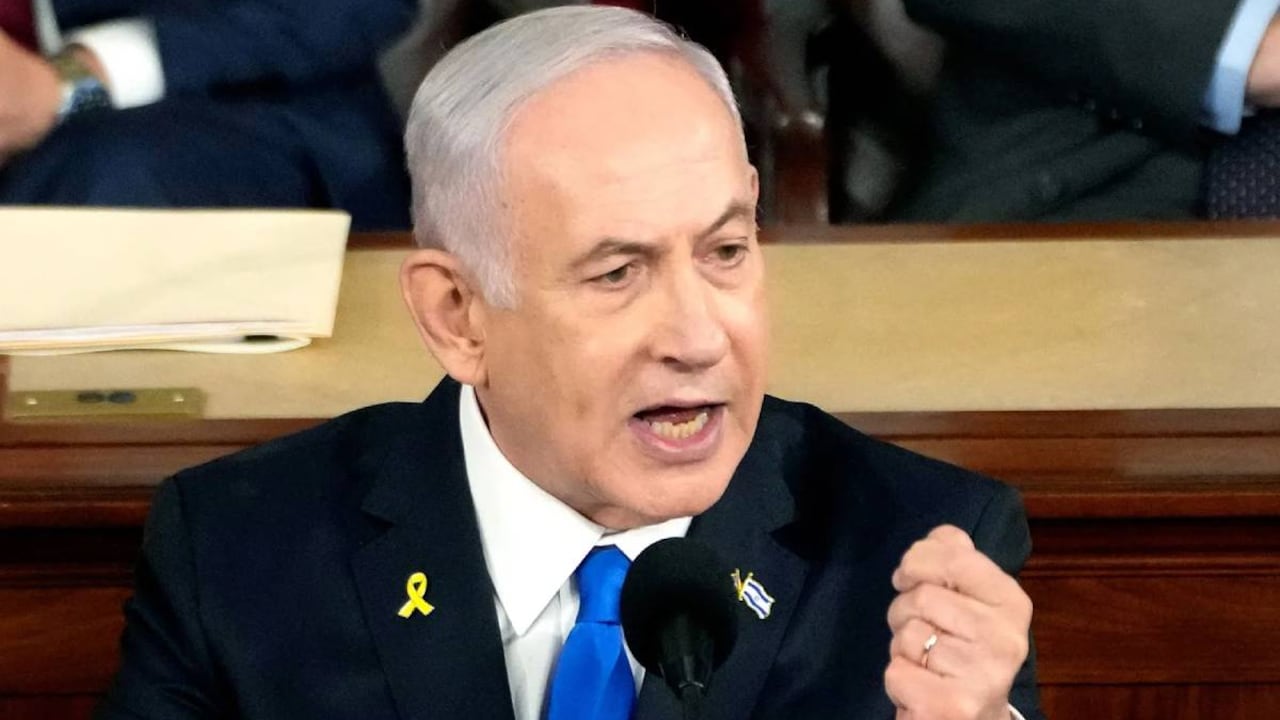
When Israeli Defense Minister Israel Katz stepped up to a podium in Jerusalem on November 8, 2026, to declare that Israel's "Iran mission is still not complete" because Tehran is trying to renew its push for nuclear weapons, mainstream wire reports treated it as another routine flare-up in a decades-old shadow war. That framing misses the real story. Katz's warning is not mere saber-rattling—it is an admission that the massive joint U.S.-Israeli bombing campaign of June 2025 failed to eliminate the core ingredients of an Iranian bomb, leaving 440 kilograms of near-weapons-grade uranium completely unaccounted for while domestic political upheaval in Jerusalem threatens to paralyze Israel's next move.
The competitor headlines stop at the quote. To understand why the Iran mission remains dangerously unfinished, you have to look at the physical reality buried under the rubble of Natanz, Fordow, and Isfahan, the blind spots blinding international inspectors, and the razor-thin political clock ticking down on Benjamin Netanyahu's outgoing government. For an alternative view, see: this related article.
The Limits of Bunker Busters and the 440-Kilogram Blind Spot
Military planners have known for twenty years that you cannot bomb knowledge out of a country's head. What the past seventeen months have demonstrated is that you cannot always bomb fissile material out of a mountain either.
Prior to the June 2025 U.S. and Israeli strikes on Iranian nuclear infrastructure, International Atomic Energy Agency (IAEA) inspectors verified that Tehran held approximately 440 kilograms of uranium enriched to 60 percent uranium-235. In nuclear physics, 60 percent is not a civilian energy benchmark; it is a technical hair-trigger. Enriching uranium from natural levels (0.7 percent) to 20 percent takes the vast majority of the separative work. Jumping from 60 percent to the 90 percent threshold required for a nuclear warhead takes a fraction of the time and far fewer centrifuges. Roughly 200 kilograms of that 60 percent stockpile—if further enriched—provides enough fissile material for five nuclear weapons. Related analysis on this trend has been provided by The New York Times.
Here is the operational problem that military victory laps gloss over. Almost all of that 440-kilogram stockpile was stored in gas form—uranium hexafluoride—inside small, portable cylinders roughly the size of commercial scuba tanks.
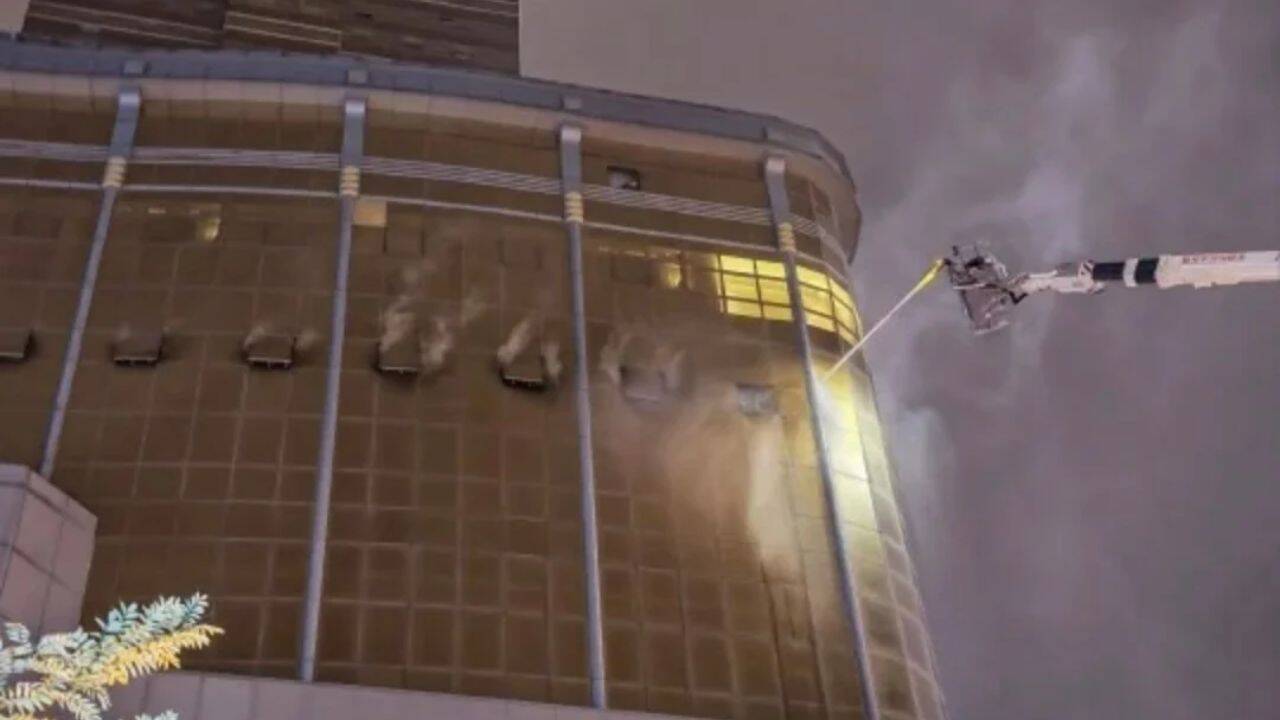
When the United States and Israel struck Iran in June 2025, they inflicted severe damage on above-ground facilities at Natanz and battered the deeply buried enrichment halls at Fordow. At Isfahan, however, U.S. planners faced an intractable geological reality. Chairman of the Joint Chiefs General Dan Caine briefed Congress that the underground storage tunnels at Isfahan were buried too deep for even the Massive Ordnance Penetrator—America's heaviest conventional bunker-busting bomb—to collapse. Worse, blowing up a concentrated cache of 60 percent enriched uranium risked triggering localized radiological contamination or even an uncontrolled criticality event. Instead of destroying the vault, U.S. aircraft collapsed the tunnel entrances to seal the material inside.
Sealing a tunnel is not the same as destroying its contents.
What Happened During the Eight-Day Window
A critical detail buried in post-strike intelligence assessments explains why Katz is sounding the alarm now. Israel launched its initial wave of strikes in June 2025 eight days before the United States bombed Fordow. Before those strikes began, Tehran formally notified the IAEA that it intended to invoke "special measures" to disperse and protect its nuclear assets in the event of an attack. On June 16, Iran informed the agency it had executed those transfers.
Since June 2025, Iran has barred IAEA inspectors from every bombed nuclear site. By late October 2026, IAEA Director General Rafael Grossi stood before the United Nations Security Council—following the agency's first formal nonproliferation breach referral against Iran in two decades—and delivered a sobering assessment. Satellite imagery showed no visible reconstruction at the pulverized surface facilities, yet the UN watchdog could no longer verify the location or status of a single gram of those 440 kilograms.
Intelligence assessments leaked in early 2026 indicated that Iranian engineers had already dug out a narrow access point into the sealed Isfahan tunnels. Overhead satellites can watch the dirt move outside a portal, and intelligence agencies claim they would spot a convoy hauling heavy casks away. But scuba-sized cylinders of uranium hexafluoride do not require a heavy convoy. They fit in the back of a standard delivery van. Without boots on the ground, Western intelligence is reduced to watching doors while guessing what walked out of them months ago.
Why the Iran Mission Stalled Between War and Diplomacy
If the military campaign left Iran's fissile stockpile intact and unseen, why hasn't Israel simply finished the job? The answer lies in the widening gap between Jerusalem's military doctrine and Washington's strategic bandwidth.
Throughout 2025 and 2026, Israel's defense establishment operated on a straightforward premise: degrade Iran's regional proxies—Hezbollah in Lebanon, Hamas in Gaza—strip away its Russian-supplied air defenses, and hit the nuclear program directly. Militarily, the strikes pushed Iran's overt enrichment timeline back from weeks to years. Strategically, however, bombing nuclear facilities without toppling the regime or securing a verifiable inspection agreement created a classic proliferation trap.
Consider the incentives inside Tehran. Before June 2025, Iran maintained a threshold posture—enriching uranium right up to the edge of weaponization while keeping inspectors inside the country as a bargaining chip for sanctions relief. The joint U.S.-Israeli bombing campaign shattered the deterrence value of staying below the threshold. Hardliners in Tehran now argue that only an actual nuclear deterrent can prevent another round of airstrikes. By driving the program out of declared facilities and expelling the IAEA, the strikes inadvertently eliminated the very transparency that previously gave Israel and the United States early warning of a breakout.
Meanwhile, Washington's appetite for a third major bombing campaign has cooled considerably. Following the November 2026 U.S. midterm elections, President Donald Trump handed Tehran a diplomatic window stretching into early 2027 to strike a new nuclear agreement, backing the ultimatum with a naval blockade choking off Iranian crude shipments to China rather than immediate new airstrikes. Reports out of Jerusalem indicate that Washington actively blocked a planned Israeli preemptive operation against Iran prior to Israel's own November election.
For Katz and Netanyahu, a diplomatic freeze that leaves 440 kilograms of 60 percent uranium unaccounted for in hidden tunnels is an existential nightmare. For Washington, plunging the Middle East back into open war while global energy markets absorb the shock of tanker attacks in the Strait of Hormuz carries unacceptable political and economic costs.
The Domestic Clock Behind Katz's Escalation
You cannot separate a defense minister's words from the political floor beneath his feet. Katz's November 8 declaration—followed days later by fresh warnings that Tehran is also pursuing chemical weapons capabilities—landed in the middle of an acute Israeli political transition.
Following Israel's November 2026 general election, opposition leader Gadi Eisenkot—a former Israel Defense Forces Chief of Staff—received the mandate from President Isaac Herzog to form a new governing coalition after Netanyahu suffered a decisive electoral setback. As a caretaker defense minister watching his coalition's grip on power slip away, Katz faces two competing pressures:
- Locking in the security narrative: By framing the Iran file as an active, unfinished emergency—and broadening the threat matrix from nuclear enrichment to chemical weapons—Katz and Netanyahu reinforce their political brand as the only leaders willing to confront Tehran without waiting for American permission.
- Constraining the incoming government: Publicly declaring that the mission is incomplete and warning Hezbollah against intervening creates high political costs for Eisenkot if a new center-led coalition opts for restraint or defers to Washington's early-2027 diplomatic deadline.
Eisenkot and his allies have pushed back sharply against the caretaker cabinet's rhetoric, warning the military establishment against being drawn into a major war driven by political timelines rather than operational readiness. Having commanded the IDF himself, Eisenkot understands the difference between tactical strikes and strategic resolution. Dropping bombs on mountain portals delays a program; it does not solve the problem of covert weaponization labs.
The Unspoken Shift From Industrial Enrichment to Covert Weaponization
The real danger keeping intelligence analysts awake in Tel Aviv, Washington, and Vienna is not that Iran will rebuild the massive centrifuge cascades at Natanz. Rebuilding industrial-scale enrichment takes years, consumes enormous amounts of electricity, and lights up satellite imagery like a flare.
The threat is a clandestine weaponization sprint using the uranium Iran already has.
To build a crude nuclear device—one not yet miniaturized to fit onto a ballistic missile warhead, but deliverable by ship, truck, or heavy aircraft—Iran does not need sprawling concrete halls. Taking 200 to 400 kilograms of 60 percent uranium hexafluoride and enriching it to 90 percent requires only a few hundred advanced centrifuges (such as IR-4 or IR-6 machines) operating inside a facility the size of a commercial warehouse.
Let's walk through a hypothetical scenario to illustrate the intelligence nightmare. Suppose Iranian engineers moved even half of the 440-kilogram stockpile out of Fordow during the eight-day warning window in June 2025. A single cascade of 350 advanced centrifuges hidden inside an unmarked industrial building in an urban area like Tehran or Qom could enrich that material to weapons-grade in roughly three to four weeks. Because the feedstock is already at 60 percent, the cascade requires minimal power and emits virtually no detectable thermal or radiological signature from space. By the time Western intelligence detected the diversion, the fissile core would already exist.
Weaponization—converting uranium gas into metal, casting it into hemispheres, and mating it with a multipoint detonation system—adds months to that timeline. Yet U.S. intelligence assessments over the past two years have repeatedly noted that Iranian scientists have conducted computer modeling and metallurgical research that shortens those final engineering steps.
What Actually Completes an Iran Mission
When politicians talk about "completing the mission" against a nuclear program, they rarely define what completion looks like on the ground. History offers only three ways a determined state gives up a near-threshold nuclear capability:
- Total regime collapse or military occupation: The model applied to Iraq in 2003, requiring hundreds of thousands of ground troops and years of insurgency—an option neither Israel nor the United States possesses the forces or political will to execute in a mountainous country of nearly 90 million people.
- Voluntary capitulation under existential pressure: The Libyan model of 2003, where Muammar Gaddafi surrendered crated centrifuges to American inspectors after watching Saddam Hussein fall. Tehran's leadership draws the exact opposite lesson from Libya: Gaddafi gave up his weapons program and was overthrown and killed eight years later.
- A coercive, intrusive verification regime: An agreement backed by credible military force that puts IAEA inspectors back inside every tunnel, tracks every gram of the 440-kilogram stockpile, and dismantles remaining centrifuge production lines in exchange for lifting the economic siege.
Airstrikes alone sit outside all three categories. They are a delaying mechanism, not an endgame. Every bombing raid resets the clock by a few years while driving the target deeper underground, scattering its materials further from international oversight, and hardening the political resolve of the survivors.
Israel's defense establishment knows this math better than anyone. Katz's warning in Jerusalem was not a revelation of a brand-new Iranian plot; it was an acknowledgment of the structural trap left behind by the June 2025 war. Until international inspectors account for every missing cylinder of enriched uranium buried beneath Iran's mountains, the mission cannot be declared complete—and no number of bunker busters will change that reality.