The United States government is dumping its deepest secrets into the public domain, but the real story isn't what the files reveal. It is how they are designed to say absolutely nothing. Under the newly minted Presidential Unsealing and Reporting System for UAP Encounters, known as PURSUE, the Department of War just dropped its third massive tranche of declassified Unidentified Anomalous Phenomena records. Millions of citizens have rushed to download gigabytes of raw video, grainy sensor logs, and chilling law enforcement interviews. Yet, beneath the political theater of transparency lies a calculated weaponization of institutional incompetence.
The public wants definitive proof of alien life or advanced technology. Instead, the Pentagon is giving them an analytical black hole.
By flooding the zone with unresolved cases, the intelligence apparatus is shifting the burden of proof from the state to the citizen. This rolling disclosure strategy, initiated by a February executive order, has successfully generated over a billion website hits while muddying the waters of national security. The files do not confirm extraterrestrial visitation. They confirm that the world’s most sophisticated military cannot identify what is flying inside its own restricted airspace. This is a quiet crisis of sovereignty masquerading as a victory for open government.
The Illusion of Absolute Transparency
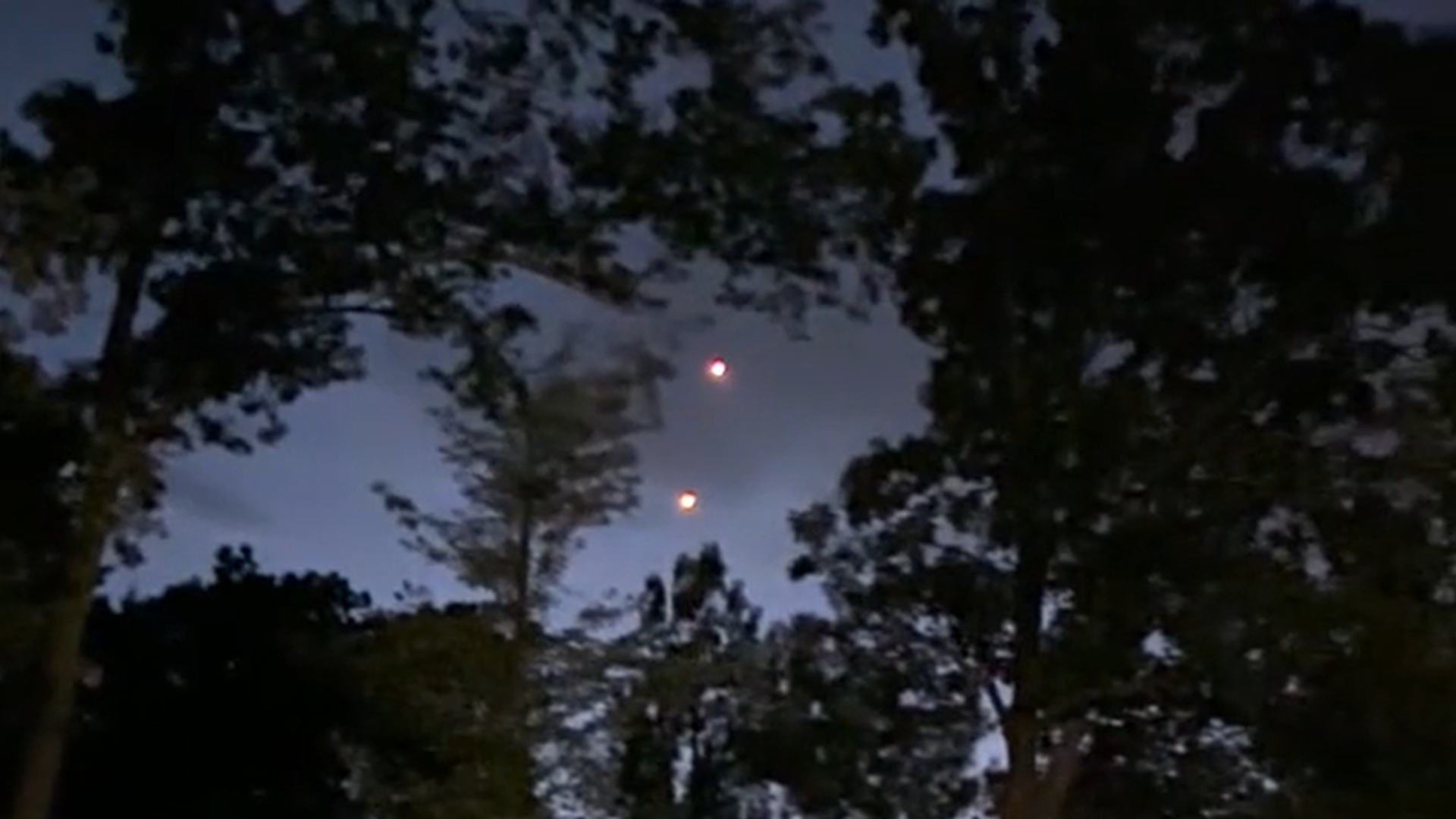
The newest batch of files includes more than 50 highly sensitive documents, eyewitness clips, and digital reconstructions compiled by the FBI and NASA. Among the standout cases is an October 2023 encounter involving federal law enforcement special agents in the western United States. The agents tracked a cluster of glowing orange and red orbs that maneuvered with perfect, smooth coordination. According to their written statements, one vehicle floated entirely off the road across rough terrain where no tires could possibly tread.
The Pentagon’s response to this chilling account? A low-confidence assessment suggesting that sunlight reflecting off snow on Cheyenne Mountain might have illuminated the underside of low-altitude clouds.
This is what insiders call defensive analysis. The All-domain Anomaly Resolution Office, or AARO, stamped the case as unresolved, a bureaucratic designation that sounds clinical but functions as an official admission of defeat. When the state blames optical artifacts or backscattering for a multi-witness event reported by trained federal agents, it isn't solving a mystery. It is admitting that its multi-billion-dollar sensor network is blind to anomalies.
Weaponized Murk and the Data Dump Strategy
For decades, the classification system was used as a shield to keep secrets in. Today, it is used as a firehose to drown investigators in useless data. The latest PURSUE release features first-hand civilian footage captured on iPhones alongside legacy reports from Apollo spaceflights.
By mixing high-credibility military encounters with unverified civilian sightings of plasma-like spheres changing shape over ponds, the Department of War creates an editorial equalizer. Everything looks equally spectacular and equally unprovable. This structural chaos serves a distinct dual purpose. It satisfies the political mandate for disclosure while ensuring that no single case can be leveraged to force true institutional accountability.
- Data overload: The sheer volume of material (gigabytes of video and hundreds of raw text files) outpaces the analytical capacity of independent researchers.
- Context stripping: Declassified files are routinely scrubbed of exact geographic coordinates, sensor technical specifications, and metadata.
- The unresolved loophole: Classifying a case as permanently unresolved stops the investigation dead in its tracks, shielding the agency from further freedom of information requests.
The Intelligence Bureaucracy Eating Itself
To understand how we arrived at this point, one must look at the mechanics of the defense apparatus. Former AARO director Sean Kirkpatrick recently described the government's ongoing UAP analysis framework as a self-licking ice cream cone. It is an enduringly cynical, highly accurate assessment. The bureaucracy has created a closed-loop system where sightings justify investigations, investigations yield inconclusive data, and inconclusive data justifies more funding for further investigations.
Consider the physical reality of these encounters. When a drone pilot or a Navy radar operator records an object moving at hypersonic speeds without a visible propulsion plume, it represents an immediate threat to aviation safety. If these objects are advanced reconnaissance devices belonging to a foreign government, the military has failed to defend American airspace. If they are something else entirely, the failure is conceptual.
The current crop of declassified files suggests that the intelligence community is far more comfortable pretending a phenomenon is unknowable than admitting an adversary has leapfrogged American aerospace capabilities.
The Geopolitical Gamble Behind the Disclosure
There is a dark geopolitical reality underlying this sudden rush to share. The timing of these rolling document releases is not accidental. Observers note that shifting attention to glowing orbs and historic NASA audio clips offers a convenient lightning rod during moments of intense domestic political friction.
Yet, foreign adversaries like Beijing and Moscow are watching these releases with keen interest. They are not looking for flying saucers. They are cataloging what the U.S. government cannot see. Every time a PURSUE document reveals that an industrial drone swarm or an anomalous object hovered over a sensitive nuclear site for 48 hours without being intercepted, it maps a hole in the American domestic air defense grid.
The Pentagon’s transparency campaign may delight civilian disclosure advocates, but it exposes a terrifying lack of asymmetric defense readiness. The message sent to our global competitors is loud and clear. If you fly an object that defies standard radar profiling, the United States military will spend three years debating its shape before dumping the raw footage onto a public website and walking away from the problem.
True transparency would require releasing the raw sensor calibration data, the radar telemetry, and the satellite tracks that accompany these visual reports. Without that technical scaffolding, a video of a glowing orb is just a high-tech Rorschach test. The public sees an alien spacecraft. The skeptic sees a weather balloon. The defense contractor sees a reason to request a larger budget. And the intelligence agencies retain total control over the underlying truth, safely hidden behind the one classification wall they will never tear down.