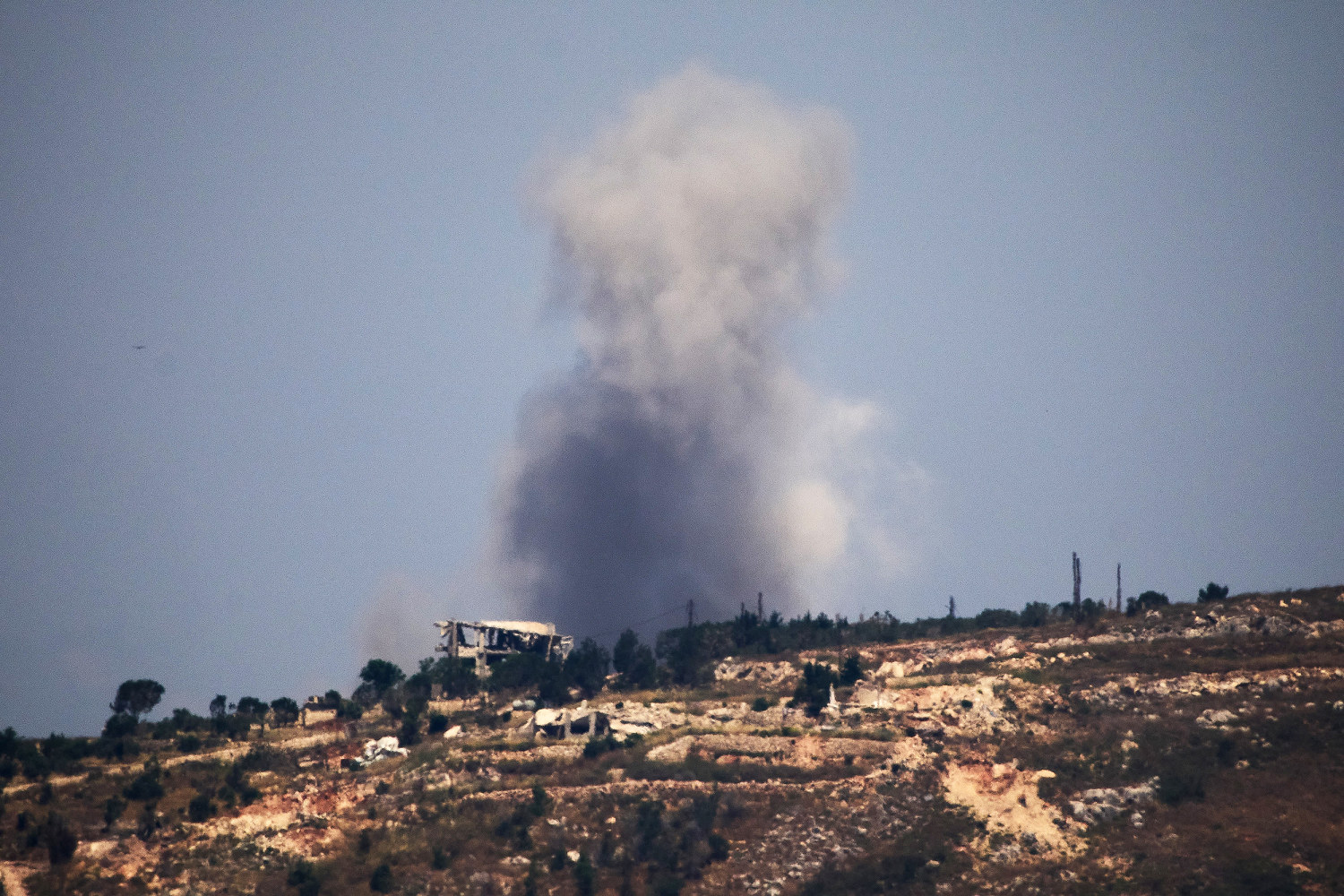
The diplomatic reality in the Middle East collapsed again this week, proving that social media proclamations cannot override structural military logic. When U.S. President Donald Trump announced on Truth Social that Israel and Hezbollah had agreed to stop all shooting, the declaration was meant to signal a monumental diplomatic triumph. He assured the public that Israeli troops heading toward Beirut had turned back and that highly placed representatives had secured a binding pledge from Hezbollah. The reality on the ground was entirely different. Within hours of the announcement, Israeli airstrikes battered parts of Lebanon, thousands of families fled Beirut in terror, and Hezbollah lawmakers openly rejected the premise of the agreement.
The fundamental breakdown of this latest peace initiative stems from a fatal mismatch between high-stakes American political branding and the irreconcilable strategic objectives of the combatants.
Washington attempted to enforce a transactional, fragmented truce. But the conflict, which erupted in March 2026 following regional escalation involving Iran, cannot be managed through ad-hoc, partial deals that treat Beirut as an isolated diplomatic chip.
The Illusion of a Partial Truce
The core flaw of the White House intervention was the proposal of a compartmentalized security arrangement. The U.S. framework sought a specific trade. Israel would spare Beirut and its southern suburbs from devastating aerial bombardment if Hezbollah ceased its rocket fire and cross-border operations against Israeli forces.
This piecemeal approach ignores how asymmetric conflicts function. Hezbollah operates on a doctrine of total resistance linked to a broader regional axis. Accepting a deal that protects the capital while allowing the Israeli military to systematically dismantle its infrastructure in the south would amount to strategic surrender for the group.
Hezbollah lawmaker Hassan Fadlallah quickly clarified the group’s stance, publicly refusing any partial truce that bartered the safety of Beirut in exchange for a halt to their military operations. For Hezbollah, the theater of war is singular. They will not decouple the capital from the frontline.
Israel views the situation through an equally unyielding lens. Prime Minister Benjamin Netanyahu responded to the American executive by drawing his own red lines. He stated that while Israel would refrain from leveling Beirut if Hezbollah remained entirely silent, the Israeli Defense Forces would continue to operate as planned in southern Lebanon.
[American Framework] ---> Proposes: Spare Beirut for a Halt to Hezbollah Rockets
[Hezbollah Stance]   ---> Rejects: Total war cannot be decoupled; southern front remains active
[Israeli Stance]     ---> Insists: Freedom of action in the south is non-negotiable
This structural contradiction explains why the April 17 temporary ceasefire, though nominally extended, has been a bloody fiction. Observers estimate that more than 800 people have been killed in Lebanon since that initial pause was announced. The fighting never actually stopped. It merely shifted in geography and intensity.
The Operational Reality of Maximum Pressure
To understand why the shooting will not simply stop, one must look at the calculation of the Israeli military command. Senior generals are working against an implicit diplomatic clock. They are fully aware that international patience, even within a friendly U.S. administration, is a finite resource.
The strategy is clear. The military aims to inflict maximum, irreversible structural damage on Hezbollah's leadership, tunnel networks, and missile stockpiles before an ironclad international agreement forces a permanent halt.
This creates an intense incentive for rapid military escalation rather than restraint. Over the weekend alone, UN coordination agencies reported the deaths of dozens of individuals as Israeli operations intensified. The sudden threat of renewed, heavy bombardment in Beirut’s southern suburbs triggered a massive civilian exodus. Families packed what little they could carry onto cars and motorcycles, fleeing into an uncertain night.
The United Nations High Commissioner for Refugees documented a mounting wave of panic. This is not the behavior of a population experiencing a breakthrough in peace talks. It is the behavior of a population that knows the bombs are coming back.
The Broken Iranian Conduit
The diplomatic theater is further complicated by the collapse of parallel negotiations with Tehran. Initially, the broader regional conflict saw Washington and Iran engaging in indirect talks aimed at establishing a wider regional framework.
Those talks are now on life support. Iran suspended negotiations in direct protest of the expanded Israeli offensive in Lebanon, asserting that a total cessation of hostilities in Lebanon remains an absolute precondition for any dialogue with the United States.
Trump sought to minimize this diplomatic setback by asserting that talks with the Islamic Republic were continuing at a rapid pace. Yet Iran's state-aligned media outlets quickly contradicted this optimism. This public disagreement highlights a deeper systemic issue. The United States is attempting to utilize a top-down diplomatic approach in an environment where local actors possess veto power through their actions on the ground.
When the U.S. administration suggested it might walk away from talks because "we've been talking too much," it was a rhetorical posture that failed to move the needle in Tehran or Jerusalem. The leverage simply wasn’t there.
The Decades of Diplomatic Inaction
The current crisis also highlights the profound weakness of the Lebanese state. Direct negotiations between senior Israeli and Lebanese officials began in Washington this April, marking the first high-level diplomatic engagement between the two nations in over three decades.
However, these talks are fundamentally hollow. The Lebanese government faces an impossible dilemma. It is a formal state entity negotiating a peace agreement that includes provisions for the disarmament of non-state armed groups, yet it possesses no domestic military or political capability to disarm Hezbollah.
Hezbollah was not a formal signatory to the April ceasefire framework, despite being the primary entity fighting the war. Expecting the Lebanese army to police the southern border and prevent veteran militants from launching attacks against Israel is a geopolitical fantasy.
The Lebanese state cannot enforce sovereignty over territories controlled by a heavily armed faction that answers to its own ideological and regional imperatives. Consequently, any agreement signed by Beirut is worth little more than the paper it is printed on if it lacks the explicit consent of Hezbollah's command structure.
The Cost of Public Relations Diplomacy
High-end journalism requires looking past official statements to observe the concrete reality of the conflict. The fundamental truth of the current crisis is that public relations diplomacy cannot substitute for a coherent strategy that addresses the core security anxieties of both sides.
Tweeting that an agreement has been reached does not change the fact that Israeli northern residents demand the complete removal of a hostile force from their border. It does not alter the fact that Hezbollah views its rocket arsenal as its sole deterrent against existential destruction.
The current strategy of announcing premature victories creates a dangerous vacuum. It erodes the credibility of international mediators and signals to the combatants that the global superpower is more interested in the optics of de-escalation than the grinding, painful work of addressing structural grievances.
As long as the diplomatic frameworks focus on superficial, localized deals—like sparing a city center while letting the borderlands burn—the cycle of violence will continue. The families fleeing Beirut understand this reality instinctively. They ignore the optimistic statements broadcast from Washington and watch the skies instead.