The catastrophic failure of Starbucks Korea’s “Tank Day” promotional campaign has forced an unprecedented, televised apology from Shinsegae Group Chairman Chung Yong-jin, revealing deep systemic flaws in how the retail giant manages historical sensitivities. The commercial disaster has wiped significant value off local operations and ignited a fierce nationwide boycott. What began as a routine product promotion for a 503-milliliter plastic tumbler transformed into a corporate nightmare because executive management approved marketing copy that directly echoed the traumatizing jargon of South Korea’s military dictatorship era. This is not a simple case of tone-deaf marketing. It is a structural failure of corporate governance within the Shinsegae retail empire.
The Anatomy of an Avoidable Disaster
On May 18, Starbucks Korea launched a discount event featuring the slogan "Put it on the table with a tak sound, Tank Day on the desk." The scheduling and vocabulary could not have been more damaging.
May 18 is the national anniversary of the 1980 Gwangju Democratization Movement, a historically sacred day commemorating hundreds of civilians massacred by military forces under dictator Chun Doo-hwan. Chun’s regime famously deployed tanks to crush the pro-democracy protesters. To make matters worse, the word tak directly references the notorious 1987 police torture and murder of student activist Park Jong-chul. At the time, military authorities attempted to cover up his death by claiming investigators merely slapped the table with a tak sound, causing the student to drop dead of shock.
By pairing the word tak with the word "Tank" on the exact anniversary of the Gwangju massacre, Starbucks Korea managed to trigger the two most painful collective traumas of modern South Korean history simultaneously.
The financial and political retribution was swift. President Lee Jae-myung publicly denounced the campaign, while the Ministry of the Interior and Safety banned the use of Starbucks products across government programs. Sales cratered instantly. In major metropolitan areas, once-bustling cafes sat empty. Local operators felt the sting immediately, forcing Shinsegae to fire Starbucks Korea Chief Executive Sohn Jeong-hyun within days.
The Breakdown of Corporate Safeguards
How did an organization managing over 2,000 stores allow such explosive material to clear internal review? The answer lies in a culture of rubber-stamping and a complete decoupling of local management from global brand values.
An intensive internal audit by Shinsegae Group exposed an astonishing lack of oversight. The marketing materials passed through seven distinct layers of corporate approval. Investigators discovered that multiple executives approved the final design drafts via email attachments without even opening the files. It was routine corporate compliance at its worst. Mid-level managers approved the text because their superiors had historically focused purely on sales volume rather than socio-political risk assessment.
[Marketing Team Design Draft]
       │
       ▼
[Blind Executive Approval] ──► (Attachments left unopened)
       │
       ▼
[Public Campaign Launch]  ──► (Catastrophic brand fallout)
Shinsegae has maintained that the phrase was an unfortunate coincidence, pointing out that the "Tank Tumbler" had been manufactured by an overseas vendor who drew inspiration from industrial water tanks. The 503-milliliter volume was a standard conversion of 17 ounces used globally. Yet, the defense of "accidental alignment" rings hollow to a highly sensitized public. Even if the product names were global, the specific Korean marketing slogan—using the distinct onomatopoeia tak—was generated locally.
The Chairman Shadow
The public anger surrounding this event cannot be understood without examining the political reputation of Shinsegae’s chairman. Chung Yong-jin has long been a polarizing figure in South Korean corporate circles.
Unlike traditional tech or automotive executives who maintain an opaque, risk-averse public profile, Chung has historically used social media to voice blunt, right-wing political opinions. His past online posts denouncing communism and mocking progressive politicians have earned him a dedicated following on conservative forums, where the late dictator Chun Doo-hwan is occasionally referred to by the subcultural nickname "Chun-Tank."
Consequently, civic organizations representing the victims of the Gwangju massacre rejected the idea that the campaign was an innocent mistake. They viewed it as a deliberate dog whistle tailored to right-wing internet culture. This political baggage transformed a massive operational blunder into an existential ideological battleground just weeks before the upcoming June 3 local elections.
The Cost of the Clean Up
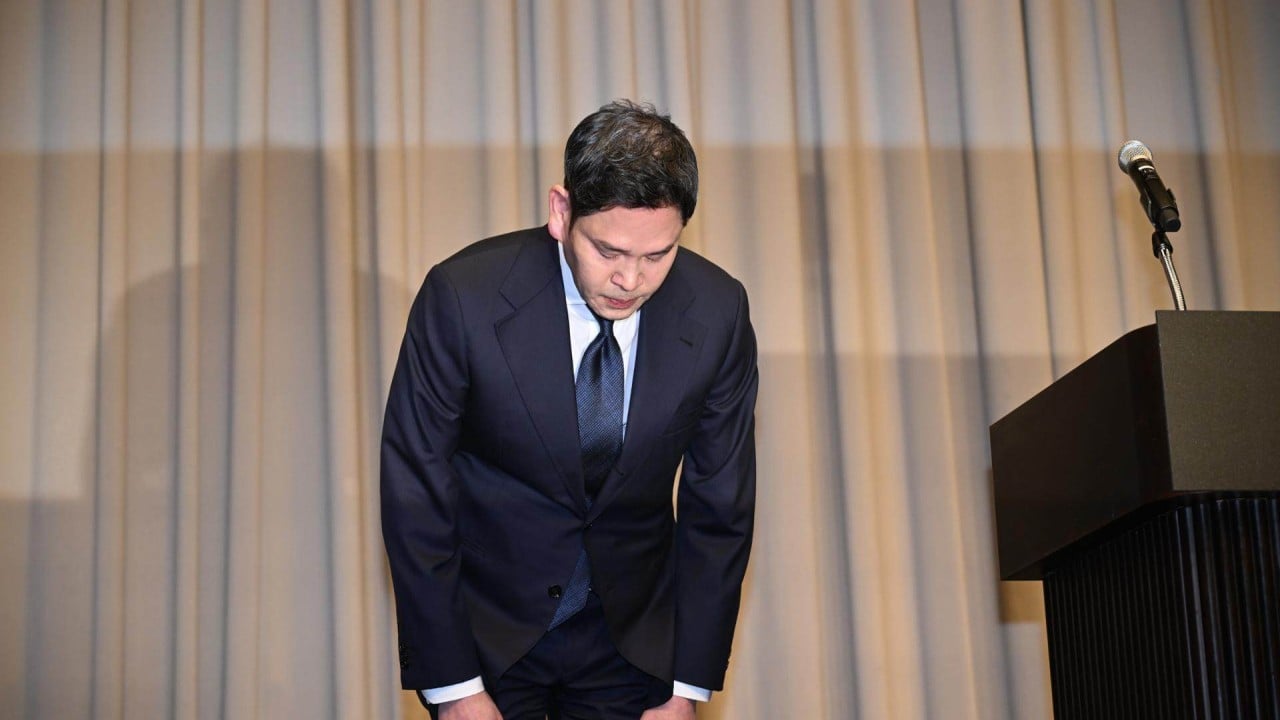
Chung’s televised press conference at the Josun Palace Hotel in Seoul was a stark exercise in corporate damage control. Bowing deeply before cameras, he accepted total institutional responsibility, a tactical move designed to shield frontline baristas from consumer hostility and de-escalate the national boycott.
The strategy has yielded mixed results. While leadership within the Democratic Party of Korea acknowledged the apparent sincerity of the apology, progressive lawmakers are still pushing forward with legislation specifically designed to punish the public mockery of historical democratic movements.
The underlying reality is that Starbucks Global, which relies on South Korea as its third-largest market by store count behind the United States and China, is now facing structural complications. The brand is operated via SCK Company, which is owned 67.5 percent by Shinsegae’s E-Mart and 32.5 percent by Singapore’s sovereign wealth fund, GIC. While the corporate structure gives Shinsegae operational dominance, the American parent company remains fiercely protective of its global equity. Starbucks Global issued its own swift, independent apology, signaling a deep discomfort with how its local partner managed historical context.
Replacing a CEO and reassigning five marketing employees does not fix the fundamental vulnerability. When a consumer brand captures a dominant market share in a highly politicized society, its marketing department can no longer operate in a vacuum of simple retail metrics. The true cost of the Tank Day disaster is not found in the unsold plastic tumblers, but in the long-term erosion of a premium brand identity that took decades to build. The lesson for global enterprises operating through local conglomerates is definitive. If local leadership treats compliance as a matter of unchecked email attachments, the market will eventually enforce its own accountability.


