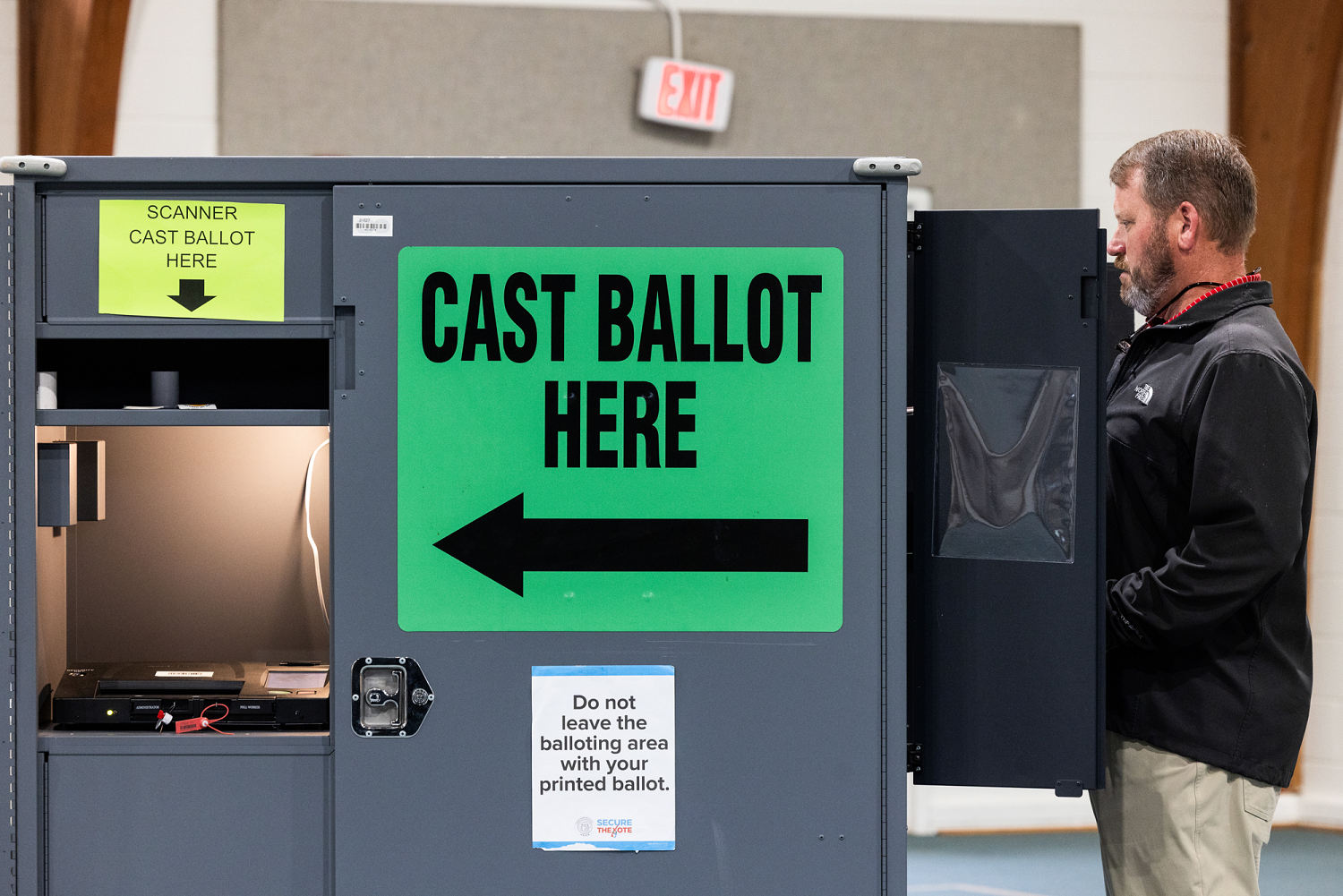
The primary runoff elections in Georgia and Alabama represent a deeper struggle than a simple choice between competing candidates. On the surface, the ballots cast on Tuesday decide who will advance to the general election in November, including the high-stakes Republican effort to unseat Democratic Senator Jon Ossoff in Georgia and the race to succeed Senator Tommy Tuberville in Alabama. Beneath that surface lies a fractured political machine where local power structures, competing endorsements, and geographic factions are colliding. The results from these specific counties reveal exactly how national narratives are breaking down at the local level.
Political observers frequently treat the American South as a uniform voting bloc governed by a singular conservative consensus. That view is wrong. By examining the shifting dynamics in key suburban and rural counties across Georgia and Alabama, a different reality becomes clear. The real battle is not between parties, but between distinct regional factions fighting for the future mechanics of their respective state organizations.
The Georgia Split
In Georgia, the Republican Senate runoff features Mike Collins and Dooley, two candidates offering fundamentally different paths for the party as it prepares to face Ossoff. The endorsement strategy in this race highlights a persistent fault line within the state. Governor Brian Kemp threw his support behind Dooley, emphasizing a localized, state-centric approach to governance and campaigning. Over the weekend, President Donald Trump intervened by endorsing Collins, setting up a direct test of political influence in the state.
This is not the first time Georgia has seen this specific proxy war, but the current economic and demographic conditions have shifted the terrain. The outcome will be determined not in the solidly blue urban core of Atlanta, but in the surrounding suburban ring and the rapidly changing exurban counties.
Cobb County and the Suburban Balance
Suburban Atlanta has transformed over the last decade from a reliable conservative stronghold into the primary battleground of the state. Cobb County serves as the ultimate bellwether for this transition. Voters here are highly educated, economically affluent, and increasingly resistant to top-down national political dictates.
During the primary rounds, the vote share in Cobb split cleanly along geographic and educational lines. The northern, more affluent precincts favored the institutional backing of the Kemp network, preferring a candidate focused on local economic stability and traditional governance. The southern and western portions of the county, which contain a higher concentration of working-class voters, showed a stronger affinity for the populist messaging of the Collins campaign. The runoff turnout in these specific precincts will demonstrate whether the traditional suburban conservative base still holds the keys to statewide nominations, or if the populist shift has permanently altered the suburban coalition.
The Rural Fire Wall in Houston County
Further south, Houston County represents the traditional core of Georgia conservative politics. It is a region heavily influenced by the presence of Robins Air Force Base, making national security, defense spending, and institutional stability major priorities for the local electorate.
In this environment, endorsements carry a different kind of weight. The Kemp network has deep roots here, tied to agricultural interests and local business leadership. A victory for Collins in Houston County would signal a major breakdown in the traditional rural political infrastructure that has sustained the state Republican establishment for decades. Conversely, a strong showing for Dooley would prove that despite national media attention on high-profile endorsements, local networks and institutional ties still dictate outcomes in the state heartland.
The Alabama Succession Battle
In Alabama, the Republican primary runoff for the United States Senate presents a different set of structural challenges. With the seat currently held by Tommy Tuberville drawing intense national attention, the race between Representative Barry Moore and Jared Hudson has devolved into a bitter, expensive conflict. Moore, an incumbent congressman with federal legislative experience, secured nearly 40% of the vote in the initial primary. Hudson, a former Navy SEAL, advanced to the runoff by positioning himself as an outsider capable of disrupting the Washington establishment.
The campaign turned exceptionally hostile in its final weeks, marked by significant negative ad spending and public disputes. Donald Trump Jr. publicly praised Hudson on the eve of the vote, calling him a good man while stopping short of an official endorsement. This dynamic created an unusual tension within an electorate that is overwhelmingly conservative but deeply divided by region and background.
Baldwin County and the Coastal Surge
Baldwin County, located on Alabama’s Gulf Coast, is one of the fastest-growing regions in the state. It possesses a unique economic engine driven by tourism, real estate development, and a growing influx of retirees from other parts of the country. This demographic mix creates a political climate that differs sharply from the rural counties of the Black Belt or the industrial north.
Voters in Baldwin County have historically demonstrated an independent streak within the primary system. They are less bound by traditional Montgomery political networks and more focused on federal policies that affect maritime commerce, insurance rates, and coastal infrastructure. Moore's legislative record in Washington gives him a tangible point of reference here, but Hudson’s outsider status appeals directly to the high concentration of military veterans and retirees who view the federal government with deep suspicion. The margin of victory in Baldwin County will show whether explosive population growth is diluting the power of established political figures.
Shelby County and the Suburban Modernizers
Just south of Birmingham, Shelby County represents the wealthiest and most educated segment of the Alabama electorate. It is a suburban enclave where corporate executives, medical professionals, and tech sector workers shape the political consensus.
In Shelby County, the mudslinging that characterized the final days of the runoff campaign is often viewed with distaste. Voters here tend to prioritize fiscal conservatism, judicial appointments, and predictability over populist rhetoric. The primary data showed a significant portion of the electorate backing state Attorney General Steve Marshall before he was eliminated from the race. With Marshall out, these voters are forced to choose between Moore’s established track record and Hudson’s disruptive message. Whichever candidate successfully captures the remnants of that suburban, establishment vote will secure the nomination, making Shelby County the critical pivot point of the night.
The Ghost of Future General Elections
While the immediate focus remains on who wins these primary runoffs, the underlying mechanisms of these races will directly impact the general election matchups in November. In Georgia, the winner must immediately pivot to face Jon Ossoff, who has spent his term building a formidable fundraising apparatus and a sophisticated voter mobilization network. Ossoff won his seat by a razor-thin margin in a 2021 runoff, and he remains the sole statewide Democrat facing reelection in a state that voted conservative in the 2024 presidential contest.
The Republican nominee will not have the luxury of a prolonged healing period after a divisive primary. If the runoff leaves the party base fractured along the Kemp-Trump fault line, Ossoff will find immediate opportunities to exploit those divisions in the general election. The data gathered from Cobb and Houston counties on Tuesday night will provide the exact blueprint for where those vulnerabilities lie.
The Democratic Contrast in Georgia
While Republicans fought through a contentious runoff, Georgia Democrats solidified their strategy early. Former Atlanta Mayor Keisha Lance Bottoms secured her nomination outright in the primary, avoiding the financial drain and internal bitterness of a runoff. This allows her campaign to operate with an structural advantage in terms of messaging consistency and resource allocation.
Bottoms represents a well-known political brand with deep roots in the state's most reliable voting demographic. Her ability to command high turnout in urban centers like Fulton and DeKalb counties is taken for granted. The real test for her campaign will be whether she can make inroads into the very suburban counties, like Cobb, where Republicans are currently divided. The degree of internal animosity revealed in the Republican runoff will directly dictate how aggressively the Democratic machine can target disaffected suburban voters in the fall.
The Oklahoma Alignment
The political dynamics observed in Georgia and Alabama are part of a broader regional pattern visible in other primary contests on Tuesday, such as Oklahoma. Following the departure of Homeland Security Secretary Markwayne Mullin, the Oklahoma Senate primary attracted a crowded field of five Republican candidates.
Oklahoma’s electorate is structurally distinct from the Deep South, characterized by a massive rural interior and two dominant urban centers in Oklahoma City and Tulsa. However, the core tension remains identical. The race has pitted candidates running on explicit populist platforms against those backed by traditional energy and agricultural interests. Because Oklahoma is a solidly Republican state, the winner of this primary is overwhelmingly favored to win the general election in November. This shifts the stakes entirely; the primary is not a preparatory step for a general election battle, but the final determination of who will hold power. The voting patterns in Tulsa's suburbs versus the rural western panhandle mirror the geographic and cultural splits seen in Shelby County, Alabama, and Cobb County, Georgia.
The Myth of the Monolith
The obsession with national endorsements often obscures the real drivers of Southern politics. A presidential tweet or a gubernatorial press conference can influence a news cycle, but they cannot alter the fundamental economic realities, demographic shifts, and local historical grievances that guide a voter’s hand in a polling booth.
The counties highlighted in tonight's returns are not merely data points on a map. They are distinct political ecosystems with their own priorities and internal rules. By moving past the superficial narrative of a national civil war and focusing on the specific mechanics of these local communities, we gain a clearer understanding of how power is actually maintained, lost, and transformed in the American South. The real story is written in the precincts.