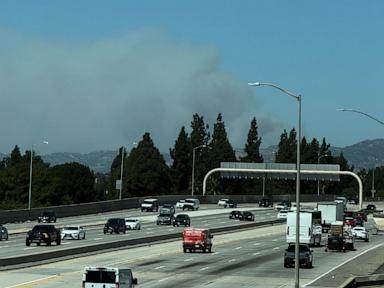
The immediate emergency began on a Monday morning when a tractor blade struck a rock in the dry hills of Simi Valley, emitting a sequence of sparks that caught the roadside brush. Within hours, the Sandy Fire consumed over 800 acres, forced the evacuation of 20,000 residents, and brought suburban life 30 miles northwest of Los Angeles to a standstill. While local news stations broadcast images of helicopters dropping water on single-family homes, the true crisis lies in the fact that California has built itself into a structural trap where routine agricultural and industrial accidents now trigger catastrophic municipal threats.
Emergency crews managed to slow the forward progress of the blaze as evening sea breezes pushed the flames back onto previously burned territory. But the event exposes a deeper structural vulnerability in the region. The issue is no longer just about unpredictable weather or changing global temperatures; it is about how decades of land-use choices and structural bottlenecks have left modern suburban developments exposed to immediate, fast-moving disasters.
The Suburban Edge Under Siege
The Sandy Fire serves as a clear demonstration of the vulnerability of the Wildland-Urban Interface (WUI), the zone where human housing meets undeveloped natural vegetation. When the fire ignited near Simi Valley, the flames did not stay in the wilderness. They moved directly down the slopes toward densely populated pockets of Thousand Oaks, demonstrating how thin the line is between suburban safety and a fast-moving fire front.
Suburban expansions over the last forty years have steadily pushed residential cul-de-sacs directly into historical fire corridors. These hillsides are filled with coastal sage scrub and chaparral, plant communities that have evolved to burn intensely. When a development is built in these valleys, the regional risk profile changes completely. A spark that would have previously burned empty brushland now creates an immediate threat to life, requiring massive asset deployment and sudden structural evacuations.
Municipal infrastructure frequently struggles to handle these rapid transitions from rural brush fire to urban structural defense. When thousands of vehicles attempt to exit a suburban valley simultaneously via two- or three-lane arterial roads, evacuation routes quickly jam.
The Mechanics of a Modern Brush Fire
To understand why the Sandy Fire grew so quickly, one must examine the specific condition of regional fuels. The problem is not simply a lack of moisture, but the cyclical nature of the growth itself. Recent wet winters across Southern California triggered an explosion of fine, flashy fuels—primarily non-native grasses and light brush.
When these grasses dry out during the spring, they become highly flammable. A single spark from heavy machinery can ignite this light material instantly. Once lit, these flashy fuels burn hot and fast, generating enough thermal energy to ignite the heavier, deeper brush like chamise and manzanita.
High winds accelerate this process through ember production. Gusts reaching 30 miles per hour do not just push the flame front; they lift thousands of burning embers and carry them hundreds of yards ahead of the main fire line. When these embers land on dry roofs, plastic backyard furniture, or uncleaned rain gutters, they start new fires instantly. This process, known as spotting, allows a wildfire to bypass standard defensive lines, jumping over highways and firebreaks to compromise homes well behind the active front.
The Deficit of Fuel Modifications
As fire risks grow, the debate over how to protect these border communities has intensified. The response to recent regional disasters has highlighted a clear policy division regarding how communities should prepare for the inevitability of the next spark.
+------------------------+---------------------------------------+---------------------------------------+
| Strategy               | Primary Mechanism                     | Structural Limitations                |
+------------------------+---------------------------------------+---------------------------------------+
| Strategic Fuel Breaks  | Thinning vegetation along borders     | High maintenance costs; vulnerable  |
|                        | to slow down approaching head fires.  | to ember spotting during high winds.  |
+------------------------+---------------------------------------+---------------------------------------+
| Home Hardening         | Modifying building materials, using   | Relies on individual compliance;      |
|                        | ember-resistant vents and templates.  | expensive to retrofit older homes.    |
+------------------------+---------------------------------------+---------------------------------------+
Proponents of aggressive fuel management argue that wide, cleared perimeters are the most effective way to protect suburban developments. The core argument is simple: reducing the volume of burnable material near homes changes the behavior of an approaching fire, dropping a high-intensity head fire down into a lower-intensity ground fire that crews can safely manage.
However, many fire ecologists and urban planners point out that fuel breaks have distinct limitations. During severe wind events, embers regularly fly right over cleared zones, landing directly inside residential neighborhoods. Critics also note that clearing native chaparral often leads to the growth of highly flammable invasive grasses, which dry out faster and ignite more easily than the native plants they replace.
This dynamic suggests that focusing solely on clearing land away from communities is an incomplete strategy. True protection requires a shift toward structural hardening—replacing standard attic vents with ember-resistant designs, installing dual-pane tempered glass, and enforcing strict clearing rules within the immediate 100-foot zone around every house.
The Limits of Suppression
The response to the Sandy Fire involved over 200 personnel, multiple air tankers, and heavy helicopter drops. While these assets are critical for protecting specific structures, relying primarily on an aggressive defense strategy is becoming increasingly unsustainable.
Air drops look impressive on television, but they rarely stop a wind-driven fire on their own. Water and retardant drops are designed to cool the flames and slow the fire's advance, giving ground crews an opening to cut containment lines with hand tools and bulldozers. When winds are strong and visibility is low, aircraft are often grounded, leaving overstretched ground crews as the sole line of defense.
As suburban areas continue to expand into high-risk zones, the cost of these large-scale operations continues to rise, drawing resources away from long-term mitigation and forest health projects. The state remains caught in a reactive cycle, spending billions to fight fires while underinvesting in the systemic planning and infrastructure upgrades needed to prevent these emergencies from threatening homes in the first place.
The evening calm in Simi Valley provided a temporary reprieve for residents, but the underlying vulnerability remains unchanged. Millions of people across Southern California continue to live along these exposed ridges and dry valleys, where safety depends entirely on the hope that no machinery hits a rock, no power line fails, and no campfire is left unattended on a windy morning.