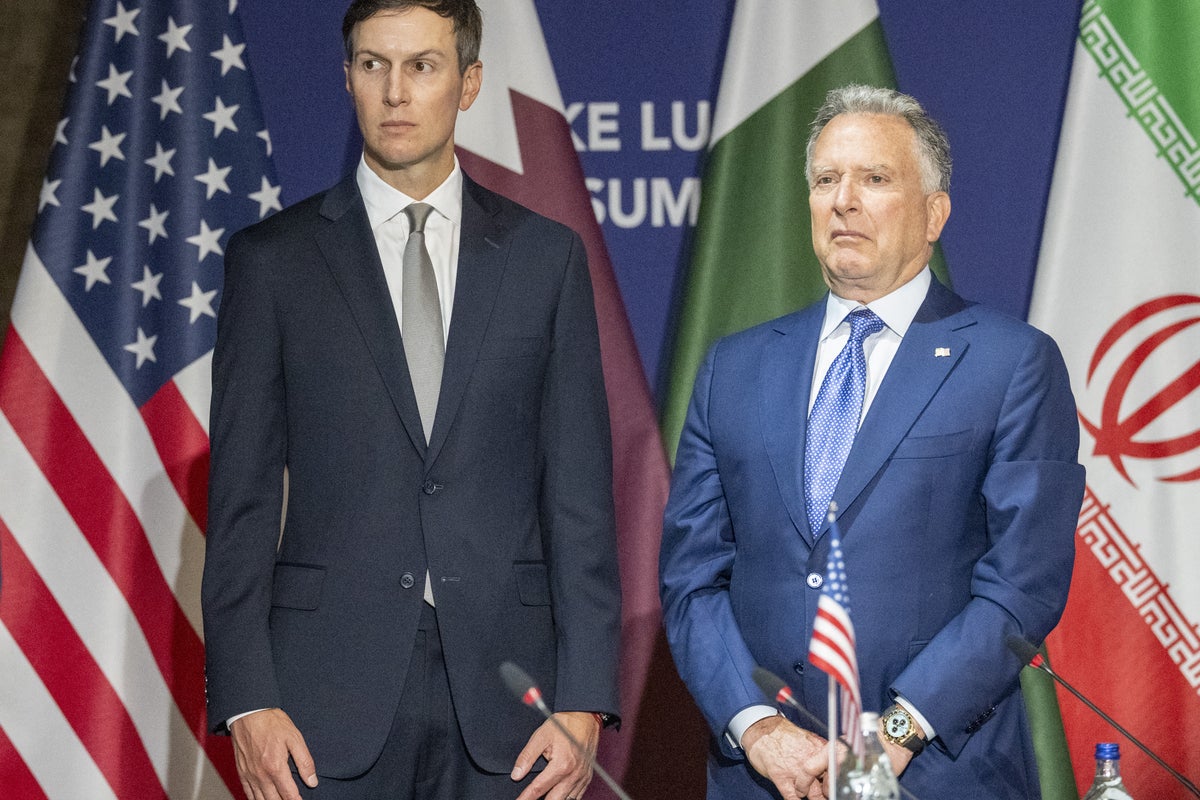
Foreign policy rarely operates through institutional channels alone. Behind every formal diplomatic cable and public State Department briefing lies a shadow network of family loyalties, private-equity connections, and back-channel advisors. When a sitting United States senator publicly warns Donald Trump to sever ties with informal confidants and family members like Jared Kushner amid escalating tensions with Iran, the warning signals a deep structural panic within the foreign policy establishment.
The immediate catalyst is straightforward. As regional conflict in the Middle East threatens to spiral out of control, lawmakers on Capitol Hill are watching the administration's informal lines of communication with acute anxiety. They fear that personal real estate ties, sovereign wealth investments, and family-driven diplomacy are dangerously bypassing traditional diplomatic safeguards. This is not merely a dispute over personnel or White House organizational charts. It is a fundamental clash over who speaks for American power when a single miscalculation could trigger a catastrophic regional war.
To understand why this friction matters, you have to look past the cable news shouting matches and examine how modern foreign policy actually functions.
The Anatomy of Parallel Diplomacy
Parallel diplomacy is an open secret in Washington. Every administration has its kitchen cabinet. Friends, donors, and family members frequently meddle in affairs far outside their official job descriptions. Yet the dynamic shifts dramatically when private financial entanglements overlap with public security crises.
Jared Kushner’s extensive post-White House financial footprint in the Middle East creates an undeniable intersection between private capital and public statecraft. Sovereign wealth funds in the Persian Gulf region have invested billions into Kushner’s private investment firm. When those same regional actors hold high stakes in the outcome of an escalating standoff with Iran, the optics—and the potential conflicts of interest—draw fierce scrutiny from lawmakers charged with oversight.
Senators watching the situation unfold understand a grim historical reality. Wars often start not through grand strategic designs, but through misunderstood signals and conflicting messages sent by unauthorized envoys.
- Official diplomatic channels rely on professional intelligence officers, verified messaging protocols, and allied coordination.
- Informal channels rely on personal trust, closed-door commercial relationships, and zero institutional accountability.
When a crisis erupts, foreign adversaries watch both channels simultaneously. If an adversary suspects that a president's real estate buddy or family member is offering private assurances that contradict official policy, deterrence collapses. Ambiguity breeds miscalculation. And miscalculation in the Strait of Hormuz or across the skies of the Middle East means immediate military escalation.
The Financial Web Behind the Back-Channels
Money dictates proximity in modern politics. The critique from Capitol Hill targets the vulnerability of a commander-in-chief relying on advisors who maintain massive financial dependencies in the very region they are attempting to navigate.
Consider the mechanics of regional investment funds. When multi-billion-dollar commitments flow from Gulf monarchies into American private equity vehicles, a web of mutual financial reliance is cast. Critics argue that this financial symbiosis compromises hard-nosed national security assessments. If an advisor's primary commercial partners have distinct strategic preferences regarding Tehran, can that advisor offer objective counsel in the Oval Office?
Lawmakers asking this question are not operating out of partisan spite alone. They are looking at structural risk. A president surrounded by yes-men and commercial partners is blind to second-order effects.
During previous flare-ups with Iran, the administration leaned heavily on unconventional deal-making mentalities. The underlying assumption was simple. Everything is a negotiation, and every adversary has a price tag. That framework works reasonably well in commercial real estate acquisitions. It fails catastrophically when applied to ideological state actors, proxy networks, and sovereign nations locked in existential security dilemmas.
Why the Senate is Sounding the Alarm Now
The urgency from the legislative branch stems from a realization that traditional guardrails have eroded. The War Powers Act is routinely bypassed or ignored. Congressional oversight is often treated as an inconvenient speed bump rather than a constitutional mandate.
When a senator steps forward to demand the sidelining of family advisors during an active threat environment, they are attempting to force a return to institutional discipline.
The stakes are brutally high. Iran's nuclear infrastructure, its network of regional militias, and the volatile security of global energy shipping lanes form a tinderbox. A single drone strike, a miscalculated cyber attack, or an accidental naval collision can ignite a wide-scale war. In that environment, having unauthorized actors whispering alternative strategies into the ear of the presidency is a grave hazard.
Veteran intelligence analysts note that foreign intelligence services actively map these informal networks. They know who has the president's ear at a private dinner. They know which family member controls secondary business interests. Adversaries exploit these vulnerabilities by feeding tailored narratives through back-channels, knowing that personal relationships often override institutional vetting.
The Illusion of the Outsider Advantage
Populist politics champions the outsider. The core narrative suggests that career diplomats and intelligence bureaucrats are captured by institutional inertia, and that only shrewd businessmen and trusted family members can break through diplomatic gridlock.
This premise contains a dangerous half-truth. Bureaucracy can indeed slow down necessary action. However, bureaucracy also serves as a shock absorber. It filters out erratic impulses, checks raw assumptions against historical precedent, and ensures that policy decisions are vetted by experts who have spent decades studying adversary behavior.
When the outsider model is applied to a high-stakes standoff with a regional power, the lack of structural discipline becomes glaring. There are no minutes taken at private meetings. There are no legal disclosures required for casual phone calls. Accountability vanishes.
The senator's warning highlights a stark choice for the executive branch. Continue operating through opaque, personal networks that prioritize loyalty and commercial alignment over rigorous national security analysis, or restore operational command to institutional frameworks designed to prevent accidental wars.
As regional tensions continue to mount and military assets reposition across the theater, the margin for error shrinks to near zero. The warning from Capitol Hill is not a routine political salvo. It is a desperate flare from inside the machinery of government, signaling that the current trajectory leads straight toward an avoidable catastrophe.