Diplomatic relations rarely shatter over a single afternoon announcement, yet the sudden rupture between Seoul and Kyiv proves that geopolitical patience has strict boundaries. When Ukrainian leadership publicly disclosed the transfer of two North Korean prisoners of war to South Korea during a high-profile address, the move triggered an immediate freeze in bilateral channels. Seoul viewed the public revelation not as a diplomatic victory, but as a severe breach of confidentiality that exposed sensitive intelligence operations and complicated domestic security postures.
The fallout was swift. Seoul recalled its ambassador and subsequently withdrew critical embassy personnel from Kyiv. Beneath the diplomatic posturing lies a much deeper, structural friction that analysts have tracked for months. South Korea possesses one of the most formidable defense manufacturing sectors on the planet, churning out artillery shells and sophisticated hardware that European and Ukrainian strategists desperately covet. Yet Seoul has maintained a stringent statutory prohibition against sending lethal weapons directly to nations engaged in active conflicts. This self-imposed restriction is not accidental. It is anchored in Seoul’s delicate geopolitical calculus regarding Pyongyang, Moscow, and the volatile security equilibrium of the Korean Peninsula.
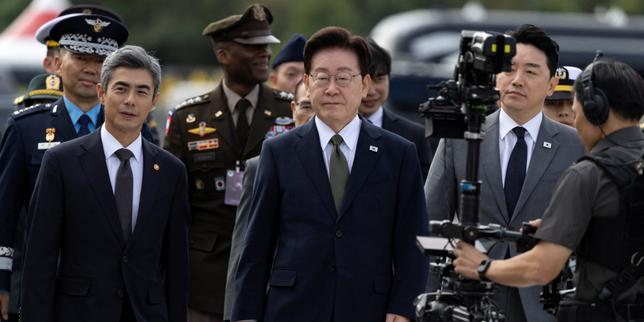
The arrival of North Korean troops and technical units on European battlefields fundamentally altered how policymakers in Seoul view the conflict. For the administration of South Korean President Lee Jae Myung, the expanding military partnership between Russia and North Korea represents a direct, unmistakable threat to national security. Intelligence sharing between Seoul and Kyiv became a vital pipeline for tracking Pyongyang's military capabilities, operational methods, and the hardware being traded in exchange for Russian assistance. Exposing these mechanics prematurely or using them for international grandstanding undermines the covert intelligence-gathering network that South Korea relies upon to monitor its northern neighbor.
When Ukrainian President Volodymyr Zelenskyy went public with the prisoner transfer at the United Nations General Assembly, he sought to internationalize the direct involvement of North Korean soldiers. Kyiv wanted to force a reluctant Seoul out of its diplomatic ambiguity and into a more explicit alignment with Western security frameworks. That strategy miscalculated South Korea's domestic political sensitivities. Seoul operates under a framework of pragmatic interest-led diplomacy. Publicly forcing South Korea's hand boxed its leadership into a corner, leaving them little choice but to demonstrate institutional displeasure to deter similar unilateral disclosures.
The dispute also highlights a widening chasm between European security expectations and East Asian realities. European capitals view the war in Ukraine as the defining existential security test of the decade, expecting all democratic partners to fall into a unified coalition. Seoul, however, must manage a nuclear-armed adversary just across the demilitarized zone. While South Korea has allocated substantial economic and humanitarian assistance to Ukraine, its primary imperative remains the prevention of a destabilizing escalation on the Korean Peninsula. Remaining entirely blind to Russian diplomatic channels or cutting off future leverage with Moscow is viewed in Seoul as an unnecessary geopolitical hazard.
Compounding this tension is the commercial and industrial dimension of South Korea's footprint in Europe. The rapid expansion of defense exports—colloquially termed K-Defense—has made South Korean armor, rocket systems, and artillery pieces foundational to the ongoing rearmament of Eastern Europe, particularly through major contracts with Poland. European strategists often assume that commercial trade in military hardware implies an automatic political subordination to European strategic directives. The current crisis exposes the flaw in that assumption. South Korean defense firms operate on strict export guidelines and sovereign commercial interests that do not automatically bend to Ukrainian tactical desires or public relations campaigns.
Diplomatic channels have not completely severed. Backchannel communications between foreign ministers continue even as embassy staffing remains thin, and both governments recognize the absolute necessity of maintaining intelligence links to counter the North Korea-Russia axis. Budgetary allocations for humanitarian assistance into the coming fiscal year indicate that Seoul has no intention of abandoning Kyiv entirely.
The crisis serves as a sobering reminder of the limits of coercive diplomacy among nominal allies. Ukraine required a high-profile diplomatic win to maintain global focus on Pyongyang's deployment of troops to the front lines. South Korea required discretion to protect its intelligence assets and manage the fragile security architecture of East Asia. By sacrificing discretion for the sake of an international headline, Kyiv alienated a crucial partner sitting on the exact industrial arsenal it needs most.
Rebuilding trust will require more than temporary ministerial handshakes or symbolic financial packages. It demands an acknowledgment from European and Ukrainian leaders that South Korea's security calculus is dictated by its own immediate neighborhood, where the threat of conflict remains an everyday reality rather than a distant European frontier. Until that structural reality is fully digested in Kyiv, transactions between the two states will remain transactional, tense, and perpetually vulnerable to the next political surprise.