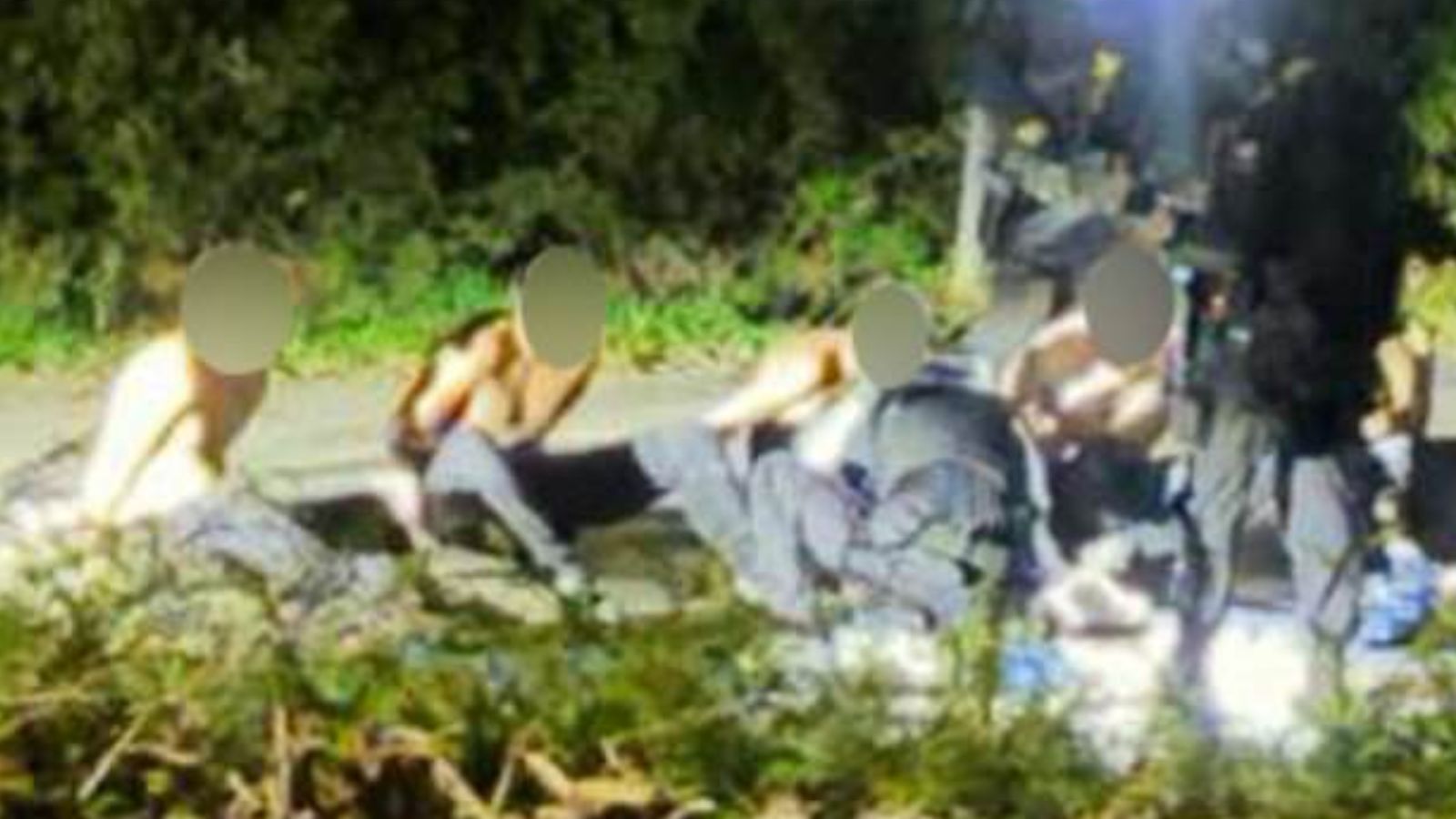
The security perimeter protecting critical military assets across the United Kingdom is routinely portrayed as an impenetrable matrix of high-resolution thermal optics, automated license plate recognition, and state-of-the-art signals intelligence. Yet, when a sophisticated, foreign-directed terror plot targeting the United States Air Force base at RAF Fairford reached its critical execution phase, the multi-million-pound surveillance apparatus did not sound the alarm. A local farmer returning home from a social gathering did.
The incident in the Gloucestershire village of Whelford exposed an uncomfortable reality for national security planners. Modern counter-terrorism infrastructure, heavily weighted toward digital intercept and algorithmic threat detection, remains dangerously reliant on the raw, analog intuition of people who actually live on the land.
The Anatomy of a Near Miss
In the dead of night, three utility-style vans blocked a narrow rural lane near the perimeter of RAF Fairford. Inside those vehicles were the components of a catastrophic attack, later tied by federal prosecutors to an overseas conspiracy orchestrated through coded messages. The operatives, moving with urgency in the dark, had positioned themselves within striking distance of a strategic staging ground for American heavy bombers.
When the farmer and her husband encountered the blockade, the operation nearly went undiscovered simply because it blended into the mundane background of rural logistics until human observation intervened. The vehicles were not parked neatly off the tarmac; they were jammed in an erratic configuration that defied standard rural behavior.
Human pattern recognition is a difficult thing to replicate in software. A machine-learning algorithm scanning a roadside camera feed might classify a parked white van as a delivery vehicle, a utility crew, or farm traffic. It takes a local inhabitant—someone who knows every gatepost, every tractor turning circle, and the precise rhythm of midnight traffic in a village of a few hundred souls—to spot the friction point where reality stops making sense.
The farmer’s immediate instinct to dial the local base police line, only to encounter an unanswered ring tone, underscores a systemic vulnerability in outer-ring base defense. If local assets are uncrewed or slow to respond, the friction of bureaucracy creates a window of vulnerability. Fortuitously, her pivot to the 999 emergency system bypassed the military red tape, initiating a rapid local police deployment that resulted in the detention of five suspects within minutes.
The Illusion of Total Surveillance
Governments love the narrative of total technological awareness. Billions are funneled into cyber defense, satellite tracking, and international signals intelligence. Following the arrests, high-ranking officials offered competing narratives regarding the operation, with some international leaders suggesting the cell had been under electronic surveillance for an extended period, while domestic investigators grappled with the chaotic reality on the ground.
If the state was indeed tracking the principals behind the plot, the fact that an active bomb-making and reconnaissance team could successfully maneuver multiple vans laden with explosive precursors directly up to the perimeter fence of a major strategic installation proves that remote monitoring is fundamentally incomplete. Electronic surveillance tells you what signals are moving across a network; it does not stop a van from turning down a dark Gloucestershire lane.
When intelligence agencies rely entirely on digital breadcrumbs, they create blind spots that low-tech operational security can easily exploit. Conspirators talking in coded phrases across international borders can evade automated keyword filters, but they cannot code away their physical mass when they park across a country road in front of someone who knows that road by heart.
The Cost of Rural Isolation
Rural communities adjacent to sensitive military installations occupy a strange geopolitical space. They are expected to absorb the security risks associated with hosting foreign power projection assets while enduring the hollowing out of local policing and emergency response infrastructure.
The farmer who made the call expressed astonishment that her local vigilance was the primary line of defense against a major international terrorist incident. That astonishment is a indictment of rural security budgeting. As centralized police forces consolidate stations and pull bobbies off country beats, the eyes and ears that protect critical national infrastructure are thinning out.
Relying on accidental heroism is not a defense strategy. If national security relies on the probability of a farmer driving down a specific lane at 1:30 in the morning, the system has already failed its primary diagnostic test.
The plot against RAF Fairford was disrupted not because the digital net caught the fish, but because the fish tangled themselves in the local weeds. Until defense planners reconcile the gap between high-altitude intelligence and boots-on-the-ground rural awareness, the defense of the realm will continue to depend on ordinary citizens happening to look out their windshields at the exact right moment.
Watch coverage of the RAF Fairford security incident
This video report provides additional context regarding the civilian accounts and the initial police response surrounding the security lockdown near the airbase.


