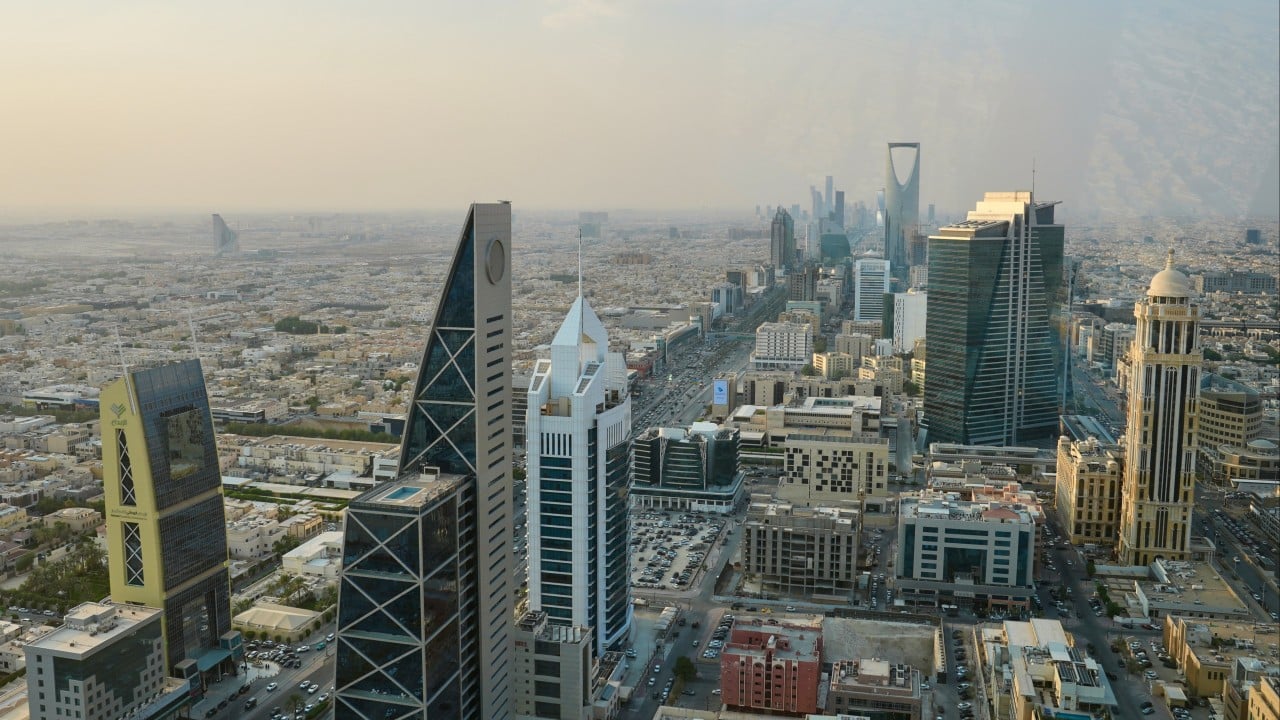
Saudi Arabia has pushed back its flagship Future Investment Initiative, widely known as Davos in the Desert, to 2027 in the wake of deadly attacks that rattled regional confidence and exposed acute security vulnerabilities. The postponement strips Riyadh of its most reliable annual showcase for sovereign capital, foreign dealmaking, and state-backed ambition.
On paper, a calendar shift looks like routine crisis management. In practice, delaying a high-profile gathering of global financiers, executives, and policymakers signals a deeper reckoning over risk pricing, regional deterrence, and how much volatility foreign boardrooms are willing to tolerate.
Why Deadly Attacks Turned a Flagship Forum into a Liability
Mega-conferences thrive on choreographed certainty. Private jets land on schedule, panel moderators keep time, and chief executives sign memoranda of understanding beneath warm spotlights while security teams operate invisibly around the perimeter.
Deadly violence shatters that illusion immediately. Even when threats are concentrated away from conference halls or intercepted by air defenses, the psychological calculus inside corporate risk committees changes overnight. Insurance underwriters recalculate war-risk premiums, corporate travel departments trigger automatic restrictions, and general counsels ask whether attending a high-visibility gathering in a tense neighborhood creates unacceptable exposure.
For Riyadh, the stakes are unusually high because Davos in the Desert is not merely an industry trade show. It is a centerpiece of Vision 2030, the sweeping economic transformation program designed to reduce the kingdom’s reliance on oil revenues by attracting foreign direct investment, global talent, and commercial partnerships.
When security incidents strike, the damage extends far beyond canceled hotel blocks. A summit built to project stability and momentum cannot easily stage business-as-usual optimism while mourners bury the dead and intelligence agencies scramble to contain escalation.
The Gap Between Hardened Perimeters and Perceived Safety
Governments often confuse physical perimeter control with market confidence. A capital city can have layered air defenses, checkpoints, and elite protection units while still failing the boardroom test of perceived safety.
Executives do not evaluate risk solely through tactical maps. They watch airspace closures, shipping lanes, diplomatic evacuations, and retaliatory cycles. If a regional conflict threatens energy infrastructure, maritime chokepoints, or neighboring states, a conference badge in Riyadh does not insulate a company’s supply chain or balance sheet.
Consider a hypothetical example involving a European industrial manufacturer planning to announce a joint venture at the summit. Before the attacks, the company’s leadership saw the event as an efficient venue to lock in local financing and political backing. Afterward, the board faces a harder question: if regional escalation disrupts freight corridors or spikes energy costs, does locking in capital commitments right now make commercial sense?
That hesitation is the real adversary Riyadh confronts. Security forces can guard a venue. Convincing skeptical capital to stay put is far harder.
What Postponement Really Costs Sovereign Ambition
Pushing an event to 2027 buys time. It also carries a steep opportunity cost that officials rarely admit publicly.
Global capital moves fast, and competing financial hubs do not pause their calendars out of sympathy. When a marquee forum is delayed, scheduled negotiations stall, side meetings evaporate, and rival capitals quietly pitch themselves as calmer alternatives for regional headquarters and cross-border deals.
Sovereign Capital and the Domestic Rebalancing Act
Saudi Arabia’s Public Investment Fund sits at the center of the kingdom’s economic pitch. For years, massive sovereign balance sheets and ambitious giga-projects gave Riyadh extraordinary convening power; bankers and founders showed up because serious money was on the table.
Yet sovereign wealth is not an endless buffer against external shocks and domestic spending demands. Financing mega-developments, infrastructure upgrades, and industrial localization requires careful pacing, disciplined capital allocation, and steady external partnerships.
When external shocks force a postponement, Riyadh faces a delicate balancing act. Domestic political expectations demand visible strength and decisive security responses, while international investors look for predictable fiscal discipline and de-escalation.
A delayed summit does not erase capital needs. It compresses the timeline for proving that stability can be restored without sacrificing economic momentum.
Reputational Friction in Global Boardrooms
Over three decades covering sovereign finance and geopolitical shocks, one pattern repeats with weary consistency. Markets rarely panic on day one of a crisis; they reprice slowly as second-order consequences accumulate.
First come flight reroutes and heightened security advisories. Next come delayed vendor decisions and cautious credit committees. Only later do executives realize how much informal relationship-building was lost when face-to-face gatherings were shelved.
High-level summits compress months of lobbying, due diligence, and relationship-building into a few intense days. Losing that window forces dealmakers back onto video calls and slow diplomatic channels, where trust is harder to build and easier to lose.
The Overlooked Factors Behind the Calendar Shift
Most coverage treats a summit cancellation or delay as a simple cause-and-effect story: deadly attacks happened, so the event was moved. That explanation is true as far as it goes, yet it leaves out crucial operational and diplomatic mechanics.
Staging a global gathering of thousands of delegates requires months of advance logistics. Protocol teams, diplomatic security details, media operations, hospitality partners, and translation services all depend on lead times that evaporate during an active security crisis.
Wait until the dust settles, and you may miss the narrow window required to vet guests, coordinate foreign protection teams, and guarantee safe transit corridors. Making an early call to push the event to 2027 avoids the embarrassment of last-minute dropouts by prominent speakers and delegations.
Diplomatic Signaling Inside a Tense Neighborhood
A postponement also functions as diplomatic signaling. Hosting a celebratory investment showcase amid deadly regional violence can strike foreign partners—and domestic audiences—as tone-deaf or overly defiant.
By shifting to 2027, Riyadh creates breathing room to focus on security coordination, crisis response, and behind-the-scenes diplomacy without turning every panel discussion into a referendum on regional survival. It allows officials to manage escalation away from live television cameras and hostile headlines.
There is also a pragmatic question of credibility. Promising a smooth, high-energy gathering weeks after deadly attacks invites scrutiny if another incident occurs nearby. Setting the bar for 2027 gives authorities a longer runway to demonstrate containment and deterrence.
Comparing Short-Term Delays Against Structural Shifts
Not every event postponement signals permanent decline. Sometimes a delay is a smart tactical pause; other times it marks a structural turning point in how international business views a region.
| Dimension | Tactical Pause to 2027 | Structural Shift in Risk Perception |
|---|---|---|
| Primary Driver | Immediate security aftermath and logistics lead times | Persistent regional escalation and supply-chain exposure |
| Investor Reaction | Deferring announcements and travel while monitoring stability | Re-evaluating long-term capital allocation and risk premiums |
| Diplomatic Effect | Creating space for crisis management and quiet outreach | Complicating regional integration and cross-border confidence |
| Key Metric to Watch | Whether 2027 bookings and speaker lists rebound strongly | Changes in insurance costs, FDI inflows, and corporate presence |
Reading the difference requires looking past press releases. If attacks remain isolated and deterrence holds, deferred deals can still materialize once confidence returns. If violence recurs or widens, a temporary delay becomes part of a longer-term risk repricing across the Gulf.
What Investors and Policymakers Should Watch Next
Anyone tracking Gulf markets and geopolitical risk should focus on concrete indicators rather than rhetorical assurances. Rhetoric is cheap during a crisis; hard commitments tell the truth.
Watch foreign direct investment filings and joint-venture closures over the coming quarters. Companies that genuinely believe in the long-term thesis will keep executing quietly even without a stage, whereas fair-weather entrants will stall or quietly walk away.
Pay close attention to insurance and logistics signals as well. Maritime transit rates, aviation advisories, and sovereign credit spreads offer a far clearer read on perceived danger than any keynote speech.
The Gray Areas No One Wants to Price In
Geopolitical risk analysis has real limits, and pretending otherwise is bad journalism. Analysts cannot know with certainty how rival actors will calibrate future strikes, how diplomatic backchannels will evolve, or whether domestic pressures will push governments toward restraint or escalation.
Even well-resourced states face dilemmas where every option carries a cost. Heavy-handed retaliation can deter future attacks, yet it can also trigger wider cycles of violence that hurt trade and tourism. Restraint can preserve calm in the short term, yet critics may read it as weakness.
For foreign executives, there is no risk-free choice either. Pulling back entirely from a major market can cede ground to competitors willing to weather storms, while charging ahead blindly can leave assets and personnel exposed to sudden shocks.
How to Judge Whether 2027 Restores Momentum
A year is a long time in geopolitics, and 2027 will arrive faster than planners expect. Whether Davos in the Desert returns with its old swagger or feels like a cautious holding pattern will depend on verifiable realities on the ground, not slick promotional videos.
Look at who commits early to the 2027 roster. When top-tier global banks, industrial leaders, and multilateral institutions put their names on the program well in advance, it signals that risk committees have signed off on the operating environment.
Look also at how Riyadh frames the gathering when it returns. A forum that pairs ambition with sober realism—acknowledging regional security challenges rather than brushing past them—will command far more respect in hardened boardrooms than empty bravado.
Security cannot be declared into existence by a conference schedule, and capital will only return in full force when leaders see durable calm backed by credible deterrence.