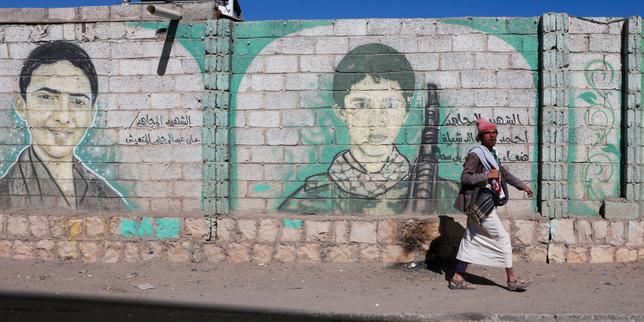
The skies above Riyadh and the holy sites of western Saudi Arabia are no longer sanctuary. When ballistic missiles and explosive drones penetrate airspace that billions look toward with reverence, the architecture of Gulf security shifts overnight. For years, the kingdom’s defense strategy relied on multi-billion-dollar Western acquisitions and an assumption of technological deterrence. That assumption fractured when sustained Houthi aerial barrages exposed deep vulnerabilities in domestic missile defense coverage. Riyadh found itself facing a relentless asymmetric threat from Yemen, prompting a frantic diplomatic and military pivot that rewrote regional alliances.
To understand why the House of Saud took the unprecedented step of activating the Mecca Pact with Turkey and Pakistan, one must look closely at the changing calculus of regional warfare. The traditional model of buying sophisticated hardware from Washington and London is broken. Hardware requires long supply chains, political oversight, and prohibitive replacement costs. Meanwhile, low-cost loitering munitions and precision guidance packages manufactured cheaply continue to bleed sophisticated economies through attrition. When every interception costs millions of dollars while the incoming threat costs a fraction of that, time works against the defender. Riyadh needed active boots, specialized electronic warfare integration, and an immediate operational partner that could absorb shocks without waiting for congressional approval from Western capitals.
Enter Ankara and Islamabad. The security pact signed in the holy city brings together three distinct military heavyweights. On paper, the combined weight of their active personnel, armored units, and air wings creates a formidable deterrent. Yet, bringing Turkish drones and Pakistani tactical expertise into the Arabian theater introduces massive operational frictions. Pakistan’s military leadership has historically walked a tightrope, eager to protect the kingdom’s territorial integrity while fiercely guarding against getting bogged down in an intractable Yemeni quagmire. Ankara’s involvement, driven by a mixture of defense industrial export ambitions and regional stabilization goals, centers heavily on command-and-control support, electronic countermeasures, and intelligence sharing rather than heavy ground combat deployments.
The timing of this pact coincides with a broader Middle Eastern theater unravelling at the seams. With tensions boiling across the Bab al-Mandab strait and the southern approaches of the Red Sea slipping away from pro-Riyadh proxy forces, the strategic geography was turning toxic. Houthi ground advances toward Aden and the critical coastal strips left the kingdom's southern flank completely exposed. Riyadh realized that relying solely on fractured Yemeni local militias was a losing bet. The dismissal of top coalition commanders signaled an internal recognition that the old playbook was dead.
Yet, foreign reinforcements carry their own heavy baggage. Bringing foreign military elements onto Saudi soil transforms a localized border conflict into a multi-state proxy theater with unpredictable tripwires. Islamabad must navigate domestic political sensitivities regarding foreign deployments, while Turkish planners must weigh the risk of direct escalation with Iran's network of regional actors. The deterrence equation has grown infinitely more complex.
The missiles falling near the capital are symptoms of a deeper geopolitical disease. Buying time with foreign military pacts buys safety only if the underlying political settlements catch up with battlefield realities. Until a durable diplomatic off-ramp is forged in Yemen, no amount of external reinforcements will completely lock down the skies over the kingdom.
The video above outlines the strategic implications of the tripartite security agreement and the shifting military balance in the region.