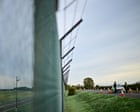
The perimeter fence of RAF Fairford in Gloucestershire has long stood as a quiet frontier of global power projection. When United States Air Force assets occupy its tarmac, the base transforms into a critical node of transatlantic defense. Last September, that quiet was violently shattered. A series of emergency calls and subsequent counter-terrorism operations exposed a sophisticated foreign sabotage network operating within the heart of the British countryside. What initially presented as a localized security scare quickly unraveled into an international espionage crisis, linking back-alley operatives in London to state-backed handlers directing chaos from abroad.
For decades, the mechanics of domestic counter-terrorism focused primarily on self-starting ideological extremists or centralized cells planning mass-casualty attacks. Modern state-backed proxy sabotage operates under an entirely different logic. Foreign intelligence services increasingly rely on decentralized, low-level contractors, criminal proxies, and opportunistic intermediaries. By employing local actors to conduct reconnaissance, procure vehicles, and cache basic incendiary materials, state sponsors maintain operational deniability.
When Gloucestershire Constabulary intercepted three suspicious vans near the airfield on September 27, they did not stumble upon a masterclass of military engineering. They found basic logistics: rental transport, communication gear, and a barrel of petrol. Yet the simplicity of the materials belied the gravity of the directive. Federal indictments filed later by the United States Department of Justice detailed how overseas handlers used encrypted video messaging to coordinate targets, urging proxies on the ground to execute destructive operations with minimal preparation.
The geographic dispersion of the suspects was striking. The individuals initially detained by British counter-terrorism police were young men hailing from various London boroughs, illustrating how modern networks recruit through digital anonymity rather than traditional radicalization hubs. Handlers sitting thousands of miles away can orchestrate kinetic disruption across European borders by sending cryptocurrency payments and remote instructions. The local operatives become disposable components in a wider strategy of psychological attrition.
Intelligence analysts tracking these developments recognize a fundamental shift in how adversaries test Western resolve. Rather than risking direct military confrontation, state actors utilize gray-zone warfare—cyber attacks, domestic arson, and probes of military infrastructure—to bleed resources and instill persistent anxiety. RAF Fairford became a prime target precisely because of its strategic utility to American and allied forces. Forcing the Pentagon to temporarily withdraw high-value bomber aircraft from the base delivered an asymmetric victory to the orchestrators, achieving disruption without ever launching a missile.
The handling of the investigation by British authorities revealed the friction inherent in balancing public safety with long-term intelligence gathering. The rapid release on police bail of the initial suspects detained near the Gloucestershire base drew intense public scrutiny. Critics questioned why individuals linked to a major terrorism incident walked out of custody so quickly. Counter-terrorism chiefs defended the maneuver as an operational necessity, prioritizing the disruption of the wider network over immediate custodial charges. Subsequent charges brought under the National Security Act and international indictments later vindicated the cautious legal pacing, proving that domestic arrests often serve as opening salvos in a much broader cross-border chess match.
Securing open democratic societies against state-directed proxies remains an intractable puzzle for modern law enforcement. Open borders, digital encryption, and the ease of hiring domestic intermediaries create a permanent vulnerability. Traditional counter-intelligence was built to catch classical spies passing microfilm in dark alleys. Today's threat matrix involves remote-controlled arsonists and hastily assembled sabotage teams operating on instructions received through consumer messaging apps.
The Gloucestershire incident serves as an uncomfortably clear window into the contemporary security landscape. British soil has effectively become a theater for simmering geopolitical conflicts fought by proxy. As intelligence agencies adapt to counter these distributed networks, the line separating domestic criminal activity from international warfare continues to blur, leaving critical infrastructure exposed to the next invisible hand.