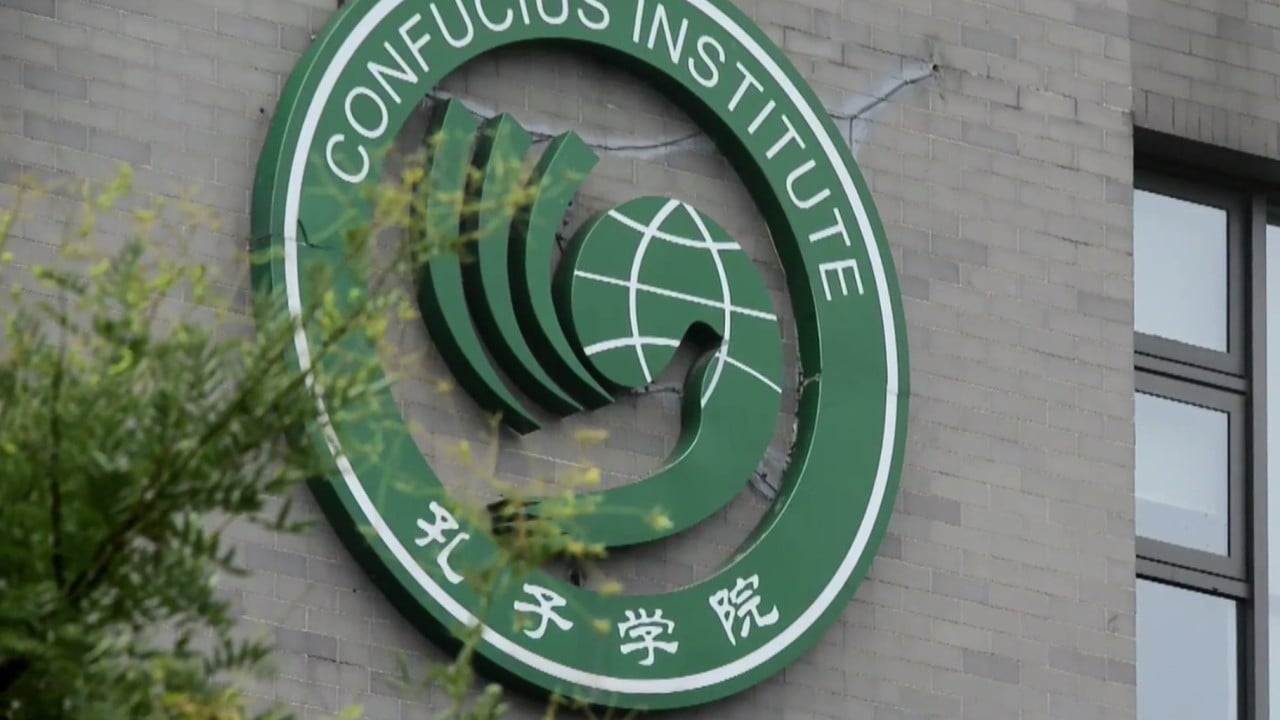
The Pentagon is closing the final loopholes on foreign-funded academic centers. Under a renewed Department of Defense directive led by Secretary Pete Hegseth, universities hosting Confucius Institutes—or any rebranded successors tied to the Chinese Communist Party—face an immediate cutoff of federal defense research dollars.
This isn't a new fight, nor is it simply about Mandarin lessons. For over a decade, national security hawks have warned that Beijing uses cultural and language programs on American soil to monitor overseas students, sanitize discussions around Taiwan and Tiananmen Square, and gain proximity to federally funded laboratories. What changed under Hegseth is the enforcement mechanism. Previous administrations relied on disclosure rules and slow-moving compliance reviews that universities routinely bypassed by changing a center's name. The new offensive targets the money directly, forcing university presidents to choose between millions in Defense Department grants and Beijing’s soft-power checkbook.
The Anatomy of a Rebrand
To understand why the Pentagon felt compelled to escalate, you have to look at how universities dodged the first wave of restrictions. In 2018 and 2021, Congress passed provisions in the National Defense Authorization Act (NDAA) barring DoD funding for schools hosting Confucius Institutes. On paper, the policy worked. Over a hundred centers shut their doors across the United States between 2018 and 2023.
In practice, many never truly left.
Investigations by congressional committees and independent watchdogs revealed a predictable shell game. Beijing quietly retired Hanban, the Ministry of Education affiliate that originally ran the institutes, and transferred oversight to a newly minted non-governmental organization called the Center for Language Education and Cooperation. American universities followed suit. They dissolved their formal Confucius Institute contracts, kept the exact same Chinese partner universities, retained the same Beijing-vetted instructors, and reopened down the hall under benign-sounding names like "Centers for Global Understanding" or "Asian Language Initiatives."
The paperwork changed. The funding pipelines and curriculum controls largely did not.
Hegseth’s directive strips away that semantic cover. Rather than relying on a static blacklist of named organizations, Pentagon procurement officers are now instructed to trace the underlying institutional relationships. If a university maintains a joint academic venture, faculty exchange, or cultural center bankrolled by entities linked to the Chinese state apparatus—including the United Front Work Department—its eligibility for defense research contracts is suspended.
Follow the Pentagon’s Checkbook
Money talks loudest in higher education, and the Department of Defense is one of the biggest spenders on American campuses. Every year, the Pentagon distributes billions of dollars to universities for basic and applied research in artificial intelligence, hypersonics, quantum computing, materials science, and biotechnology.
For top-tier research institutions, losing DoD access is an existential financial threat. A single Confucius Institute typically brought a university between $100,000 and $200,000 annually, alongside free teaching staff. By contrast, a single multi-year Pentagon research grant can easily exceed $10 million, covering not just lab equipment and graduate stipends, but massive administrative overhead fees that keep entire university departments afloat.
When the financial stakes were theoretical, university administrators stalled. They argued that cutting ties with Chinese institutions infringed on academic freedom and hindered cross-cultural dialogue. Now, with procurement officers actively auditing sub-recipients and threatening immediate clawbacks, those philosophical objections have evaporated overnight.
Yet the crackdown exposes a structural vulnerability in how American science is funded. For decades, universities grew accustomed to taking money from both Washington and Beijing, treating federal defense grants and foreign cultural sponsorships as separate buckets that never touched. The Pentagon’s stance is that on a modern research campus, those buckets sit in the exact same room. A visiting scholar funded by a state-backed Chinese entity might not have security clearance to enter a classified defense lab, but they share faculty lounges, attend the same departmental seminars, and collaborate with the same graduate researchers working on dual-use technologies.
The Counter-Argument From the Quad
Not everyone in Washington or academia believes a blunt financial ban is the smartest way to counter Beijing. Critics of the Hegseth approach—including former intelligence officials and veteran China scholars—warn that treating every cultural exchange as an espionage front risks blinding the United States to its primary strategic competitor.
The core problem is linguistic and cultural literacy. At the exact moment geopolitical tensions with China are peaking, the number of American students studying Mandarin and living in mainland China has plummeted to historic lows. Closing down Chinese-funded language programs without providing federal alternatives creates a massive talent vacuum. You cannot effectively analyze, deter, or negotiate with a rival superpower if your diplomats, intelligence analysts, and military officers cannot read its primary sources or understand its internal political debates.
There is also the very real risk of collateral damage. Past federal crackdowns on academic espionage, most notably the Justice Department's China Initiative launched during the first Trump administration, collapsed under the weight of prosecutorial overreach. Several high-profile cases against Chinese-American scientists fell apart in court because investigators confused routine administrative disclosure errors with intentional intellectual property theft. That history left deep scars across Asian-American academic communities and prompted prominent researchers to leave the United States altogether.
If Pentagon auditors apply the new directive clumsily, universities may simply sever all ties with Chinese scholars—even independent dissidents or researchers working on non-sensitive climate and public health projects—out of sheer bureaucratic fear.
Beijing’s Next Move
Beijing is unlikely to pack up its soft-power apparatus and go home. Historically, whenever Western governments close one avenue of influence, the Chinese state adapts by decentralizing its operations.
Instead of formal, branded centers inside major research universities, intelligence analysts expect Beijing to shift its focus toward three less visible channels:
- K-12 School Districts: Local school boards rarely receive Pentagon research grants, making them largely immune to DoD financial leverage. Through sister-city agreements and "Confucius Classrooms," Chinese educational affiliates have quietly embedded curriculum materials and visiting teachers in public high schools across the country, flying well beneath federal radar.
- Private Foundations and Alumni Networks: Rather than wiring money directly from a Beijing ministry to a university bursar, funding can be routed through sympathetic overseas business associations, alumni groups, or third-party non-profits that obscure the original state sponsor.
- Non-Defense Universities: Smaller liberal arts colleges and regional state schools that do not compete for Pentagon engineering grants remain open territory for cultural partnerships, allowing Beijing to maintain a domestic foothold and influence future policymakers early in their careers.
What Comes Down to Compliance
The success or failure of Hegseth's offensive will ultimately be decided not in press briefings, but in the unglamorous trenches of university compliance offices and Pentagon auditing divisions. Writing a strict directive is easy. Enforcing it across hundreds of decentralized, fiercely independent academic institutions is another matter entirely.
Universities are notoriously opaque bureaucracies. A dean in the humanities department rarely knows what contracts a principal investigator in the aerospace engineering lab has signed, and neither of them routinely coordinates with the office handling international memorandums of understanding. Beijing exploited that institutional blindness for twenty years.
To make the ban stick, the Pentagon must build an auditing apparatus capable of tracking sub-tier agreements without paralyzing legitimate scientific research. At the same time, Congress will have to decide whether it is willing to put federal money on the table to replace the language and area-studies programs it is forcing schools to shut down. Dismantling Beijing’s influence network on American campuses removes a clear national security blind spot, but leaving an empty classroom in its place is a strategic vulnerability all its own.