On Tuesday afternoon, July 21, 2026, a public hostage situation at Westview Shopping Centre in North Vancouver escalated into a fatal police shooting within minutes. The suspect was pronounced dead at a regional hospital following a high-stakes sequence that involved a knife attack in a crowded fast-food joint, a citizen intervention, multiple car collisions, a fuel station threat, and an attempted commandeering of an emergency vehicle. The British Columbia Independent Investigations Office has launched a full inquiry into the fatal encounter.
The immediate answer to how a routine suburban shopping trip turned into a fatal encounter lies in the speed of the suspect's rapid escalation across multiple zones of Westview Plaza. Within a tiny timeframe, the unidentified man shifted from brandishing a blade inside a McDonald's to orchestrating a multi-vehicle crash, threatening self-immolation at a gas station, and attempting to breach an active-duty law enforcement vehicle.
When Citizen Intervention Alters the First Response Timeline
The sequence of events began inside a busy McDonald's location at Westview Shopping Centre, where an armed man grabbed an employee and held a knife directly to her throat. While most bystanders predictably fled the building, local resident Arman Abadi chose to step directly into the strike zone. Abadi waited for a momentary shift in the suspect's posture, caught him off guard from behind, disarmed the suspect, and slid the blade far out of reach beneath a nearby dining table.
This immediate physical intervention succeeded in protecting the hostage, but it forced the assailant into an unpredictable, outward flee response. Stripped of his leverage inside the establishment, the suspect sprinted into the surrounding parking lot and commandeered a civilian vehicle. Rather than driving away smoothly, the suspect slammed into several parked vehicles, creating immediate structural chaos and attracting intense public scrutiny.
The High Risk Dynamics at the Fuel Pump
Abandoning the battered vehicle, the suspect moved directly toward an adjacent gas station within the plaza. Eyewitnesses reported seeing him attempt to douse himself with gasoline, a violent act that drastically escalated the threat environment for every civilian and responding unit nearby. Gasoline vapors represent an extreme explosive hazard; any electrical discharge—including static electricity or standard tactical equipment—can trigger an immediate, lethal firestorm in close proximity to fuel storage infrastructure.
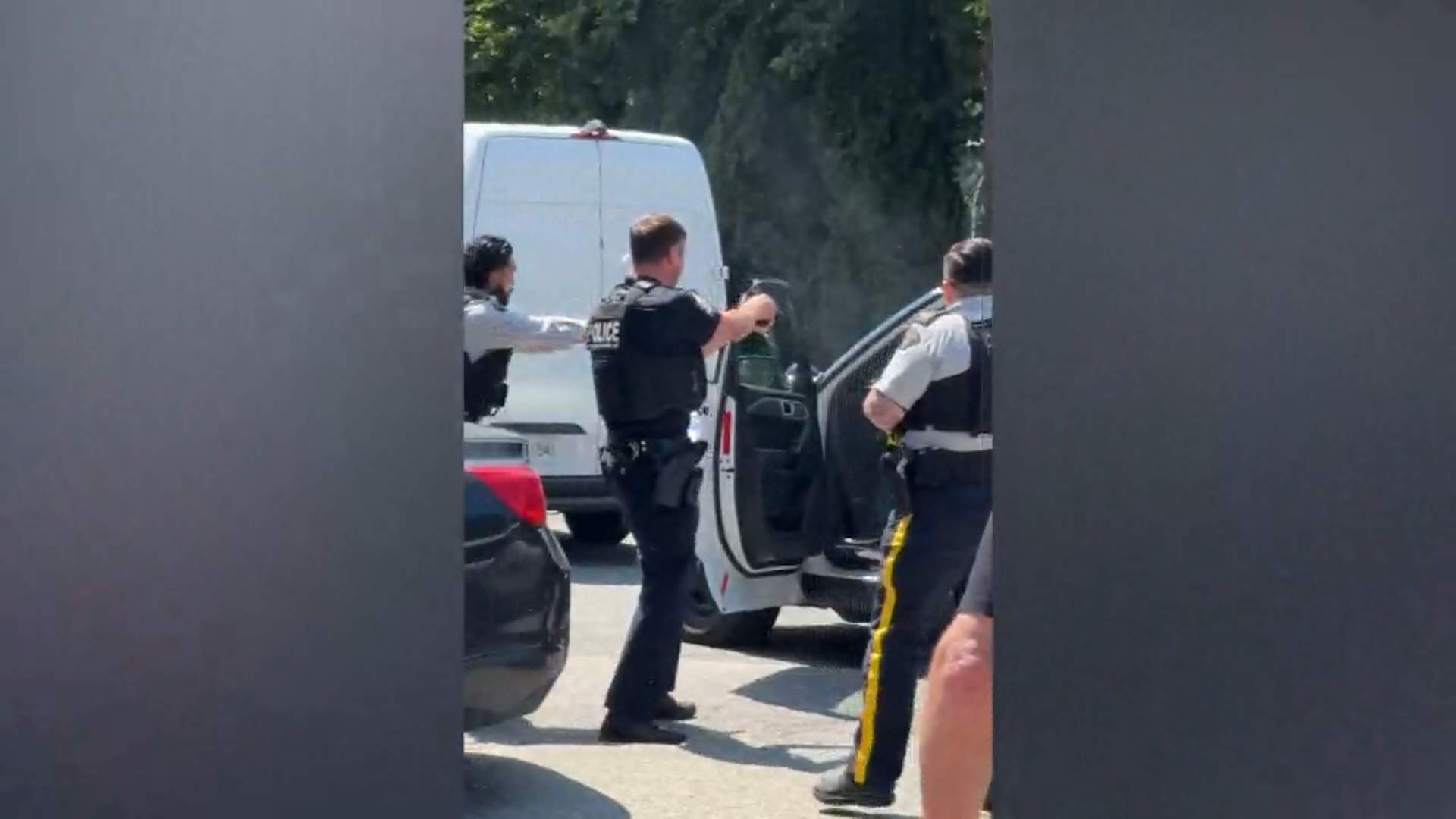
It was during this phase that North Vancouver RCMP units intercepted the suspect. Rather than surrendering to officers who had drawn weapons and issued verbal directives, the suspect moved rapidly toward an unoccupied police SUV on site.
Non Lethal Escalation and the Final Breakpoint
When an agitated suspect attempts to gain control of a law enforcement vehicle, police protocol shifts immediately. A police vehicle contains loaded secondary firearms, secure communications networks, and a heavy kinetic platform that can easily be weaponized in a crowded parking lot. Officers deployed a Conducted Energy Weapon, commonly known as a Taser, in an effort to neutralize the man without relying on kinetic lethal force.
When the electrical deployment failed to stop the suspect's attempt to breach the police vehicle, officers opened fire. Multiple rounds were discharged at close range. Emergency medical services transported the injured man to hospital, where medical staff confirmed his death shortly thereafter. No police personnel or bystanders sustained physical injuries during the final breach attempt.
Structural Questions Facing B.C. Independent Investigations Office
Investigators from the Independent Investigations Office are scouring video footage captured on civilian mobile phones and gas station surveillance cameras. Oversight investigators are scrutinizing specific tactical factors:
- Taser Deployment Failure: Examining why the Conducted Energy Weapon failed to achieve neuromuscular incapacitation, whether due to probe separation, clothing obstruction, or physical intoxication.
- Proximity to Volatile Hazards: Evaluating how the presence of retail fuel pumps influenced the decision-making process regarding firearms use versus chemical or physical restraints.
- Vehicle Containment Tactics: Assessing standard protocols for securing unattended emergency vehicles in active-threat environments while officers step into chaotic pedestrian zones.
The investigation will take months to yield a complete ballistic, toxicological, and tactical report. What remains crystal clear is how rapidly an unhinged individual can convert everyday civilian spaces into high-velocity combat environments—and how thin the margin for error remains when split-second decisions must be made under pressure.