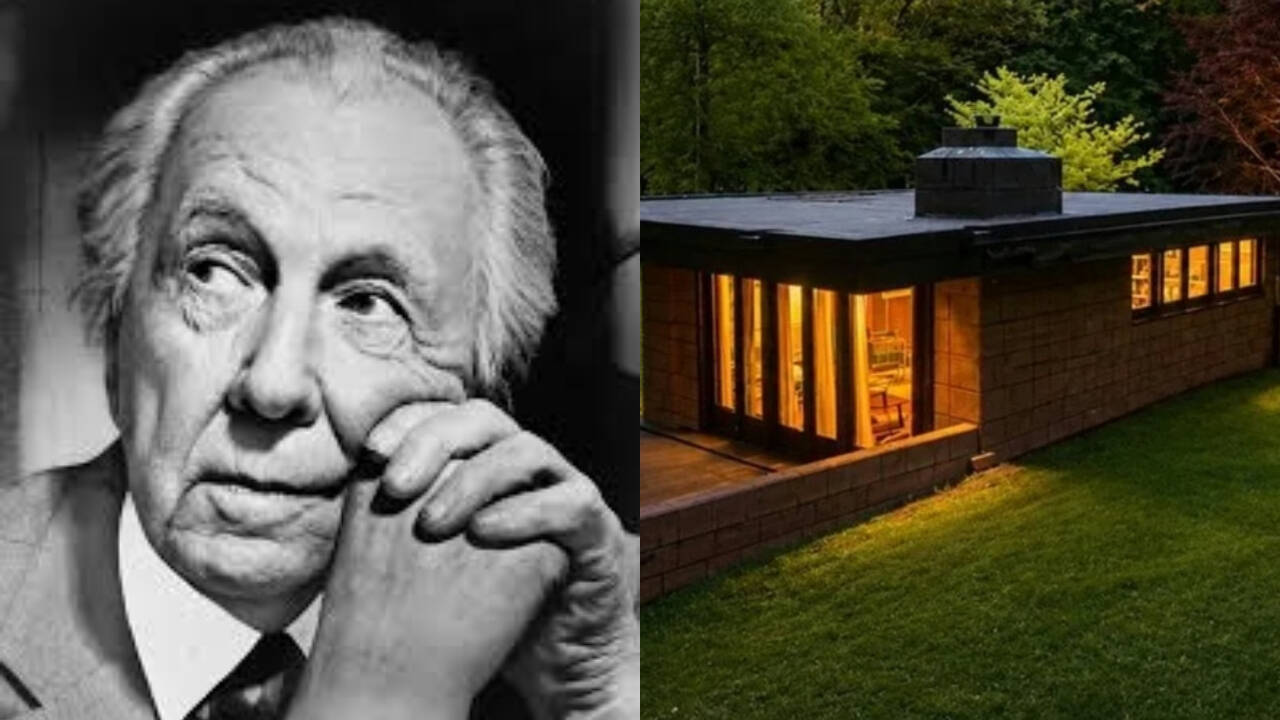
Owning a piece of architectural history sounds romantic until you realize what it actually takes to keep a mid-century masterpiece from collapsing around you. Most people look at a Frank Lloyd Wright house and see glowing windows, sweeping horizontal lines, and organic harmony with nature. They do not see the rotting concrete blocks, the failing flat roofs, or the decades of deferred maintenance that usually precede a massive price tag.
Take the Samuel and Dorothy Eppstein House in Galesburg, Michigan. Completed in 1953, this 2,500-square-foot Usonian home recently hit the market for $2.1 million. It is a stunning structure, but its current multi-million-dollar valuation is the direct result of brutal, uncompromising restoration work. Before current owners stepped in to revive it, the property had fallen into a state of serious neglect. Restoring a Wright-designed home is not a weekend DIY project. It is an expensive, obsessive rescue mission that tests the limits of historic preservation. For an alternative look, see: this related article.
The Reality of Living Inside a Usonian Experiment
Wright conceived The Acres in 1947 as a cooperative community where scientists, academics, and working professionals could live close to the land without buying into suburban conformity. Located just outside Kalamazoo, the 70-acre plot was designed to feature several Usonian homes integrated directly into the landscape.
The Eppstein House embodies this philosophy. Ten-foot-tall windows wrap around the living spaces, blurring the boundary between the interior and the surrounding woods. A massive block fireplace anchors the center of the home, radiating warmth through the open-plan layout. Mahogany millwork, built-in cabinetry, and original Wright-designed furniture give the interior an undeniable soul. Similar analysis on the subject has been published by The Spruce.
Yet, living in a Usonian home requires compromises. Wright notoriously designed spaces for people of a certain height, with compact kitchens and low rooflines. When homes like this change hands, buyers aren't just paying for square footage. They are buying an ongoing curation job.
What It Takes to Reverse Decades of Decay
Restoring a concrete-block Usonian house demands specialized labor and stubborn dedication. When preservation designers Marika Broere and Tony Hillebrandt took on the Eppstein House restoration, they faced deteriorating structural blocks, outdated mechanical systems, and decades of amateur alterations.
Fixing a Wright property means sourcing period-accurate materials, custom-milling mahogany, and treating exterior concrete with specialized formulas to prevent further erosion. The plumbing, electrical, heating, and cooling systems had to be entirely modernized without disrupting the visual integrity of the original layout.
Properties that undergo this level of intense rehabilitation often function as hybrid assets today. Many historic homes now double as high-end short-term rentals or event spaces when owners aren't living there, pulling in substantial annual revenues—sometimes upwards of $180,000 to $200,000 a year—to offset the crushing cost of upkeep. It turns architectural stewardship into a part-time business model.
Why Mid-Century Modern Buyers Pay a Premium
You might wonder why anyone drops millions on a mid-century home in southwestern Michigan when they could buy a brand-new mansion in a major metro area. The answer comes down to scarcity and pedigree. You can build a new house anywhere, but you cannot manufacture provenance. Wright only built a finite number of homes, and cooperatives like The Acres represent his social theories in action.
When these properties are rescued from neglect and brought back to absolute pristine condition, they attract a specific breed of buyer—architectural purists, collectors, and design obsessives who view themselves as custodians rather than homeowners.
If you are shopping in this tier, look past the glossy real estate photography. Ask for the restoration logs, inspect the roof membranes, and verify how the mechanicals were updated. Owning a piece of American architectural history is an elite privilege, but the bills always come due. Treat it like a museum piece you happen to sleep in, and you will understand why these homes command such fierce loyalty.