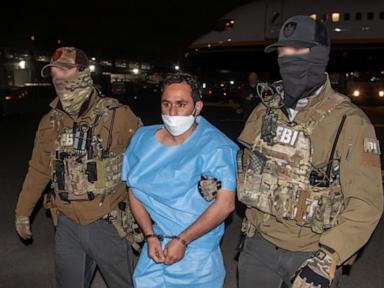
On August 26, 2021, a single suicide bomber detonated an explosive device at Abbey Gate outside the Hamid Karzai International Airport in Kabul, killing 13 U.S. service members and upwards of 160 Afghan civilians. Years later, the pursuit of accountability materialized in a federal courtroom in Virginia, where an Afghan man named Sharifullah received a 20-year prison sentence for conspiring to provide material support to ISIS-K. Yet the path to this sentencing reveals profound complexities regarding international counterterrorism, evidentiary standards, and the limits of domestic criminal law when applied to asymmetric warfare.
The prosecution asserted that Sharifullah was not merely a peripheral figure but an active facilitator within the Islamic State's Khorasan branch. According to trial evidence and court documents, ISIS-K leadership assigned him to surveil specific routes leading to the airport during the chaotic final days of the American military withdrawal. Prosecutors detailed how operatives provided him with a motorcycle, communication tools, and logistical instructions to scout checkpoints and ensure a clear path for the suicide bomber, Abdul Rahman al-Logari. Beyond the airport attack, federal attorneys presented evidence connecting the defendant to multiple other militant operations spanning years. For a different perspective, see: this related article.
However, the legal mechanics of the trial exposed deep friction between national security investigations and standard courtroom burdens of proof. While a federal jury convicted Sharifullah of conspiracy to provide material support to a designated foreign terrorist organization, they deadlocked on a critical question: whether the conspiracy legally resulted in the deaths at Abbey Gate. Without a unanimous finding linking his specific surveillance actions directly to the fatalities under federal homicide enhancements, the court was bound by statutory maximums rather than the potential life sentence prosecutors sought.
Defense counsel vigorously contested the government's narrative. They argued that the prosecution's case relied heavily on statements obtained during coercive detentions abroad, pointing to interrogations conducted while Sharifullah and his family were held by authorities known for harsh interrogation practices before his eventual transfer to American custody. This defense strategy highlighted a persistent gray area in transnational terrorism trials: balancing the urgency of intelligence-gathering in hostile foreign environments with the rigid admissibility rules of federal district courts. Related analysis on this matter has been provided by The Washington Post.
The courtroom proceedings ultimately became a crucible for grief and competing interpretations of justice. During the sentencing hearing, family members of the fallen service members addressed the court directly. Some voiced deep frustration that the 20-year ceiling failed to match the permanent devastation left in the wake of the bombing. Others, such as Mark Schmitz—father of Marine Lance Corporal Jared Schmitz—chose to direct their energy toward forgiveness, refusing to let bitterness dictate the remainder of their lives.
Federal District Judge Liam Trenga acknowledged the stark limitations of the verdict, noting that no single sentence could adequately address the full scale of the tragedy. The case closes a chapter on one specific prosecution tied to the end of America's longest war, but it leaves open larger questions about how international tribunals and domestic courts handle the tangled web of local collaborators, intelligence sharing, and accountability in collapsed states.
Afghan man sentenced in case tied to Kabul airport attack
This short video provides a brief news overview regarding the sentencing of the individual tied to the Kabul airport attack.

