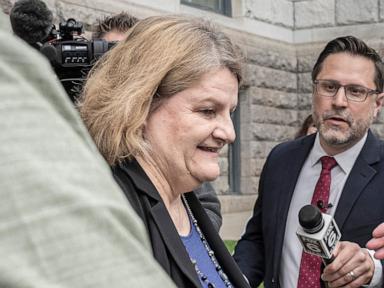
A former state judge convicted of obstructing federal immigration agents has walked out of a federal courthouse without a prison sentence, exposing a deep rift in how the American legal system punishes its own. When the court handed down a sentence of probation rather than federal prison time, it did more than resolve a single criminal case. It triggered a fierce national debate over judicial privilege and whether the robe acts as an unbreakable shield against accountability. The core issue centers on a fundamental question. Do those who administer the law face a different standard of justice when they break it?
Legal analysts and watchdog groups are sounding the alarm. They argue that sparing a convicted jurist from incarceration undermines the public's confidence in the courts. When ordinary citizens face years behind bars for similar acts of obstruction, a sentence of probation for a high-ranking legal official creates a dangerous perception of elitism.
The Courthouses That Became Battlegrounds
The friction between local judicial independence and federal law enforcement has been building for years. Across the country, state courthouses have transformed into flashpoints for jurisdictional warfare. Local officials often view federal immigration enforcement inside state facilities as an encroachment on their authority and a disruption to the administration of justice.
Federal agents argue that courthouses are safe, public locations where targets are guaranteed to appear, minimizing the risks associated with field arrests. Conversely, state judges contend that the presence of federal agents deters victims and witnesses from coming forward, effectively paralyzing the local legal process. This structural tension reached a breaking point in this specific case, where an official chose to actively intervene rather than navigate the proper legal channels to address the dispute.
Breaking Down the Mechanics of Obstruction
To understand the severity of the conviction, one must look at what constitutes federal obstruction of justice. It requires a deliberate act intended to delay, disrupt, or prevent the communication of information to a federal law enforcement officer.
- Intentional diversion: Actively assisting a suspect in evading law enforcement officers who are present and executing their duties.
- Misdirection: Providing false paths or utilizing restricted exits to bypass waiting officials.
- Concealment: Utilizing judicial authority to shield an individual from federal custody within a secure government facility.
In this instance, the prosecution demonstrated that the actions taken were not an oversight or a misunderstanding of policy. They were calculated maneuvers designed to thwart federal operations. Yet, despite proving these elements beyond a reasonable doubt, the government failed to secure a prison sentence.
Why the Sentencing Guidelines Failed to Deliver Prison Time
Federal sentencing guidelines are designed to ensure uniformity across the judicial system. They utilize a complex point system based on the severity of the offense and the defendant's criminal history. However, these guidelines are merely advisory, a reality established by the Supreme Court over two decades ago.
+-----------------------------------+-----------------------------------+
| Factor Driving Leniency           | Practical Impact on Case Outcome  |
+-----------------------------------+-----------------------------------+
| Lack of Prior Criminal History    | Drops offender score to lowest    |
|                                   | possible tier                     |
+-----------------------------------+-----------------------------------+
| Decades of Public Service         | Used by defense to argue character|
|                                   | outweighs the criminal act        |
+-----------------------------------+-----------------------------------+
| Judicial Discretionary Scope      | Allows sentencing judge to deviate|
|                                   | from standard prison ranges       |
+-----------------------------------+-----------------------------------+
The sentencing judge weighed the defendant's lifetime of public service against the gravity of the single conviction. This is where the system often bends toward leniency for white-collar defendants and public officials. The defense successfully argued that the loss of a judicial career, public humiliation, and the forfeiture of a professional reputation constituted sufficient punishment.
This argument wins in courtrooms every day, but it rarely applies to defendants from lower socioeconomic backgrounds. A typical defendant facing obstruction charges rarely possesses a portfolio of community service or a network of influential character witnesses to tip the scales of justice.
The Double Standard in the Eyes of the Public
The disparity in sentencing outcomes damages the credibility of the entire legal apparatus. When the public witnesses a high-profile figure avoid incarceration for a felony conviction, it reinforces the belief that there is a tiered system of justice. One tier manages the politically connected and professionally accomplished with care, while the other tier swiftly processes ordinary citizens into the prison system.
True accountability requires equal application of the law, regardless of the defendant's former title or stature. By prioritizing a defendant’s past achievements over the defiance of federal law, courts risk signaling that certain individuals are too valuable, or too prestigious, to lock away. This leniency erodes the very foundation of the rule of law, which dictates that no individual stands above the statutes they are sworn to uphold.
The Department of Justice now faces a difficult choice. Prosecutors must decide whether to appeal what they view as an overly lenient sentence or let the ruling stand, potentially creating a precedent that defense attorneys will exploit in future obstruction cases involving public officials.