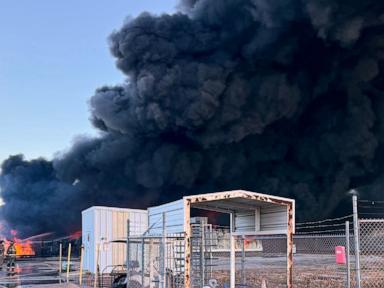
Russian long-range missile and drone strikes have severed critical electricity and water supplies across Kyiv, plunging residential districts into darkness while emergency crews in southern Ukraine dig through collapsed concrete to locate trapped civilians. This coordinated dual-theater assault represents a deliberate military doctrine aimed at breaking urban survivability rather than achieving tactical breakthroughs on the front lines. By simultaneously targeting high-voltage substations in the capital and residential structures in the south, Moscow is attempting to overwhelm Ukraine's finite air defense interceptors and exhaust municipal repair capacities before winter cold sets in.
The pattern is unmistakable to anyone who has tracked modern siege warfare over the past three decades. Infrastructure is no longer collateral damage. It has become the primary theater of attrition, engineered to turn basic municipal engineering into a liability for the defending state.
The Anatomy of a Grid Collapse
To understand why a single wave of Russian strikes can cut both power and water in a sprawling metropolis like Kyiv, you have to look at how Soviet-era urban utilities were built. They are not independent systems. They are deeply interdependent machines where a failure in one node triggers a cascading collapse across the entire city.
Water does not move without electricity. In a flat or moderately sloped city, municipal water pressure relies entirely on massive electric pumping stations. When high-voltage autotransformers at regional substations are struck by cruise missiles or Shahed-type loitering munitions, the grid automatically trips to prevent catastrophic overload. Within minutes, the pumps lose power, pressure drops across hundreds of kilometers of trunk mains, and taps run dry from the ground floor to the thirtieth story of apartment blocks.
Sewage systems fail on the exact same timeline. Without active lift stations pushing wastewater toward treatment facilities, municipal sanitation backs up, creating an immediate public health hazard alongside the lack of drinking water.
The Autotransformer Bottleneck
The vulnerability lies in specific, irreplaceable components. Standard power lines and distribution poles can be spliced back together by utility linemen in a matter of hours using stockpiled cable and standard cranes. High-voltage autotransformers—the massive, oil-filled steel boxes that step down electricity from 750 kilovolts or 330 kilovolts to levels usable by local city grids—cannot be fixed quickly.
Each unit weighs hundreds of tons. They are custom-built to exact electrical specifications, often taking up to a year or more to manufacture and transport under peacetime conditions. When Russian planners target these exact nodes, they are not trying to knock out power for an afternoon. They are trying to delete the physical hardware required to transmit electricity at all.
Backup diesel generators can keep intensive care units running in hospitals and maintain emergency communications at municipal command centers. They cannot power a city's water pumping network or its district heating boilers. The energy draw is simply too massive.
The Southern Rescue Dilemma
While utility workers in Kyiv race to reroute power through surviving grid pathways, emergency responders in southern Ukraine face a fundamentally different, brutal math problem. When ballistic or cruise missiles strike dense urban areas in the south—cities like Odesa, Mykolaiv, or Zaporizhzhia—the flight times are measured in minutes rather than hours.
Residents rarely have enough warning to reach deep underground shelters. The result is structural collapse over occupied buildings.
Search and rescue operations under active threat conditions operate under severe constraints. Standard international urban search and rescue protocols dictate stabilizing a structure before sending heavy machinery or dog teams into the void spaces. In southern Ukraine, rescue crews from the State Emergency Service routinely work under the threat of double-tap strikes—a tactic where a second wave of munitions is fired at the exact same coordinates thirty to sixty minutes after the initial impact, specifically timed to kill first responders, paramedics, and journalists arriving on the scene.
Listening Through Concrete
Finding survivors beneath pancaked floor slabs requires absolute silence, a luxury almost impossible to achieve in a war zone. Rescuers use acoustic listening devices—sensitive seismic sensors planted into the rubble—to detect faint tapping, breathing, or groans beneath tons of reinforced concrete.
Every fifteen minutes, heavy hydraulic cutters and cranes must shut down completely. The generators are killed. Crews stand frozen in the dust while acoustic technicians listen through headphones for signs of life.
If a signal is detected, tunneling begins by hand. Rescuers cannot simply lift a collapsed roof slab with a crane without risking a secondary shift that would crush the air pocket keeping a survivor alive. They must shore up the concrete with wooden cribbing and hydraulic jacks, inch by inch, often taking twelve to twenty-four hours to reach a single person trapped two floors down.
Why Air Defense Math Favors the Attacker
A common misconception among casual observers is that an effective air defense network functions like an impenetrable dome. It does not. It is a game of resource allocation, geometry, and probability, and right now, the economics heavily favor the offense.
Russia manufactures and launches mixed salvos designed specifically to exploit the radar and interception limitations of Western and Soviet-era air defense systems. A typical strike package combines:
- Slow, low-flying drones launched in swarms from multiple compass headings to force Ukrainian radar operators to illuminate their positions and expend relatively cheap anti-aircraft artillery or short-range missiles.
- Subsonic cruise missiles programmed to fly terrain-hugging routes along riverbeds and valleys, dipping below the radar horizon until they are within kilometers of their targets.
- High-altitude ballistic missiles descending at hypersonic terminal speeds, which can only be intercepted by top-tier systems like the Patriot or SAMP/T batteries.
The defender must protect everything. The attacker only needs to overwhelm one sector.
The Interceptor Deficit
Every time a Ukrainian air defense battery fires an interceptor at an incoming threat, it depletes an inventory that cannot be rapidly replenished. A single Patriot interceptor costs roughly four million dollars and takes specialized aerospace manufacturing lines months to produce. A Russian Geran-2 drone—the localized version of the Iranian Shahed-136—costs a fraction of that and can be assembled in converted industrial facilities using commercially available electronics.
Even when Ukrainian air defenses achieve an interception rate of eighty or ninety percent, the ten percent that leaks through is enough to cripple a substation or level an apartment block. Furthermore, falling debris from intercepted missiles carries immense kinetic energy and unburned rocket fuel, frequently sparking fires and causing structural damage even when the warhead itself is destroyed mid-air.
The Psychological and Economic Attrition Strategy
Military analysts who view these strikes purely through the lens of kinetic damage miss the broader strategic objective. Moscow is waging a campaign of compellence—using sustained civilian hardship to force political concessions from Kyiv and exhaust the financial willpower of its Western backers.
When power and water fail repeatedly in the capital, economic output stalls. Factories halt assembly lines. Small businesses burn through cash reserves buying diesel fuel for sidewalk generators, driving up the cost of basic goods and accelerating inflation. Municipal budgets, already stretched thin by wartime demands, are forced to divert millions of dollars from local services into emergency grid repairs and mobile water distribution.
There is also a calculated demographic pressure at play. By making urban life unlivable—depriving families of running water, central heating, and reliable electricity—the strikes aim to trigger a new wave of internal displacement and external refugees. Millions of Ukrainians moving westward puts immediate economic and political strain on neighboring European nations, testing the cohesion of the coalition supporting Kyiv.
The Limits of Decentralization
In response to these attacks, Ukrainian energy engineers have begun shifting away from centralized Soviet grid architecture toward a decentralized model. The goal is to replace massive, easily targeted power plants and substations with hundreds of smaller, distributed generation units—gas turbines, solar arrays paired with industrial battery storage, and modular cogeneration plants scattered across urban districts.
It is the correct engineering solution, yet it is an agonizingly slow one. Installing distributed generation takes capital, secure supply chains, and time that the front lines do not freely grant. You cannot decentralized a city's water pumping infrastructure overnight, nor can you easily hide a thermal power plant from satellite reconnaissance.
Until enough distributed capacity comes online and air defense density increases around critical nodes, every major air raid alert carries the same threat. Utility crews will continue to patch transformers under floodlights, patching a grid held together by technical ingenuity and sheer endurance, while rescue teams in the south keep digging through the dust for whoever is still breathing underneath.