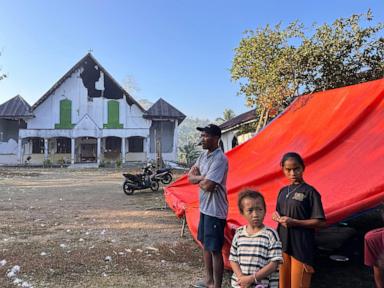
Thousands of displaced children across Indonesia's Flores Island are grappling with profound psychological trauma following a destructive earthquake that left tens of thousands homeless and damaged hundreds of schools. When the ground violently fractured on Saturday morning, it shattered not only traditional timber and concrete houses across East Nusa Tenggara province, but also the baseline sense of security for over 8,000 young residents whose education and daily lives abruptly stopped.
The disaster exposed deep structural vulnerabilities in remote archipelago regions where recurrent hazards—ranging from El Niño-driven droughts to active volcanic threats—compound the human toll. While emergency responders immediately mobilized tarpaulin tents and food distributions, the invisible wounds carried by the survivors demand a rigorous examination of how remote communities manage chronic catastrophe.
The Anatomy of a Forgotten Emergency
Disaster response metrics typically focus on immediate body counts, collapsed roofs, and tonnage of aid delivered. Yet, these quantifiable markers obscure the chronic psychological strain inflicted on populations living along the Pacific Ring of Fire. On Flores Island, shallow tectonic fracturing unleashed thousands of aftershocks that transformed everyday sounds into triggers for panic.
Children living in makeshift evacuation camps exhibit textbook symptoms of acute stress disorders. Parents report that youngsters refuse to sleep indoors, jolting awake at the slightest tremor or gust of wind. In rural pockets like Lamba Leda, where modest homes collapsed instantly under the initial shockwave, community infrastructure was wiped out before local agencies could deploy heavy machinery.
Field analysts point out that physical rebuilding gets prioritized because tents and concrete blocks are easy to count. Psychological first aid requires sustained, specialized intervention that is rarely scaled for remote islands. When hundreds of educational facilities are compromised simultaneously, the loss of structured routines accelerates anxiety among children who already feel completely unmoored.
Compounding Vulnerabilities in Marginalized Terrain
Earthquakes in rural Indonesia do not happen in a vacuum. The tremors hit communities already stretched thin by seasonal environmental shocks and geographic isolation. Transporting medical teams and psychosocial counselors across rugged terrain strains federal resources, forcing local police units and grassroots volunteers to improvise mental health interventions on the ground.
Officers trained in specialized coping techniques attempt to steady traumatized residents through community art programs, reading circles, and group therapy. Still, these measures remain stopgap remedies against an overwhelming wave of distress. Schools functioning as community anchors are often rendered unsafe, leaving children without structured daytime environments for months at a time.
Without systematic investments in local resilience, every subsequent aftershock resets the healing process. Aid agencies note that protecting young minds requires hardening local infrastructure against future shocks rather than merely reacting after the earth gives way. Until rural structural engineering matches the seismic reality of the region, generations of children will continue to grow up viewing their own homes as potential traps.