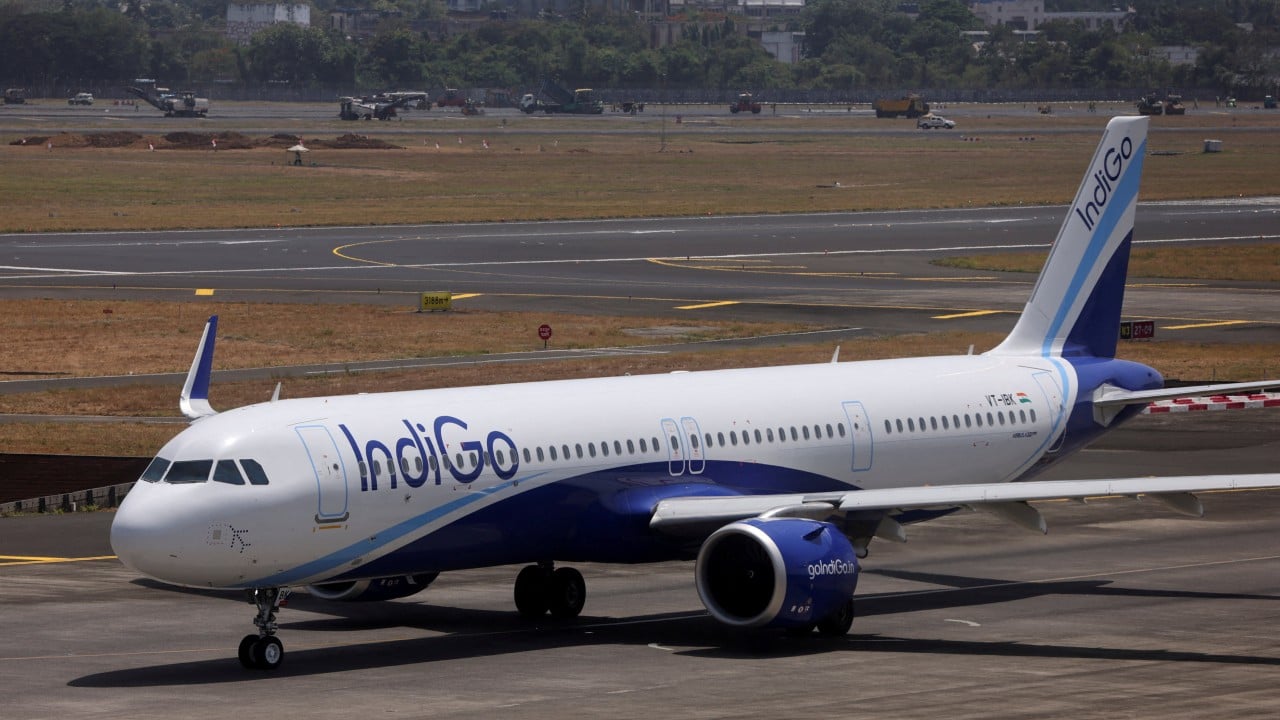
The warning arrived at the Ministry of Civil Aviation on April 26, 2026, with the kind of bluntness rarely seen in polite corporate lobbying. India’s largest carriers—IndiGo, Air India, and SpiceJet—acting through the Federation of Indian Airlines (FIA), declared they are on the brink of "stopping operations." While casual observers might see this as a standard plea for government subsidies, the underlying math suggests a systemic collapse is no longer a distant theoretical threat.
The primary catalyst is a brutal surge in Aviation Turbine Fuel (ATF) costs, which has seen prices cross the threshold of ₹2 lakh per kilolitre in recent weeks. For an industry that typically budgets fuel at 40% of operating expenses, that figure has now ballooned to nearly 60%. The math is simple and devastating: when the cost of moving a plane from point A to point B exceeds the revenue generated by the seats sold, the only rational business move is to stop flying.
The West Asia War and the Fuel Trap
While global crude oil volatility is a perennial headache, the current crisis is anchored in the 2026 conflict in West Asia. Missile strikes and disruptions around the Strait of Hormuz have choked a corridor that handles a fifth of the world's oil supply. For Indian airlines, this isn’t just a geopolitical headline; it is a direct drain on liquidity.
The "crack spread"—the difference between the price of crude oil and the refined product (ATF)—has widened to irrational levels. Even on days when crude prices soften, refining margins remain stubbornly high, leaving airlines unable to plan budgets beyond a week at a time. The industry has urged the government to return to a Brent-linked pricing mechanism or a "crack band" system to cap these variations. Without it, the market isn't just volatile; it's unmanageable.
The Double Taxation Death Spiral
India remains one of the most expensive places in the world to refuel an aircraft, a fact driven by a convoluted tax structure that treats jet fuel like a luxury sin rather than a critical utility. ATF is currently excluded from the Goods and Services Tax (GST) regime. This exclusion is a silent killer for balance sheets because it prevents airlines from claiming input tax credits on the fuel they purchase.
Instead, carriers are hit with an 11% central excise duty and state-level Value-Added Tax (VAT) that can soar as high as 25% depending on the airport.
- Excise Duty: A flat percentage that grows more expensive as the base fuel price rises.
- State VAT: Highly fragmented, creating a "geographic lottery" for refueling costs.
- International Disparity: Domestic ATF prices were recently capped at a 9.2% increase, but international refueling costs for Indian carriers jumped by a staggering ₹73 per litre.
This disparity makes long-haul international routes, which Air India has banked its future on, increasingly unviable. It is cheaper for a foreign airline to refuel at its home hub and fly into India than it is for an Indian carrier to fly out.
The Fragility of the Duopoly
On the surface, the Indian sky looks crowded. In reality, it is consolidating into a fragile duopoly. IndiGo controls roughly 50% of the market, while the Tata-owned Air India group holds about 24%.
While these giants have deeper pockets, they are not immune to the cash-burn. Air India and Air India Express have already started scaling back capacity, with an 8% year-on-year decline in seat availability. Even IndiGo, the gold standard of operational efficiency, is seeing its margins crushed. When the market leaders sound an SOS, the smaller players are usually already underwater. SpiceJet, despite a 43% increase in capacity over the last year, remains in a precarious dance with creditors and fuel suppliers.
The "Hidden" Cost of Airspace Restrictions
Fuel is the headline, but airspace is the invisible bottleneck. The ongoing regional conflicts have forced airlines to take circuitous routes to avoid active combat zones. A flight that used to take seven hours might now take nine. These extra two hours burn thousands of liters of fuel, increase wear and tear on engines, and force crews into expensive overtime.
When you combine a 60% fuel-to-cost ratio with longer flight paths and a depreciating Rupee, the result is a "perfect storm" that ticket price hikes cannot solve. Domestic fares on premium routes like Mumbai-Delhi have already seen sharp increases, but there is a ceiling to what the Indian middle class will pay before they revert to the Vande Bharat express trains.
The Failure of Policy Intervention
The government’s response has been characterized by "ad hocism." While there was a temporary cap on domestic ATF price hikes, it acted as a band-aid on a gushing wound. The industry’s demand is clear: Bring ATF under GST. This would immediately allow for a uniform tax rate and let airlines offset the tax paid on fuel against the tax collected on tickets.
However, state governments are loath to surrender VAT revenue, which is one of their few remaining independent "cash cows" post-GST. This stalemate between central policy and state revenue is effectively subsidizing regional budgets at the expense of national connectivity.
The Grounding Reality
If the Ministry does not intervene with a structured relief package—possibly including the deferment of excise duties or a specialized credit line for fuel—the "stopping of operations" will not happen as a single event. It will look like a slow-motion collapse.
First, the "thin" routes to Tier-2 and Tier-3 cities will vanish. Then, the frequency of flights on trunk routes will drop, sending prices for the remaining seats into the stratosphere. Finally, the smaller carriers will enter insolvency, leaving a depleted market that lacks the competition necessary to keep prices fair.
The industry is not asking for a bailout in the traditional sense; they are asking for the removal of a tax burden that was designed for a different era. Indian aviation is currently flying on reserve tanks. Without a fundamental shift in how fuel is taxed and priced, the world's fastest-growing aviation market is about to hit the runway—hard.
Airlines must now move beyond lobbying and begin the aggressive rationalization of fleets. This means grounding older, fuel-thirsty aircraft immediately, even if it hurts short-term capacity. For the passenger, the era of "cheap" Indian flying is over. The true cost of a ticket is finally catching up to the reality of the pump.