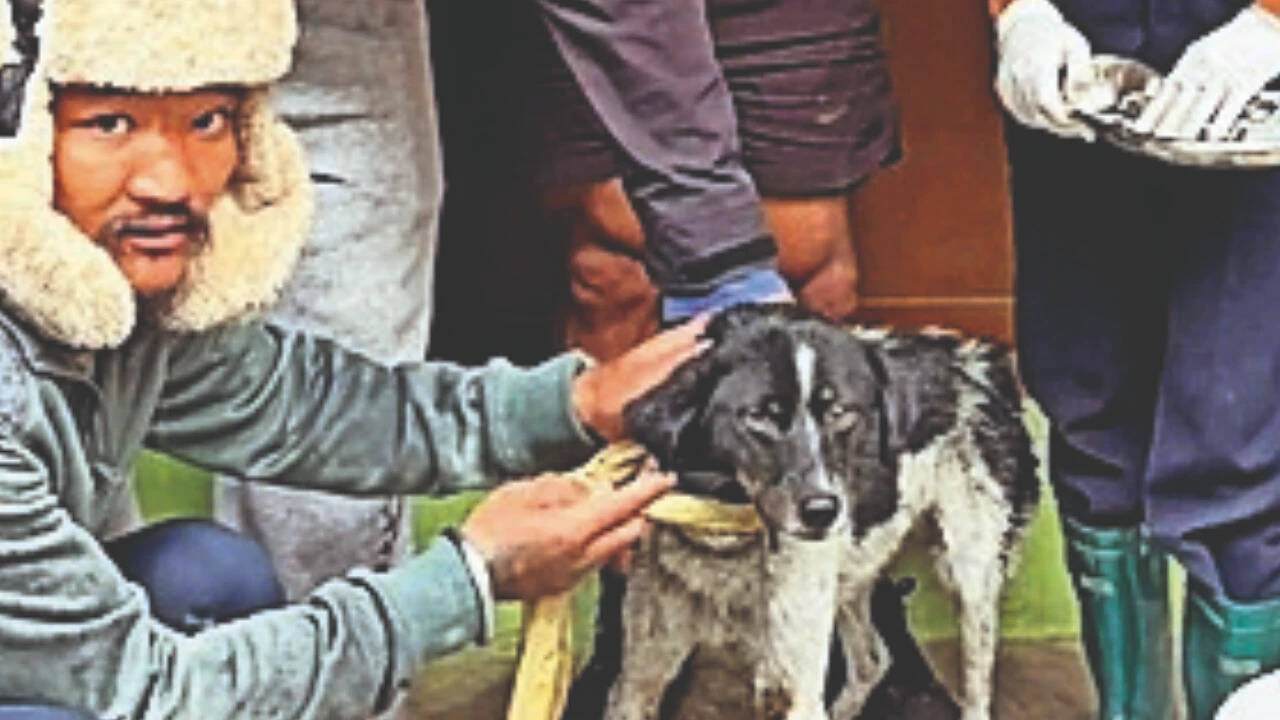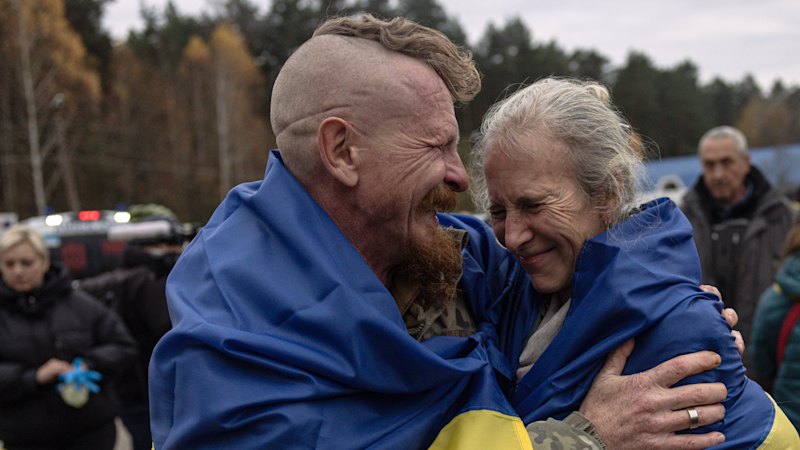
Starved residents fleeing Russian-occupied Oleshky have crossed back into Ukrainian-controlled territory during a rare, localized ceasefire, exposing a severe humanitarian crisis on the left bank of the Dnipro River. The evacuation highlights the systemic breakdown of basic life support systems—food distribution, clean water, medical infrastructure, and freedom of movement—in towns trapped directly along the active front line of southern Ukraine.
For months, Oleshky has existed in a brutal logistical blind spot. Situated just across the destroyed Antonivsky Bridge from Kherson, the town is close enough to the front to endure relentless artillery exchanges and drone surveillance, yet cut off from the international aid corridors that sustain civilians on the western bank. When a brief window of halted hostilities finally allowed a trickle of residents to cross, their physical condition told the story that Russian occupation authorities had spent months trying to suppress.
The Anatomy of a Frontline Siege
Modern warfare rarely relies on medieval siege walls, yet the geography of the lower Dnipro creates the exact same effect. The river serves as a natural barrier roughly a kilometer wide in stretches, flanked by marshlands, islands, and flooded channels. Since Russian forces retreated from Kherson city in November 2022 and dug into the eastern bank, Oleshky has functioned less as a municipality and more as a forward military garrison with a trapped civilian population.
Logistical isolation drives the starvation. Supply trucks bringing commercial groceries or humanitarian parcels from deeper inside Russian-occupied territories—such as Crimea or Melitopol—frequently refuse to enter the immediate artillery zone. Drivers face constant threats from first-person-view drones and counter-battery fire, pushing transport costs to astronomical levels and leaving local shelves bare.
The collapse of the Kakhovka Dam in June 2023 accelerated this decay. The resulting floodwaters submerged vast swaths of Oleshky, destroying root cellars, contaminating groundwater wells, and wiping out the backyard gardens that traditionally insulated rural Ukrainian families from market shocks. Once the water receded, it left behind thick layers of toxic silt, ruined electrical substations, and houses stripped of heating infrastructure.
Without reliable electricity, refrigeration vanished. Without functioning water pumps, residents were forced to collect rainwater or haul buckets from compromised wells. In an environment where a simple trip down the street carries the risk of shrapnel or drone strikes, securing basic calories became a daily gamble with death.
How Occupation Policies Weaponize Basic Survival
A lack of supplies is only half the equation; administrative coercion completes the trap. Under Russian occupation protocols, access to the few remaining social services, pension payouts, and sporadic food rations is routinely tied to forced passportization.
Residents who refuse to accept Russian citizenship find themselves legally invisible within their own hometown. They are denied medical prescriptions, barred from receiving humanitarian boxes distributed by occupation administrations, and subjected to heightened scrutiny at military checkpoints. For elderly residents—who make up the majority of those unable to flee earlier in the invasion—this creates an impossible choice between ideological capitulation and physical starvation.
Even for those who took the paperwork under duress, the promised safety net proved largely illusory. Local governance in frontline towns like Oleshky is fragmented between military commanders focused purely on defensive fortifications and civilian administrators imported from Russia who rarely remain in the active fire zone.
The Collapse of Medical Infrastructure
Healthcare in Oleshky has effectively ceased to exist at a clinical level. Before the full-scale invasion, the town relied on its central district hospital and proximity to Kherson's specialized medical centers. Today, most qualified doctors and nurses have either fled to Ukrainian-held territory, evacuated to Europe, or been deported deeper into Russian-controlled zones.
- Medication shortages have turned manageable chronic conditions—such as diabetes, hypertension, and heart disease—into fatal sentences. Insulin and basic antibiotics are scarce, often available only through informal networks at inflated prices.
- Military prioritization means that remaining medical supplies and functional facilities are commandeered to treat wounded Russian soldiers, leaving civilians with traumatic injuries from shelling to rely on rudimentary first aid.
- Emergency transport is virtually nonexistent, as ambulances are frequently targeted or immobilized by fuel shortages and cratered roads.
When evacuated residents finally reached Ukrainian medical teams during the localized truce, doctors observed acute malnutrition, severe dehydration, and untreated infections that had festered for months.
The Mechanics of a Rare Local Ceasefire
Ceasefires along the Dnipro front are notoriously fragile because neither side trusts the operational pause. Unlike high-level diplomatic agreements brokered in foreign capitals, localized truces are usually negotiated through backchannel military-to-military contacts, intelligence intermediaries, or humanitarian liaisons operating under strict, narrow parameters.
These pauses are not signs of impending peace; they are tactical necessities. Both armies occasionally require brief windows to recover fallen soldiers, repair critical infrastructure near civilian zones, or allow trapped non-combatants to exit areas slated for intensified military operations.
Why Evacuation Corridors Rarely Open
The primary obstacle to regular evacuations across the Dnipro is operational security. Every movement across the river or through the grey zone reveals defensive positions, minefield gaps, and observation posts.
- Reconnaissance risks: Military commanders on both sides fear that humanitarian corridors will be used to insert sabotage groups or gather intelligence on troop concentrations.
- Command fragmentation: Even when senior officers agree to a local pause, conveying that order down to every artillery battery, mortar crew, and independent drone operator along a chaotic frontline is notoriously difficult. A single unauthorized shot can collapse the entire arrangement within seconds.
- Human shields: Occupying forces frequently embed command posts, ammunition depots, and artillery units inside residential neighborhoods, using the presence of civilians to deter Ukrainian strikes. Allowing the entire population to leave removes that protective buffer.
Consequently, when a window does open, it is brief, chaotic, and fraught with anxiety. Evacuees often travel on foot or in battered civilian vehicles, carrying whatever documents and belongings they can fit into a single bag, moving past checkpoints where soldiers nervously watch the sky for the buzz of drones.
The Journey Across the Grey Zone
Crossing from Russian-occupied territory back into free Ukraine is rarely a straight line. While Oleshky sits just a few kilometers from Kherson as the crow flies, the destruction of the Antonivsky Bridge and the militarization of the riverbanks mean that direct crossings are extraordinarily dangerous.
In many instances, residents attempting to escape occupied Kherson Oblast have been forced to take grueling, multi-day detours—traveling south through Crimea, crossing into Russia via the Kerch Bridge, moving north through Russian territory, and eventually crossing back into Ukraine through the Sumy border or via the Baltic states and Poland. That journey requires thousands of dollars in bribes and transport fees, putting it entirely out of reach for impoverished pensioners and disabled residents.
When a localized ceasefire permits a direct crossing or a short-route transfer near the front line, it represents a lifeline for those who had zero financial means to escape through the long corridor. Yet the psychological toll of the crossing is immense. Residents spend months living in basements, conditioned to fear every engine noise and overhead shadow. Stepping into an open space, even under a temporary truce, requires overriding every survival instinct they have developed since 2022.
What Happens After Reintegration
Reaching Ukrainian-controlled territory ends the immediate threat of starvation and occupation, but it initiates a complex set of bureaucratic, medical, and psychological challenges. Ukrainian authorities and volunteer networks have established reception hubs in cities like Kherson, Mykolaiv, and Odesa to process evacuees, yet the system operates under immense strain.
Security vetting is the first mandatory step. Ukrainian intelligence services must interview every adult crossing from occupied zones to identify potential collaborators, coerced informants, or Russian operatives attempting to infiltrate the rear. For traumatized civilians who have endured years of occupation, undergoing intense questioning immediately after escaping can feel jarring, though officials argue it is indispensable for protecting frontline cities from espionage.
The Long Road to Physical and Legal Recovery
Once cleared, evacuees enter a stabilization pipeline designed to rebuild their basic existence from scratch.
- Refeeding protocols: Medical teams must carefully manage severe malnutrition. Reintroducing normal caloric intake too quickly to a starved body can trigger refeeding syndrome, a potentially fatal shift in fluids and electrolytes.
- Document reconstruction: Many residents arrive with destroyed Ukrainian passports, or holding only Russian-issued documents forced upon them during the occupation. Legal aid organizations work to verify identities and restore access to Ukrainian state pensions and internal displacement stipends.
- Trauma counseling: Prolonged isolation, constant bombardment, and the loss of homes and neighbors leave deep psychological scars that manifest long after physical hunger is resolved.
Volunteers who work directly with evacuees from the left bank note a consistent pattern: people arriving from places like Oleshky often apologize for their appearance, their hunger, or the burden they feel they are placing on reception centers. Years of living under an occupying authority that treated them as expendable collateral systematically erodes their sense of agency.
The Broader Reality Behind the Dnipro Front
The evacuation from Oleshky strips away the abstract nature of map lines and territorial control percentages. When military analysts discuss the stalemate along the Dnipro River, the conversation typically revolves around bridgeheads, drone attrition rates, and artillery shell parity. Rarely does it account for the slow-motion humanitarian catastrophe unfolding inside the residential streets just behind the Russian trenches.
Tens of thousands of Ukrainian civilians remain trapped across the occupied territories of Kherson and Zaporizhzhia oblasts. Many stay because they are caring for bedridden relatives who cannot survive a journey through checkpoints. Others stay because leaving means abandoning the only property and savings they will ever own, facing an uncertain future as internally displaced persons in cities already stretched thin by war.
Every rare ceasefire that allows a handful of starved residents to cross back into Ukraine serves as an urgent warning about the conditions endured by those left behind. Until sustained, internationally monitored humanitarian corridors are established—a prospect that remains remote given the total breakdown of trust between the warring parties—the civilians of Oleshky and neighboring left-bank towns remain hostages to geography, artillery, and a war that treats their survival as an afterthought.