On May 29, 2026, a Hong Kong High Court judge dismissed the final appeal of Ronson Chan, the former chairman of the Hong Kong Journalists Association, sending him straight to prison for five days. His crime was a 15-second dispute over a routine identity card check by plainclothes police officers. The swiftness of his immediate detention underscores a far deeper crisis than a simple misdemeanor conviction. The true story lies in the weaponization of low-level administrative laws to systematically dismantle independent journalism under the guise of public order.
By centering the state's legal machinery on minor bureaucratic infractions rather than high-profile national security charges, authorities have discovered a highly efficient mechanism for chilling dissent. This tactical shift leaves local reporters exposed to immense risk during everyday street reporting.
The Legal Architecture of a Disproportionate Sentence
The incident that led to Chan’s imprisonment occurred in September 2022. Chan, a veteran reporter for the independent online media outlet Channel C, was on his way to cover a mundane neighborhood homeowners' meeting in Mong Kok. He was stopped by two plainclothes officers who demanded his mandatory Hong Kong identity card.
According to court testimonies, Chan asked the officers to display their official warrant cards first before he handed over his documents. The interaction was brief. The prosecution's key evidence relied heavily on a narrow window of CCTV footage.
Yet, Deputy High Court Judge Lily Wong upheld a 2023 lower court ruling that deemed Chan’s behavior "reckless and unreasonable." The state’s legal argument hinges on the absolute nature of police stop-and-search powers in Hong Kong, where residents have practically no legal recourse to delay or question an identity check.
The court rejected alternative sentencing options such as a fine or community service. The justification was telling. Judge Wong noted that because Chan showed no remorse for demanding the officers’ credentials, a custodial sentence was the only appropriate response.
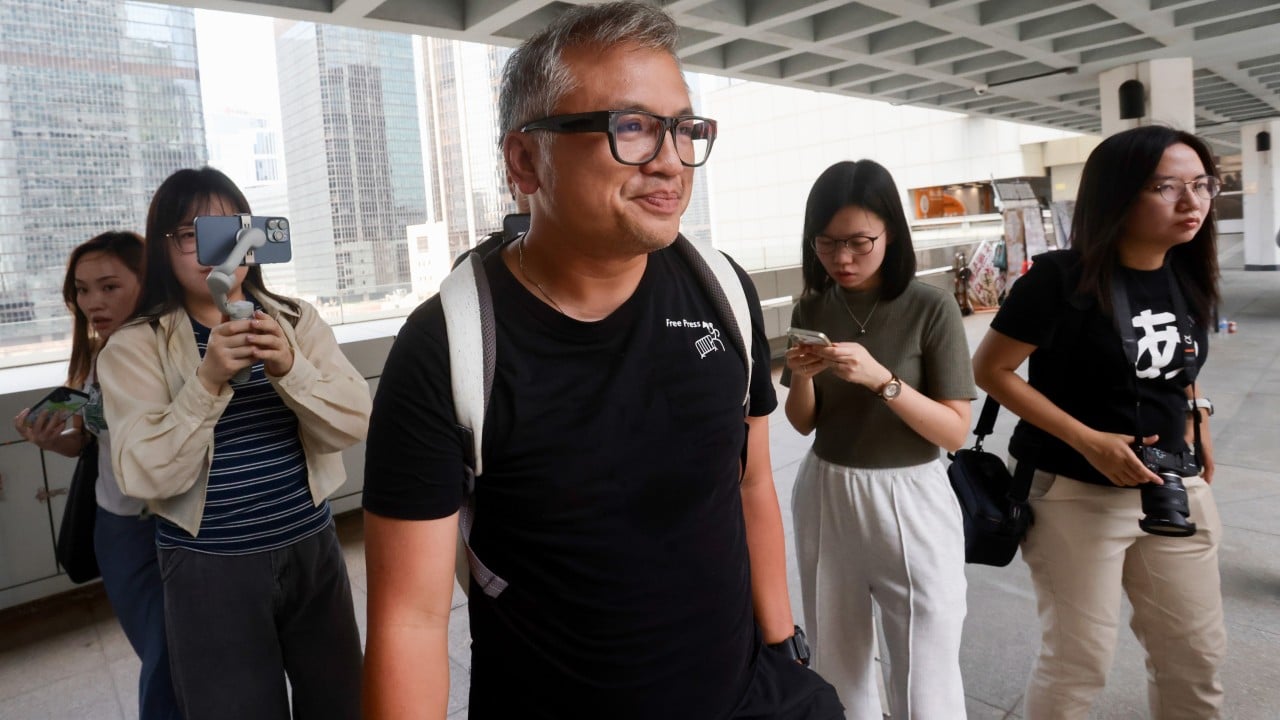
"I personally believe that Hong Kong enjoys freedom of the press under the Basic Law, yet time and again, in practice, I have seen that the status of press freedom is truly very low," Chan remarked to reporters outside the courtroom, sporting a black t-shirt emblazoned with the words "Press Freedom" just moments before being led away in handcuffs.
The Shift to Low-Level Attrition
For years, international attention has focused on the sweeping arrests made under the 2020 National Security Law, which effectively shuttered major pro-democracy outlets like Apple Daily and Stand News. Those high-profile trials involved allegations of foreign collusion and sedition. They required massive resources and lengthy legal battles.
What the international community is missing now is the transition to low-level attrition.
By utilizing charges like obstructing a police officer, public disorder, or minor traffic violations, the state achieves the same chilling effect with a fraction of the geopolitical backlash. A five-day jail sentence does not provoke global headlines the way a life sentence under national security legislation does.
It does, however, send a precise and terrifying message to the field reporters left on the ground.
- Everyday Vulnerability: Frontline journalists must routinely interact with police forces during protests, court coverage, and local investigative assignments.
- The Remorse Trap: By tying non-custodial sentences strictly to a defendant showing "remorse," the judiciary forces journalists to choose between admitting guilt for doing their jobs or facing immediate jail time.
- Administrative Harassment: Press freedom organizations note that independent media workers are now facing an onslaught of non-criminal pressures, including sudden tax audits, passport confiscations, and targeted zoning inspections of their newsrooms.
This is a war of exhaustion. It is designed to make the daily mechanics of gathering news so legally risky and psychologically exhausting that media workers simply walk away.
The Dismantling of the HKJA
To understand why Ronson Chan was targeted, one must look at the organization he led. The Hong Kong Journalists Association (HKJA) is the city's oldest and largest press union. It has long served as a vocal defender of media independence, publishing annual reports on the erosion of free speech and providing legal assistance to targeted reporters.
As a result, the union itself has been under relentless pressure. Government officials have repeatedly accused the body of being biased and politically motivated.
When the state imprisons the leader of a trade union over a routine street stop, it signals the near-total delegitimization of that union’s protective umbrella. If the chairman can be jailed for asking a plainclothes officer for identification, a junior freelancer enjoys zero institutional protection on the streets of Kowloon.
The local government maintains that the media environment remains entirely vibrant and that the rule of law is applied blindly without regard to a defendant’s profession. Statistics tell a different story. In the World Press Freedom Index published by Reporters Without Borders, Hong Kong’s ranking has collapsed completely over the last several years, sitting at 140 out of 180 countries and territories.
The Illusion of Normalcy
The current strategy relies on maintaining an external veneer of normalcy. Malls are full, the financial markets function, and international business travelers fill the hotels.
Behind this curtain of stability lies a highly sophisticated legal ecosystem where the boundaries of permissible speech change constantly. The ambiguity is intentional. When a journalist cannot know whether a standard question or a request for a police badge will result in a prison sentence, the safest corporate choice is self-censorship.
The defense team has indicated they will consider a final appeal to the Court of Final Appeal. Given the consistent trajectory of recent rulings, however, the legal avenues for establishing journalistic protections during police interactions have narrowed to a sliver.
The five-day sentence given to Ronson Chan will be served quickly. The precedent it cements will reshape the city's information ecosystem for years.