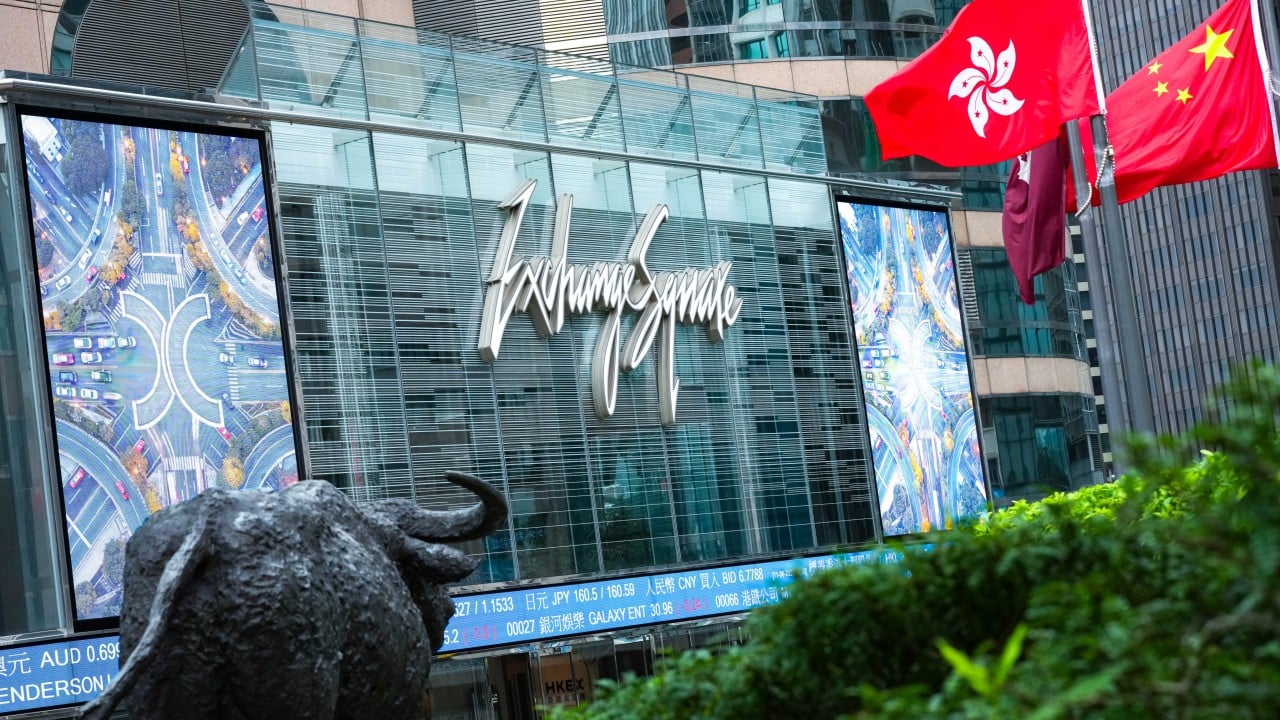
Hong Kong has reclaimed its crown as the world’s leading destination for initial public offerings, but the victory celebration inside the trading halls of Exchange Square masking a structural vulnerability. While local think tanks and exchange officials credit a deliberate diversification strategy for the spectacular surge in listing volumes, the reality is far more transactional.
The city did not diversify its way to the top by attracting global corporate giants. It triumphed because Beijing redirected its massive domestic corporate pipeline southward. Meanwhile, you can read other events here: Why AI Supply Chain Projects Are Quietly Failing.
To mistake a politically driven capital migration for a broad-based, global market diversification is the single most dangerous error an industry analyst can make right now.
The Illusion of Variety
On paper, the data compiled by capital market advisory groups looks flawless. In 2025, Hong Kong hosted 119 new listings that generated an aggregate HK$285.8 billion, a blistering 225% jump from the cyclical lows of the previous year. The initial half of 2026 maintained this momentum, tracking closely behind New York's tech-heavy exchanges. To see the full picture, we recommend the excellent report by The Economist.
Local policy groups point to these numbers as proof that listing reforms, like the Chapter 18A rules for pre-revenue biotech and the Chapter 18C framework for specialist technology firms, have successfully broadened the market's horizons. They claim the market is no longer dependent on the volatile swings of classic mainland property developers and internet conglomerates.
Look closer at the individual corporate tickers that drove this resurgence. Contemporary Amperex Technology Co. Limited (CATL) anchored the industrial push with a massive US$5.2 billion listing, followed closely by mining giant Zijin Gold and heavy machinery titan Sany. Advanced manufacturing, vehicle engineering, and green technology now dominate the pipeline.
This is indeed diversification away from the old real estate and e-commerce duopoly. Yet every single one of these landmark issuers is a mainland Chinese company.
True market diversification requires geographic variety among issuers, not just a shift in industrial sectors within the same nation. The primary source of capital has shifted inward, too.
The mechanism keeping the exchange afloat is the Southbound leg of the Stock Connect program, which allows mainland retail and institutional investors to funnel liquidity directly into Hong Kong-listed shares. Southbound daily turnover skyrocketed by 84% year-on-year, accounting for an unprecedented 24% of the city’s total trading volume.
Hong Kong has not transformed into a global melting pot of corporate capital. It has become a highly sophisticated offshore financial utility for the People's Republic of China.
The Regulatory Push Factor
The sudden stampede of mainland industrial champions into Hong Kong was not sparked by a sudden infatuation with the city’s regulatory framework. It was forced by an aggressive regulatory squeeze at home and abroad.
In early 2024, the China Securities Regulatory Commission enacted strict guidelines designed to optimize the quality of domestic listings on the Shanghai and Shenzhen exchanges. Mainland regulators placed an unyielding emphasis on sponsor responsibility, effectively slowing the domestic IPO pipeline to a crawl to prevent retail market dilution.
For a scaled Chinese industrial enterprise requiring billions in expansion capital, waiting out the domestic queue was not an option. Hong Kong became the designated escape valve.
Simultaneously, the geopolitical climate made New York a hostile environment. Capital market lawyers face a wall of scrutiny when trying to shepherd Chinese technology or healthcare companies toward a Nasdaq listing.
Proposed Western legislative frameworks targeting biotechnology supply chains have made cross-border listings in the United States a legal minefield.
Faced with severe delays in Shanghai and political friction in New York, corporate boards looked to Hong Kong. The introduction of confidential filing mechanisms allowed these massive firms to execute their listing preparations far from the public eye, mitigating early speculative short-selling.
The Missing Global Component
The fundamental risk of this current model lies in its geopolitical uniformity. Think tanks frequently argue that Hong Kong can serve as a dual-engine hub, functioning as a bridge between the Association of Southeast Asian Nations (ASEAN) and the Middle East.
The actual deal flow from these regions remains minimal.
Attracting a handful of dual-listings or secondary shares from international commodity firms does not constitute a global market. A genuine international financial center requires global asset managers, Western endowments, and European pension funds to actively anchor new listings.
While sovereign wealth funds from the Middle East and selective long-only funds from Europe participated in the 2025 listings, their allocations were highly defensive. They targeted large, profitable, state-adjacent industrial plays rather than innovative, high-growth startups.
The international investment community is demanding a level of corporate governance and valuation predictability that creates tension with domestic Chinese corporate structures. When an exchange becomes heavily reliant on domestic capital flows to clear its largest deals, global institutional investors lose their pricing leverage. They become secondary participants in a market tailored for mainland liquidity.
The Structural Cost of Success
This heavy tilt toward heavy industrial, semiconductor, and new-energy issuers introduces a different kind of cyclical risk. The old internet-driven market was volatile, but it was highly liquid.
Modern industrial and manufacturing firms operate on tight capital cycles and lower margins. They do not command the astronomical valuation multiples that software providers once enjoyed.
| Sector Concentration | Vintage Model (2020-2021) | Current Model (2025-2026) |
|---|---|---|
| Primary Drivers | Internet platforms, real estate developers | Advanced industrials, new energy, biotech |
| Capital Origin | Global institutional, Western venture capital | Mainland corporate, Southbound Stock Connect |
| Valuation Foundation | Aggressive growth projections, platform scale | Capital expenditure efficiency, national alignment |
The table illustrates the core transformation. The current market structure is more stable, but it possesses a significantly lower growth ceiling.
The average aftermarket performance of major listings showed a modest short-term bump of roughly 23% in the initial month post-IPO, but sustaining those valuations over a multi-year horizon requires consistent global capital inflows.
If the exchange cannot attract genuine international corporate issuers, it runs the risk of becoming an echo chamber for regional capital. Relying solely on sector diversification within a single geographic ecosystem creates a systemic single point of failure.
Any macroeconomic headwind that impacts the industrial engine of the mainland economy will instantly translate into a liquidity freeze on the trading floor of the Hong Kong exchange.
True resilience cannot be engineered through policy papers or regulatory adjustments alone. The exchange must demonstrate that a non-Chinese corporate entity can list in Hong Kong, attract deep pools of international liquidity, and achieve a fair valuation without relying on mainland retail investors to clear the book. Until that happens, the global IPO crown remains a glittering distraction from a deeply centralized reality.