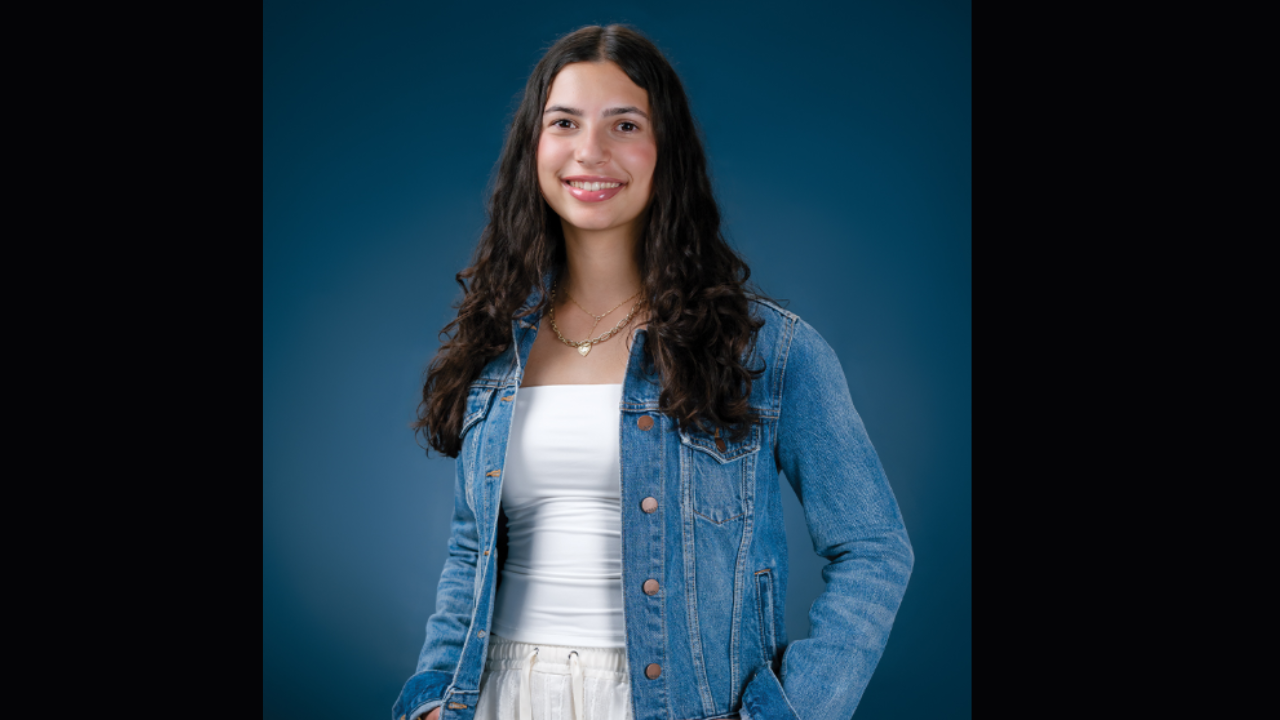
When sixteen-year-old Lilah Mehta walked into a biomedical research facility at the Yale School of Medicine, she was not there to wash glassware or shadow an indifferent professor. The New Canaan resident and King School student stepped directly into the complex, volatile world of molecular neurodegeneration, eventually earning a co-authorship on a peer-reviewed study published in Current Opinion in Immunology. Her path—working alongside senior investigators like Dr. Srikant Rangaraju to dissect how Kv1.3 channels interact within microglial cells and peripheral T cells—illustrates a widening structural shift in how elite institutions recruit and train the next generation of scientific minds. Yet, beneath the glossy sheen of adolescent prodigy profiles lies a grueling administrative and intellectual gauntlet that few high schoolers are equipped to survive.
The Architecture of Early Access
Secondary science education has long suffered from a profound bottleneck. Standard high school curricula treat biology and chemistry as static collections of settled facts rather than fluid, contested frontiers. Programs like the Advanced Science Program with Independent Research and Engineering (ASPIRE) at King School, directed by educators like Dr. Victoria Schulman, attempt to bridge this chasm by embedding students directly into university ecosystems.
This is not simple mentorship. It is an immersion pipeline. Students must master foundational database navigation through platforms like PubMed and ScienceDirect, parsing dense medical literature before they even understand the underlying biochemical nomenclature. Mehta herself noted the steep cognitive climb required to untangle unfamiliar mechanisms, from tracking cellular iron-dependent death pathways like ferroptosis to interpreting messy network datasets.
The friction is deliberate. Real laboratories do not run on textbook scenarios. Mehta’s initial months in the Yale environment involved devastating setbacks, including consecutive cell batch failures triggered by fungal infections. These contamination events highlight a core truth of modern wet-bench research: failure is constant, expensive, and emotionally taxing. For a teenager conditioned to chase a rubric for an A-plus grade, discovering that science is fundamentally a sequence of controlled failures can be disorienting.
The Meritocratic Divide in STEM Training
While stories of high school co-authorships make for compelling local magazine profiles, they also expose a glaring systemic imbalance in modern academic enrichment. Access to university-level laboratories remains heavily contingent on geography, institutional wealth, and elite secondary school networking.
Consider the infrastructure required to produce a teenage researcher. It demands a private or exceptionally well-funded public school with dedicated independent study tracks, proximity to an R1 research institution like Yale or the University of Connecticut Health Center, and mentors willing to absorb the liability and overhead of training minors.
[Traditional High School Science] -> Rigid Curricula / Standard Labs
[Elite Pipeline (ASPIRE/Yale)]   -> University Mentors / Peer-Reviewed Output
When a student from Fairfield County secures a finalist spot at the Connecticut Science and Engineering Fair, it is the visible tip of an invisible pyramid of privilege. The disparity raises uncomfortable questions for science educators. If rigorous, publishable research is restricted to teenagers whose prep schools maintain direct pipelines to Ivy League medical departments, we risk creating a neo-feudal academic caste system where scientific aptitude is validated only when backed by institutional proximity.
Beyond the Resumé Bullet
The psychological toll of high-level academic competition is rarely discussed in triumphant press releases. Teenagers operating in university labs are expected to balance rigorous advanced coursework, standardized testing, extracurricular leadership—such as campus life committees or community service projects—and the unforgiving cadence of bench science.
When things break, they break publicly. Data gets corrupted, hypotheses disintegrate, and months of work evaporate overnight. Surviving this environment requires a specific psychological resilience, an ability to detach self-worth from immediate data outcomes. Mehta's trajectory suggests that the true value of early lab exposure is not the line on a curriculum vitae or the college admissions boost, but the brutal, accelerated shedding of naive certainty.
Science does not care about your GPA. It demands an appetite for sustained confusion. As more academic medical centers open their doors to exceptional high schoolers through structured regional initiatives, the challenge for institutions will be democratizing this friction. Until then, the laboratory remains an exclusive crucible, turning a select few raw minds into battle-tested researchers long before they ever set foot in a university lecture hall.