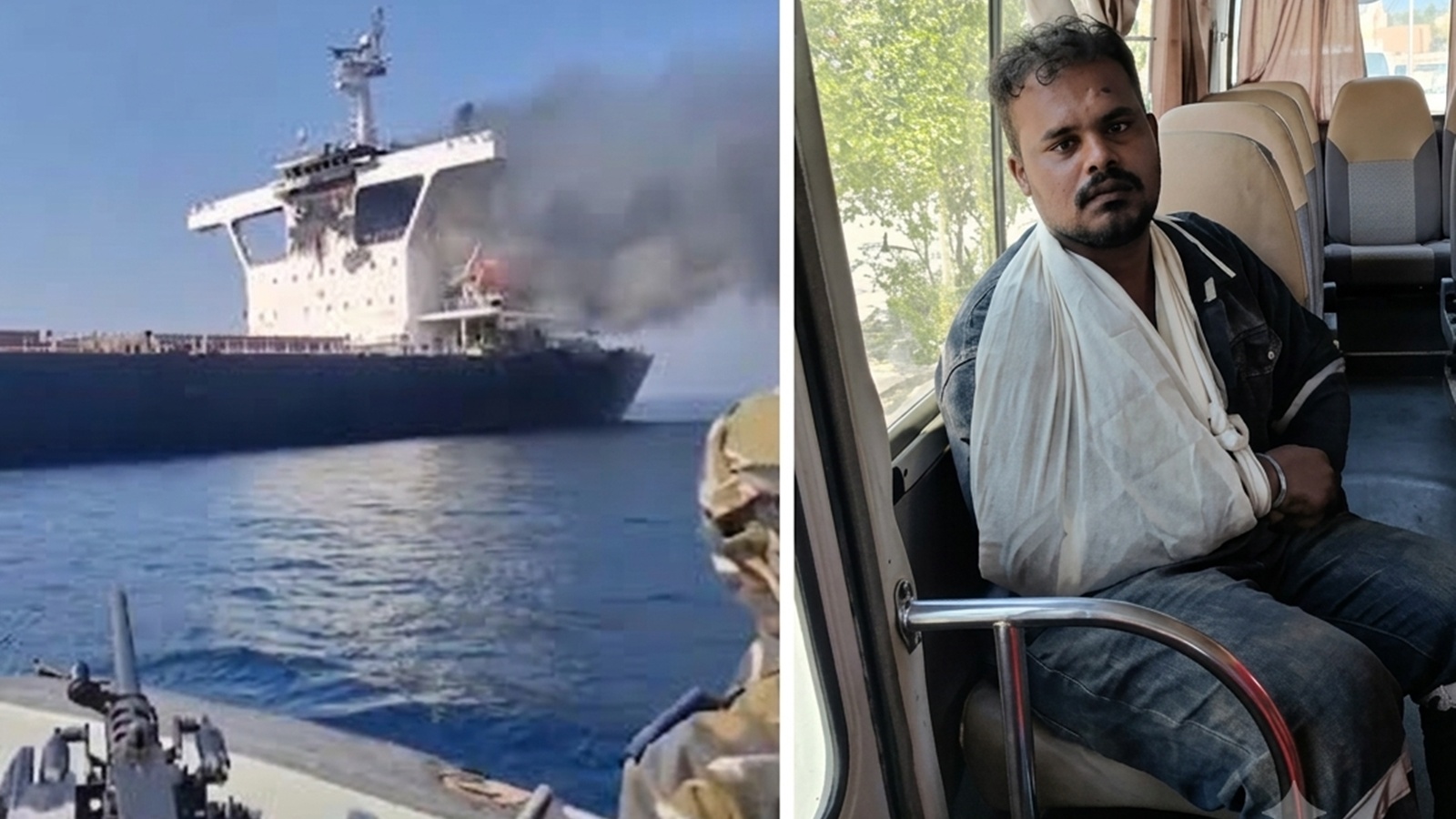
When an Indian sailor was killed after the MV Cape Dao came under attack in the Gulf of Oman, the maritime industry was forced to confront an uncomfortable truth that boardrooms routinely brush past. Merchant crews are the unarmed front line of global trade, sailing through contested waters on commercial vessels built for cargo efficiency rather than kinetic survival. A single strike on a hull changes everything for the people living inside those steel bulkheads, turning a routine transit through the Gulf of Oman into a sudden, terrifying fight for survival.
Standard breaking news reports tend to stop at the casualty count, the vessel name, and a brief mention of regional tension. That surface-level framing misses the mechanics of how modern maritime security actually works, why commercial ships remain vulnerable despite years of warnings, and how the human cost falls disproportionately on seafarers from major labor-supplying nations like India. After three decades covering shipping lanes, charter parties, and maritime risk, I have seen how quickly headlines fade while the structural flaws on the water remain untouched. Also making news in related news: Why The UN Human Rights Circus Keeps Balochistan Trapped In Permanent Stateless Suffering.
Why Merchant Vessels Are Sitting Ducks in Contested Waters
Commercial ships are designed to maximize deadweight tonnage, fuel economy, and schedule reliability. They are not warships. Even when a merchant vessel carries basic self-protection measures—such as razor wire, water cannons, citadel safe rooms, or embarked private armed security teams—those defenses are calibrated against low-end piracy or opportunistic boarding, not coordinated military ordnance, drones, or standoff strikes.
Consider a hypothetical example to see how tight the margin for error really is. Imagine a general cargo or bulk vessel steaming at fourteen knots through a narrow corridor where regional friction is high. A crew member on watch or working on deck has almost no warning time if an unmanned aerial system, a small fast-attack craft, or a projectile closes the distance. Unlike a naval frigate with layered radar, electronic countermeasures, and damage-control teams trained specifically for combat trauma, a merchant ship runs on a lean crew—often twenty to twenty-five people—whose primary training is navigation, cargo handling, engine maintenance, and basic firefighting. Further information regarding the matter are covered by NPR.
Maritime trade relies on predictable corridors because geography leaves few alternatives. Between the Persian Gulf, the Strait of Hormuz, and the Gulf of Oman, traffic funnels into tight lanes where vessels cannot simply take a wide detour without adding days of steaming time, burning extra bunker fuel, and breaching charter deadlines. Every extra day at sea carries a price tag that charterers and shipowners fight over down to the last dollar.
- Lean manning reduces daily operating costs, yet leaves fewer hands available during a sudden emergency or mass casualty event.
- Commercial hull construction prioritizes structural strength for cargo loads and wave stress rather than blast or splinter resistance.
- Tight schedule pressure pushes vessels through high-risk zones even when intelligence advisories urge caution or rerouting.
- Fragmented jurisdiction across flag states, beneficial owners, managers, and coastal authorities slows down post-incident investigation and accountability.
The Anatomy of Risk in the Gulf of Oman
The Gulf of Oman sits at the threshold between the open Arabian Sea and the Strait of Hormuz, making it a pressure valve for global energy and freight flows. When tensions flare in the broader Middle East, ships transiting this stretch face an environment where commercial neutrality offers very little shield. State actors, non-state proxies, and shadow-fleet operators all share overlapping waters, creating a fog of war where miscalculation is constant.
From an analyst's vantage point, one of the most overlooked factors in incidents involving vessels like the MV Cape Dao is the gap between war risk insurance pricing and actual physical protection on board. Underwriters price risk by adjusting premiums and designating high-risk areas or listed zones. That financial mechanism transfers monetary exposure, but paying an extra war risk premium does not stop shrapnel or weld a thicker plate onto a superstructure.
There is also a counter-argument worth examining fairly. Shipowners and operators often point out that rerouting entire fleets around crises is neither logistically simple nor economically sustainable for global supply chains. If every commercial operator halted transit at the first sign of heightened threat alerts, freight rates would spike immediately, ports would back up, and essential commodities would face severe delays. Balancing commercial continuity against crew safety is not a neat equation, and pretending it is easy ignores the real economic trade-offs at stake.
Still, acknowledging commercial constraints does not excuse complacency. When an Indian sailor loses his life on a vessel attacked in the Gulf of Oman, the industry has to ask whether current risk assessment protocols treat seafarer lives as a fixed variable rather than a non-negotiable floor. Too often, advisories are issued as broad warnings while individual voyage decisions are left to a patchwork of commercial incentives.
Indian Seafarers and the Human Cost of Global Freight
India is one of the world's largest suppliers of officers and ratings to the global merchant fleet. Walk through the crew quarters of almost any ocean-going vessel today, and you will find Indian mariners serving on the bridge, in the engine room, and on deck. When an attack occurs in the Gulf of Oman, families in coastal states like Maharashtra, Kerala, Tamil Nadu, Goa, or West Bengal are the ones waiting by the phone for word that is often delayed by maritime communications protocols and corporate caution.
Seafarer welfare has a long history of lagging behind commercial milestones. When ships are hit, the immediate focus of industry chatter usually centers on hull integrity, cargo claims, insurance coverage, and geopolitical attribution. The human story—the trauma suffered by surviving crew members trapped miles from shore, the agonizing wait for repatriation, and the long-term financial security of a bereaved family—frequently gets pushed into the background once the initial news cycle passes.
On paper, a contract of employment covers repatriation, wages, and death benefits. In practice, families often face months of bureaucratic friction across flag states, manning agents, and insurers while grieving a loved one killed thousands of miles from home.
What makes this dynamic particularly sharp is how little leverage individual seafarers have once a voyage begins. A mariner can refuse a voyage into a designated war zone under certain collective bargaining frameworks, yet doing so can carry career stigma, lost income, or pressure from agencies in a competitive labor market. Many sailors go where the ship goes because supporting their families depends on keeping their sea service continuous.
What Shipowners, Insurers, and Regulators Get Wrong
After major maritime incidents, the usual playbook rolls out: roundtables are convened, statements express deep regret, and guidelines are updated on paper. In my years watching this sector, paper compliance is abundant while real operational reform moves at a crawl.
One major blind spot is how threat intelligence is shared and acted upon. Commercial operators receive alerts from naval coalitions, private security firms, and flag administrations, yet information can arrive fragmented or late. A vessel master on the bridge needs clear, actionable guidance—not vague geopolitical commentary—when operating near contested waters like the Gulf of Oman.
Another flaw lies in emergency preparedness for non-military crews. Most merchant mariners train for collisions, groundings, engine fires, and abandon-ship drills. Far fewer receive realistic training for missile or drone strikes, secondary fires from fuel or cargo, or severe blast and burn injuries while waiting hours for naval or coast guard assistance. Waiting two or three hours for help in open water can feel like an eternity when someone is critically injured.
| Stakeholder Group | Primary Focus During Crisis | Key Blind Spot |
|---|---|---|
| Shipowners and Managers | Vessel safety, schedule recovery, liability containment | Underestimating psychological trauma and crew fatigue after attacks |
| War Risk Insurers | Premium adjustments, zone listings, hull and liability cover | Financial pricing does not directly improve on-board physical hardening |
| Flag and Coastal States | Diplomatic statements, navigation notices, casualty reporting | Slow cross-border coordination on investigations and family support |
| Seafarer Unions and Families | Crew repatriation, compensation, legal protection | Uneven enforcement of welfare standards across flags of convenience |
None of these fixes are silver bullets. Arming merchant ships heavily raises legal, diplomatic, and escalation risks that most governments and shipowners rightly oppose. Diverting vessels indefinitely is not always feasible without choking trade. Yet doing nothing beyond offering condolences after each tragedy is a failure of leadership.
Accountability Beyond the Headlines
When a vessel such as the MV Cape Dao is targeted and an Indian sailor is killed, accountability cannot stop at naming the region or blaming distant actors. Every link in the maritime chain—from the charterer demanding rapid delivery to the manager approving the route and the insurer underwriting the risk—participates in a system that puts civilians in harm's way.
Real reform requires concrete choices rather than platitudes: stricter criteria for routing through active threat corridors, faster and more transparent compensation and repatriation for affected crews, and honest recognition that cheap, frictionless global trade rests on the backs of people who rarely get a say in the risk calculus. Until commercial shipping treats crew protection with the same urgency it brings to protecting cargo and schedules, another sailor's name will inevitably join the ledger.


