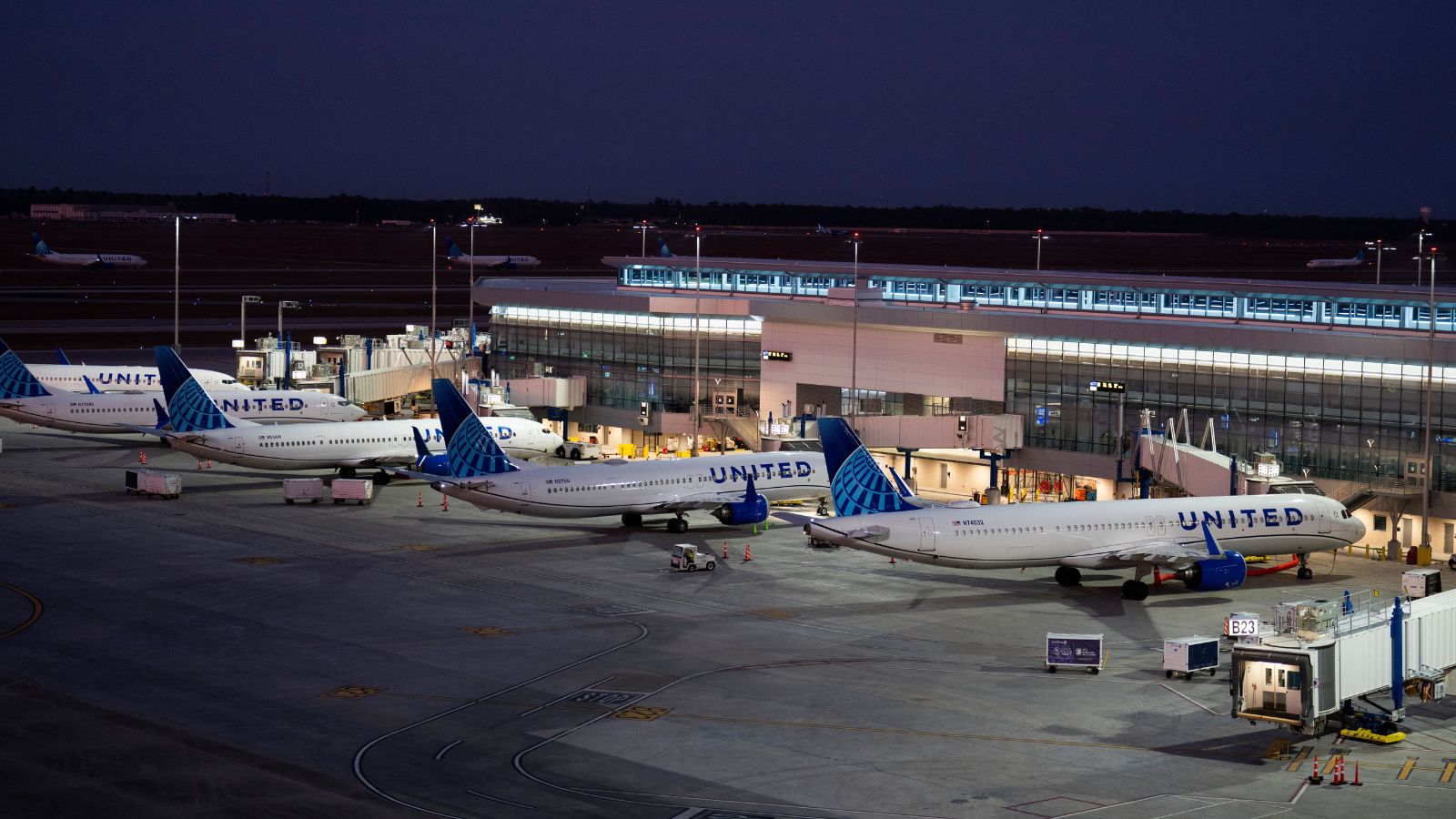
When a communications outage halts commercial air traffic across the United States, flights resume only after aviation engineers isolate the broken data pipeline, verify backup routing, and clear the backlog of aircraft queued on tarmacs nationwide. While airline press releases and federal regulators typically frame these ground stops as isolated technical glitches, the real story sits buried inside a decades-old architecture of legacy telecommunications lines, single-point software dependencies, and aging data hubs. Commercial aviation moves millions of people every day on top of a communications grid that was never designed for modern traffic volume.
The immediate chaos is always visible. Gate boards flip from green to red. Terminals fill with stranded travelers sitting on carpets near charging outlets. Beneath that surface disruption, however, a far more rigid set of safety protocols dictates why a single severed fiber line or corrupted database can freeze an entire continent of departures within minutes.
How a Single Wire Breaks National Airspace
Aviation does not tolerate guesswork. Before a commercial airliner pushes back from a gate, dispatchers, pilots, and air traffic controllers must share a continuous stream of verified data. This includes flight plans, upper-atmosphere wind models, runway surface conditions, and real-time maintenance logs.
When a primary communications network fails, that synchronization breaks instantly. Pilots lose direct data-link access to airline operations centers. Air traffic control facilities lose automated handoff capabilities between regional sectors. Under Federal Aviation Administration rules, if automated verification drops below strict safety thresholds, controllers must revert to manual voice procedures and widen the physical distance between aircraft in the sky.
Space requires time. Widening the buffer between airborne jets forces air traffic managers to throttle the number of planes entering congested airspace. The fastest way to stop congestion in the air is to lock planes to the ground. A ground stop is not a panic button; it is a calculated pressure-release valve designed to keep the sky manageable while technicians hunt down the fault on the ground.
The Hidden Vulnerability of Centralized Dispatch
Most major US carriers rely on centralized operations centers to manage their global fleets. A single facility in Texas, Georgia, or Illinois might calculate fuel loads, weight-and-balance figures, and routing clearances for thousands of flights simultaneously.
This centralization saves millions of dollars in overhead during normal operations. Yet it creates a massive structural liability. If the telecommunications trunk connecting that central nervous system to the outside world goes dark, the entire airline goes blind at once.
Consider a hypothetical example of how this cascades. Suppose a third-party telecommunications provider accidentally cuts a primary fiber-optic bundle during routine highway construction. In theory, a secondary redundant circuit should pick up the traffic within milliseconds. In practice, decades of corporate mergers have left airlines running patched-together software stacks. When traffic suddenly shifts to the backup line, legacy authentication servers often reject the surge of unfamiliar routing addresses, choking the backup pipe before a single flight plan gets through.
Why Aviation Technology Moves at a Glacial Pace
Passengers routinely ask why an industry capable of landing a multi-ton aircraft in zero visibility still suffers from basic network outages. The answer lies in the economics and regulatory structure of aerospace certification.
Consumer tech companies push software updates every week. If a smartphone app crashes, a user restarts it and moves on. In commercial aviation, every line of code, router configuration, and cockpit display must survive exhaustive testing to prove it cannot interfere with flight-critical systems. Certifying a new communications protocol can take years and cost tens of millions of dollars.
Because certification is slow and expensive, airlines and federal agencies hold onto proven hardware long after Silicon Valley would consider it obsolete. Massive portions of the US airspace infrastructure still rely on Time Division Multiplexing circuits—a telecommunications standard developed in the twentieth century—to carry voice and radar data between control towers and regional centers. Telecom carriers are actively retiring these copper-based networks in favor of modern Internet Protocol routing, forcing aviation agencies into expensive, complex migrations while keeping the live system running twenty-four hours a day.
The Domino Effect After the Fix
Restoring the broken connection is only the halfway point of a major outage. Once engineers bring the servers back online and verify data integrity, the industry faces an acute logistical math problem.
Airplanes and flight crews are not interchangeable widgets. They operate on tightly choreographed rotations governed by strict federal limits on pilot duty hours. A two-hour communications blackout in the morning does not simply push the schedule back by two hours; it fractures the entire day's grid.
- Crew timeouts: Pilots and flight attendants have hard legal limits on how long they can remain on duty. If a crew sits on a tarmac waiting for communications to return, they may exceed their maximum hours before the plane ever reaches the runway. Once a crew times out, that aircraft cannot move until a reserve crew arrives, often from another city.
- Aircraft positioning: An aircraft stuck in Chicago cannot operate its scheduled afternoon leg out of Denver. Dispatchers must manually rebuild hundreds of individual aircraft routing chains while accounting for mandatory maintenance intervals that trigger after a specific number of flight hours.
- Airport gate gridlock: Inbound planes that were already in the air when the outage hit still have to land. When departing planes cannot push back, arriving jets have nowhere to park, forcing them onto remote taxiways and burning fuel reserves.
The Myth of Total Redundancy
Whenever a communications outage grounds flights, officials inevitably promise a comprehensive review and upgraded backups. Industry veterans hear these assurances with practiced skepticism. True redundancy in complex networks is notoriously difficult to achieve because hidden dependencies frequently tie primary and backup systems together.
An airline might pay two different telecommunications companies for separate fiber routes entering its headquarters, believing it has eliminated single points of failure. Years later, an outage reveals that both companies leased space inside the exact same underground conduit three miles down the road, or that both networks route through the same regional switching hub.
Software introduces even subtler traps. During the 2023 failure of the Notice to Air Missions system, a damaged database file corrupted both the live system and its immediate backup simultaneously. Because the backup was designed to mirror the primary database in real time to prevent data loss, it faithfully copied the corruption the instant it occurred. The architecture worked exactly as programmed, and it took the entire national airspace down with it.
Who Pays When the Network Goes Dark
For travelers, a communications outage triggers an immediate battle over financial responsibility. Under US Department of Transportation guidelines, airlines owe passengers cash refunds if a flight is canceled and the traveler chooses not to take an alternative flight. However, compensation for hotels, meals, and ground transportation depends entirely on whether the airline accepts blame for the delay.
When an airline's internal server crashes, the carrier classifies the disruption as a controllable delay, unlocking meal vouchers and hotel accommodations for stranded flyers. When the failure originates inside a federal system or a third-party telecom network outside the carrier's direct control, airlines frequently classify the event as uncontrollable, shifting the financial burden of overnight stays directly onto the passenger.
This gray area leaves travelers caught between corporate legal departments and federal regulators. A passenger sitting in an airport terminal does not care whether the severed cable belonged to the airline, a regional telecom provider, or the federal government. To the person missing a wedding, a business negotiation, or a medical appointment, the failure is absolute.
The Quiet Cost of Deferred Modernization
Modernizing the communications backbone of US aviation requires sustained capital investment that rarely produces flashy headlines. Politicians prefer funding new airport terminals or cutting ribbons on fresh runways. Upgrading underground fiber rings, rewriting legacy mainframe code, and replacing aging air traffic control switches do not make for compelling campaign photography.
Yet these invisible arteries determine the true capacity of American air travel. Every year, airlines add larger aircraft, denser schedules, and tighter turnaround times to maximize fleet utilization. The margin for error shrinks with every added flight. When the underlying data pipes run near maximum capacity without modern failover architecture, minor technical hiccups inevitably escalate into national emergencies.
Until federal agencies and private carriers decouple legacy software dependencies and enforce genuine physical separation across their telecommunications grids, the system will remain vulnerable to sudden freezes. The planes are built to handle extreme turbulence in the sky, yet they remain entirely at the mercy of fragile wires buried beneath the ground.