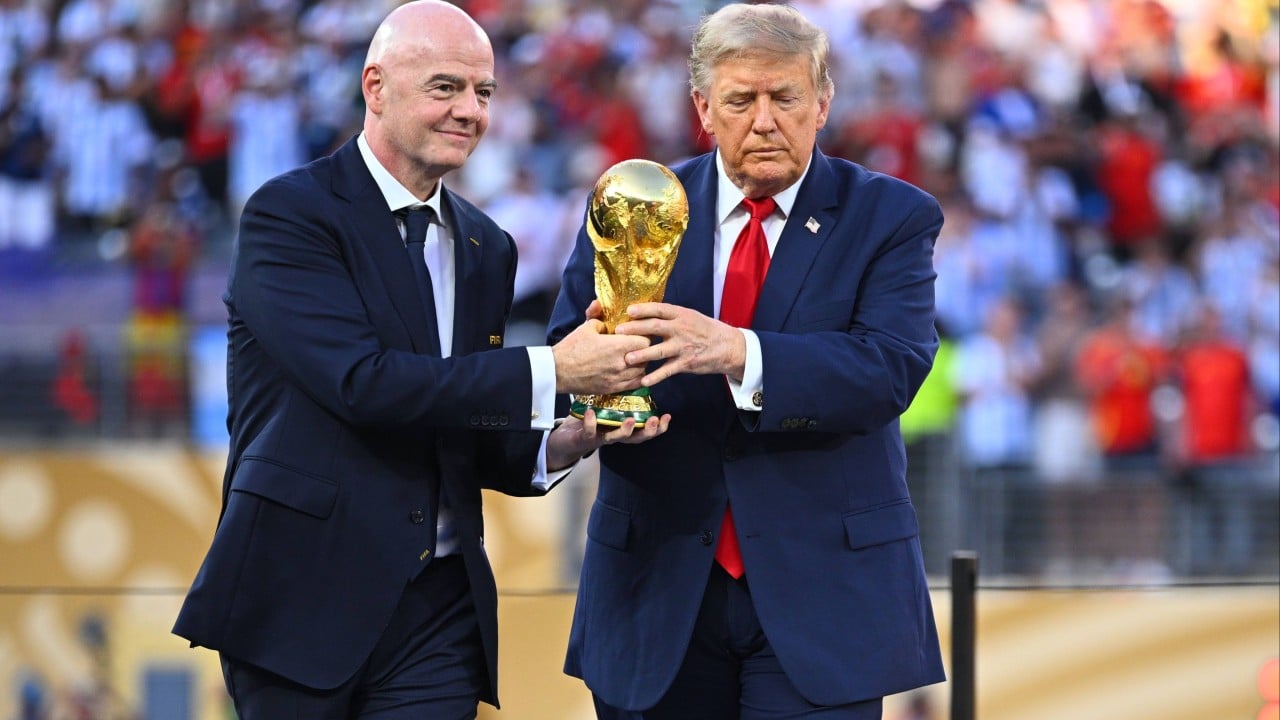
Gianni Infantino and FIFA face intense backlash over a secretive private investment plan that threatens to alter the financial architecture of global association football. Critics argue that opening the door to external equity threatens the traditional governance model of the sport, replacing democratic sporting oversight with aggressive commercial optimization. For decades, football operated under a strict federation model where revenues generated by the World Cup flowed back into global development, grassroots programs, and member associations. Now, external capital threatens to redirect those streams toward private balance sheets.
The roots of this financial shift trace back years. FIFA has steadily transformed from a non-profit Swiss association into a global entertainment conglomerate. Every four years, the quadrennial tournament generates billions of dollars in television rights, corporate sponsorships, and ticket sales. Yet, leadership under Infantino continuously seeks new growth vectors. The expansion of the Club World Cup to a thirty-two-team format represents the primary vehicle for this strategy. To fund these expanded tournaments and guarantee massive payouts to elite clubs, FIFA requires liquidity beyond its traditional reserves. Private equity and sovereign wealth funds stand ready with billions in dry powder, eager to secure a permanent slice of football calendar revenue. Meanwhile, you can read similar events here: The Golden Handcuffs on Tyneside.
Following the money reveals a stark conflict of interest. External investors do not inject capital out of philanthropic goodwill. They demand predictable returns, asset-backed guarantees, and control over commercial rights. When private funds enter sports governance, they introduce an imperative for margin expansion. This creates an immediate friction point with national leagues and player unions. Domestic leagues already accuse FIFA of calendar congestion, arguing that extra global tournaments exhaust players and cannibalize domestic broadcasting value. Introducing profit-seeking equity partners into the governing body risks wedding the regulator's decisions directly to investor dividend yields.
The Structural Mechanics of the Proposed Investment
Understanding why this initiative faces such fierce resistance requires looking past the public relations messaging and examining the actual mechanics of the deal structures under discussion. Historically, FIFA retained sole ownership of its competitions. No outside shareholders held a claim against tournament revenues. To explore the bigger picture, check out the excellent article by Sky Sports.
When external capital enters, it typically takes the form of a joint venture or a specialized commercial vehicle. FIFA establishes a subsidiary to manage media rights, sponsorships, and event promotions for expanded properties like the Club World Cup. Investors acquire equity stakes in this commercial arm. To make the pitch attractive to Wall Street and private equity giants, the asset must offer downside protection and priority cash flows.
- Seniority of Claims: Private investors demand that their returns are serviced before funds are allocated to grassroots development or solidarity payments for smaller member associations.
- Asset Encumbrance: Commercial rights tied to elite tournaments serve as collateral, limiting FIFA's future flexibility to alter tournament formats without shareholder approval.
- Monetization Pressure: Maximizing investor returns requires aggressive fixture scheduling, expanded broadcasting tiers, and constant commercialization of every minute of broadcast time.
These mechanisms shift the institutional DNA of FIFA. A body originally chartered to oversee the global game transforms into an asset manager beholden to external fiduciary duties.
The Pushback from European Leagues and Player Unions
The resistance to Infantino's financial strategy is not merely academic. It spans a coalition of European leagues, FIFPRO, and various national associations who view the plan as an existential threat to domestic ecosystems.
Domestic leagues form the bedrock of football fandom. Weekly fixtures sustain local cultures, stadium attendance, and community engagement. When FIFA introduces high-stakes global tournaments that crowd the calendar, domestic leagues suffer diminished broadcasting appeal and physical burnout among elite athletes. Players have reached a breaking point. The modern fixture calendar features virtually no meaningful offseason. Athletes play upwards of seventy matches a year when combining club duties, domestic cups, continental competitions, and international windows.
Adding an expanded Club World Cup backed by private investment money exacerbates this strain. Player unions have threatened legal action under competition law, arguing that FIFA acts as both regulator and commercial promoter—a clear conflict of interest. When a governing body regulates participation while simultaneously profiting from the commercial exploitation of the matches, antitrust concerns multiply rapidly.
The Illusion of Universal Distribution
Proponents of the investment plan defend it by pointing to the promise of increased funding for smaller federations. Infantino frequently frames commercial expansion as a redistribution mechanism, claiming that billions in new revenue will finally bridge the financial gap between European powerhouses and developing football nations in Africa, Asia, and Oceania.
This argument collapses under close scrutiny. While increased lump-sum distributions to smaller associations sound generous on paper, they often fail to generate sustainable structural improvements without accompanying governance reforms. More importantly, the math reveals a different reality. To satisfy private equity return hurdles, the gross revenue generated must vastly exceed historical baselines. After paying out investor yields, servicing debt, and covering the high operational costs of mega-tournaments, the net residual available for genuine solidarity distribution shrinks significantly.
Furthermore, funneling funds directly through central administration without stringent oversight risks entrenching local administrative corruption. History demonstrates that cash infusions into federations lacking transparent governance structures frequently vanish without trace, leaving grassroots pitches unbuilt and youth academies underfunded.
The Governance Vacuum at the Top
The ease with which these investment plans advance exposes deep vulnerabilities in FIFA’s internal checks and balances. The structure of the FIFA Congress gives equal voting power to micro-nations and global football giants. While democratic in principle, this dynamic allows leadership to secure broad blocks of votes through targeted development grants and infrastructure promises, insulating executive decisions from rigorous accountability.
When major European stakeholders raise objections, they are often dismissed as self-interested elites protecting their own commercial monopolies. There is truth to that accusation. European clubs and leagues guard their wealth fiercely. Yet, the fact that European stakeholders are self-interested does not make their warnings regarding private equity incorrect. Both things can be true simultaneously: European football generates disproportionate wealth, and introducing opaque private investment into global governance creates a dangerous precedent.
Transparency remains the primary casualty. Details regarding valuation, profit-sharing ratios, and governance veto rights granted to potential investors are guarded closely within Zurich boardrooms. Stakeholders outside the immediate inner circle learn about multi-billion-dollar commercial shifts through leaks or press statements rather than consultative stakeholder processes.
The Road Ahead for Global Football
The conflict over private investment marks a permanent turning point for the sport. Football has crossed the threshold from a sport governed by cultural traditions into an institutionalized global asset class.
The immediate battleground centers on legal challenges and calendar negotiations. Leagues and players hold the ultimate leverage: the labor. Without the world's best players on the pitch, any tournament loses its commercial viability. Yet, FIFA commands the regulatory authority to sanction matches and control official international windows. As these two forces collide, the courts will likely decide the boundaries of sports governance.
If the private investment model prevails, football will resemble modern corporate entertainment, where fan allegiance serves merely as a metric for customer lifetime value, and international tournaments function as yield-generation products for institutional portfolios. The soul of the game hangs in the balance, caught between the insatiable demands of capital and the enduring loyalty of those who play and watch it on local pitches every weekend.