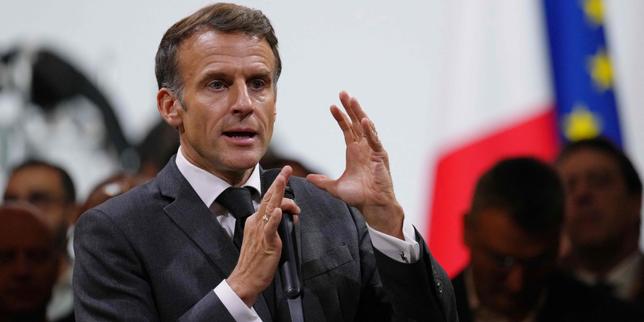
Emmanuel Macron has abandoned diplomatic ambiguity to accuse Russia of executing a direct, aggressive agenda on European soil. This sharp rhetorical pivot signals that Paris no longer views the war in Ukraine as a regional border dispute, but as an active hybrid campaign targeting European sovereignty, infrastructure, and democratic stability. By explicitly framing Moscow’s actions as an attack on European territory, the French president is attempting to shock hesitant Western allies into accepting a harsh reality. The post-Cold War security architecture is dead, and France is positioning itself to lead a continental war economy before it is too late.
For years, the Élysée Palace operated on a doctrine of keeping communication channels open with the Kremlin. Macron famously warned against humiliating Russia during the early months of the 2022 full-scale invasion, drawing sharp rebukes from Baltic and Eastern European capitals. That era of cautious statecraft has evaporated. When Macron stands before cameras and denounces an aggressive Russian agenda operating directly within European borders, he is reacting to a measurable escalation in covert warfare, cyber intrusions, and physical sabotage across the continent.
The Anatomy of a Shadow War
The shift in French rhetoric is grounded in intelligence assessments that point to a coordinated campaign beneath the threshold of conventional military conflict. European security services have documented a sharp rise in incidents that bear the hallmarks of Russian military intelligence, specifically the GRU. These are not isolated acts of vandalism. They represent a systematic effort to test NATO’s resolve, disrupt supply lines bound for Kyiv, and sow domestic panic among European voters.
Consider the pattern of incidents across the bloc. Arson attacks on commercial warehouses in the United Kingdom and Poland, GPS jamming over the Baltic Sea that has forced commercial airliners to turn back, and sophisticated cyberattacks targeting European hospitals and municipal networks. In France itself, security officials have investigated physical intimidation tactics, including the painting of Stars of David on Paris buildings and the placement of coffins near the Eiffel Tower—operations designed to inflame social divisions and amplify domestic polarization.
Hybrid warfare relies on plausible deniability. By recruiting local criminals, disposable proxies, and online operatives via encrypted messaging apps, Moscow achieves strategic disruption without triggering Article 5 of the NATO treaty. Macron’s decision to call this an aggressive agenda on European territory strips away that deniability. He is publicly naming the threat to justify domestic security crackdowns and higher defense spending.
Why Paris Changed Its Tune
To understand Macron’s transformation from diplomatic mediator to European hawk, one must look at the collapse of French assumptions regarding Moscow. Paris long believed that economic interdependence and personal rapport between leaders could restrain Russian expansionism. That illusion shattered as the war in Ukraine ground into a war of attrition, revealing that the Kremlin had transitioned its entire economy onto a permanent war footing.
French intelligence agencies realized that Russia’s military-industrial complex was outproducing the entire Western alliance in critical munitions like 155mm artillery shells. Simultaneously, Moscow began systematically dismantling French influence in West Africa. Through the deployment of Wagner Group mercenaries—later rebranded as the Africa Corps—Russia fueled anti-French sentiment and backed military coups in Mali, Burkina Faso, and Niger. Paris watched its traditional sphere of influence crumble while Russian disinformation networks celebrated the ouster of French troops.
The realization in Paris was stark. Russia was not merely fighting a war in Donbas; it was waging a global campaign to weaken Western democracies wherever they were vulnerable. If Moscow could expel France from the Sahel and destabilize European elections through targeted information operations, no border on the European continent could be considered secure. Macron’s hardline stance is a belated recognition that appeasement only invites further encroachment.
Strategic Ambiguity Turned Inward
For decades, nuclear powers have relied on strategic ambiguity to keep adversaries guessing about their red lines. Historically, Western leaders used the opposite approach regarding Ukraine, explicitly stating what they would not do—such as sending troops or providing long-range missiles—to avoid escalation. Macron flipped this script entirely when he refused to rule out deploying Western ground forces to Ukraine.
The backlash from Berlin, Washington, and other NATO capitals was immediate and fierce. German Chancellor Olaf Scholz quickly distanced himself from the remarks, reiterating that no European or NATO soldiers would set foot on Ukrainian soil. Yet, Macron doubled down. His logic is rooted in deterrence theory. By telling Vladimir Putin what Europe will never do, Western leaders hand the Kremlin a risk-free environment to escalate at will.
Macron’s rhetoric about an aggressive Russian agenda on European territory is an extension of this new doctrine. It is designed to force European allies out of their comfort zones. Many Western European nations still operate with a peacetime mindset, treating defense procurement as a bureaucratic exercise rather than an existential necessity. By framing Russia as an active threat inside Europe, Macron is attempting to create the political urgency required to fund joint European defense bonds and streamline weapons manufacturing.
The Domestic Political Gamble
Foreign policy does not exist in a vacuum, and Macron’s hawkish turn is deeply intertwined with France’s fractured domestic politics. The French president faces a resurgent far-right led by Marine Le Pen’s National Rally, alongside a fragmented left-wing coalition. Both political flanks have historically expressed skepticism toward NATO and advocated for a more conciliatory approach toward Moscow, often framing the war in Ukraine as a distant conflict driving up domestic energy prices.
By elevating the Russian threat to an immediate danger on European soil, Macron is attempting to draw a sharp dividing line between his centrist coalition and his populist rivals. He is framing the geopolitical crisis as a test of national patriotism and competence. In this narrative, anyone who opposes robust support for Ukraine or European defense integration is effectively enabling a foreign adversary that is actively targeting France.
However, this strategy carries immense political risk. Polling consistently shows that while the French public supports Ukraine, there is deep anxiety about direct military involvement and the economic costs of prolonged confrontation. Critics argue that Macron is using external threats to distract from domestic economic stagnation, pension reforms, and ballooning national debt. If voters perceive his rhetoric as reckless warmongering rather than prudent deterrence, the political payoff could backfire catastrophically in future elections.
Europe's Industrial and Military Reality Check
Strong words from the Élysée Palace cannot mask the severe structural deficiencies facing European militaries. Decades of underinvestment following the collapse of the Soviet Union hollowed out continental defense industries. Ammunition stockpiles were depleted, tank fleets were reduced to fractions of their Cold War strength, and supply chains became reliant on single-source suppliers vulnerable to disruption.
Macron has championed the concept of European strategic autonomy—the idea that Europe must be capable of defending itself without relying entirely on the American security umbrella. With the unpredictability of US domestic politics looming over the transatlantic alliance, this vision has gained traction in Brussels. Yet, the gap between French rhetoric and European industrial capacity remains vast.
France itself has struggled to scale up production rapidly enough to meet both its own commitments and Ukraine’s urgent battlefield needs. While Paris has increased defense spending through its Military Programming Law, delivering high-end systems like CAESAR self-propelled howitzers and air defense batteries takes years, not months. Furthermore, European nations remain deeply divided on how to pay for rearmament. Northern and Eastern European states favor immediate purchases from established American and South Korean manufacturers, while France insists that European taxpayer money must stay within the European defense industrial base.
The Information Battlefield
Beyond tanks and artillery, the aggressive agenda Macron references is fought daily across digital networks. French authorities have uncovered sophisticated Russian disinformation ecosystems, such as the Portal Kombat network, designed to flood European social media with fabricated news stories and manipulated videos.
These operations do not aim to convince Europeans that the Kremlin is benevolent. Instead, their goal is epistemic exhaustion—convincing citizens that truth is unknowable, that their own governments are corrupt, and that supporting Ukraine is a futile waste of resources. Viginum, the French state agency tasked with monitoring foreign digital interference, has documented how these networks rapidly adapt to current events, exploiting everything from bedbug panics in Paris to farmer protests across the continent.
Combating this requires more than diplomatic condemnations. It demands aggressive counter-intelligence, platform regulation, and public resilience. By publicly calling out Russia’s agenda, Macron is attempting to inoculate the French public against these narratives, stripping covert influence campaigns of their stealth advantage.
The Fractured European Consensus
Macron’s vision of a muscular, united Europe confronting Russian aggression faces stiff resistance from within the European Union itself. The bloc is far from monolithic. Countries like Hungary and Slovakia have actively obstructed EU aid packages for Ukraine and maintained cordial diplomatic ties with Moscow, arguing that sanctions hurt European economies more than Russia’s.
Even among staunch supporters of Kyiv, disagreements persist over the endgame. Baltic states and Poland view Russia as an existential threat that must be decisively defeated on the battlefield to ensure their own survival. In contrast, major powers like Germany remain deeply cautious, haunted by historical guilt and terrified of any miscalculation that could trigger a direct NATO-Russia nuclear exchange.
Macron sits awkwardly between these two camps. While his rhetoric now aligns closely with Warsaw and Tallinn, France’s actual military aid to Ukraine—measured as a percentage of GDP—has lagged behind Germany, the United Kingdom, and Nordic nations. Critics in Eastern Europe frequently point out this discrepancy, demanding that Paris match its bold speeches with heavier shipments of armored vehicles, air defense systems, and long-range munitions.
What Escalation Actually Looks Like
When leaders speak of an aggressive agenda on European territory, the public often imagines tank columns crossing the Suwalki Gap between Poland and Lithuania. Military analysts view that scenario as unlikely in the near term, given how heavily Russian ground forces are tied down in Ukraine. The real danger lies in the gray zone.
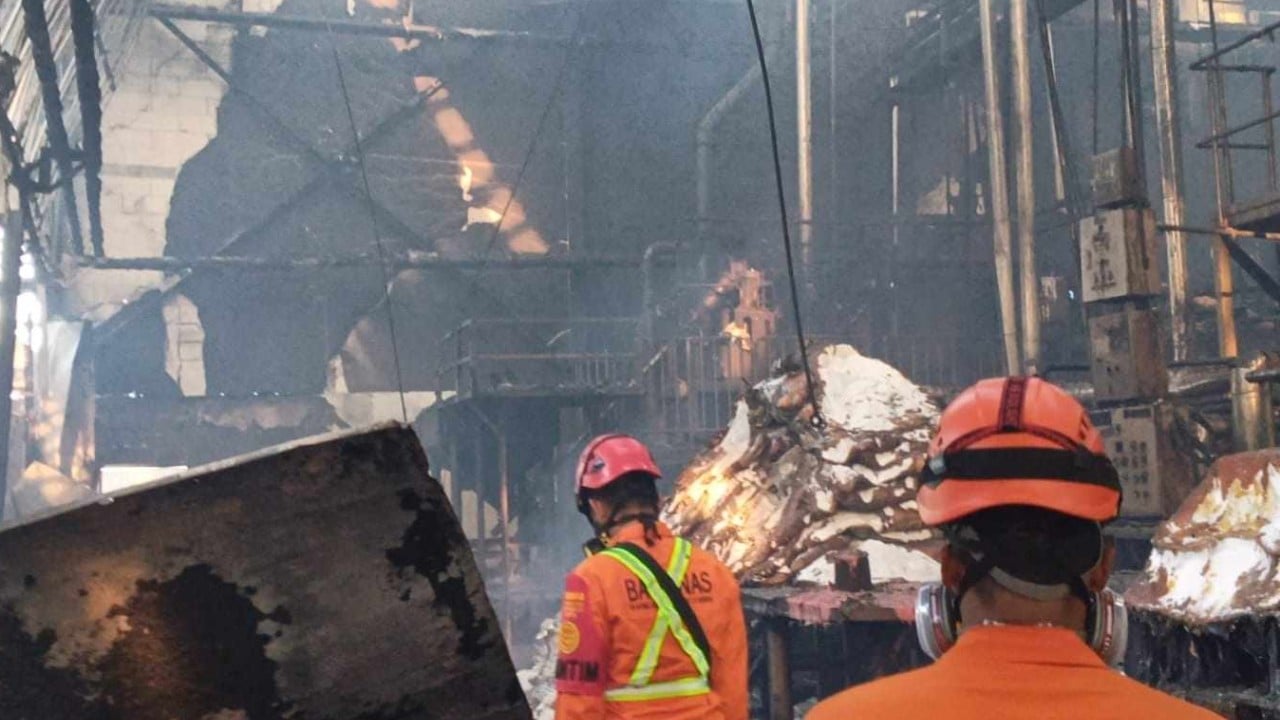
Escalation in Europe looks like cut undersea fiber-optic cables in the North Sea, severing financial and communications links between continents. It looks like coordinated cyberattacks disabling electrical grids during winter cold snaps, or unexplained explosions at chemical plants and rail junctions vital to NATO logistics. It involves weaponizing migration flows along the Finnish and Polish borders to strain social services and fuel far-right extremism.
In this environment, the traditional boundary between war and peace disappears. Nations find themselves under sustained attack without a formal declaration of war ever being issued. Macron’s warning is an acknowledgment that Europe is already living in this reality, whether its citizens and politicians want to admit it or not.
The Burden of Leadership
Emmanuel Macron’s presidency has always been defined by grand strategic visions that often outpace the political consensus required to execute them. His declaration that Russia is pursuing an aggressive agenda on European territory is his most consequential pivot yet. It forces an uncomfortable reckoning across Western capitals.
If Moscow is indeed operating offensively inside Europe, the era of incremental half-measures is over. Half-hearted sanctions that allow dual-use electronics to flow into Russian missiles via third countries will not suffice. Delayed deliveries of ammunition that leave Ukrainian troops outgunned ten-to-one will only embolden the Kremlin to push further west.
Europe stands at a historical inflection point where economic comfort and geopolitical security are no longer compatible. Every European government must now decide whether to absorb the steep financial and political costs of genuine deterrence today, or pay an infinitely higher price when the shadow war steps fully into the light.