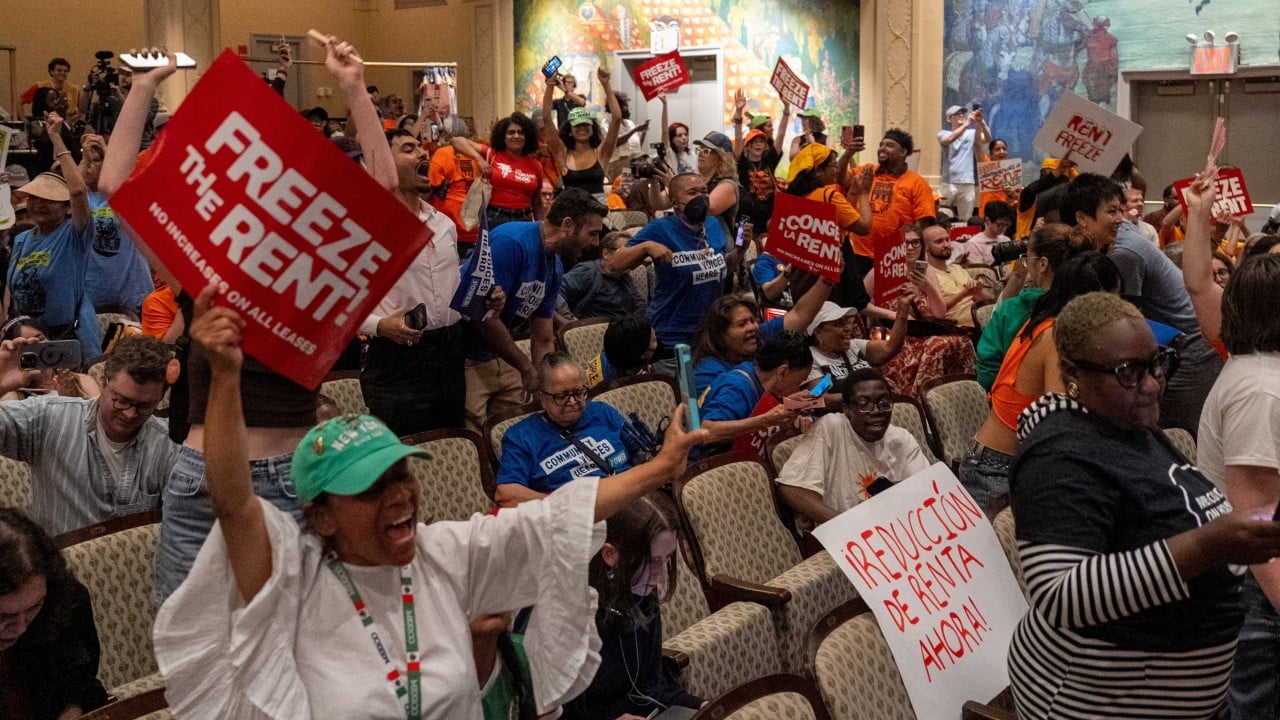
The Rent Guidelines Board delivered a sweeping victory for Mayor Zohran Mamdani by voting 7 to 1 to freeze rents for nearly one million rent-stabilized apartments across the five boroughs. The decision temporarily caps housing costs for roughly 2.4 million New Yorkers, marking the first time in the city's history that both one-year and two-year leases have been simultaneously frozen. While tenant advocacy groups are celebrating the move as a historic triumph against displacement, the policy masks a far more volatile economic reality. Underneath the populist victory lies a compromised regulatory process, an escalating real estate crisis, and an impending wave of building foreclosures that could ultimately destroy the very housing stock the city is trying to protect.
By orchestrating this freeze through a board stacked with his own appointees, Mamdani has fulfilled his core campaign promise with remarkable speed. The newly reshaped nine-member panel, featuring six fresh mayoral selections, voted in an atmosphere thick with political theatrics inside an East Harlem auditorium. Hours before the final ballots were cast, veteran landlord representative Christina Smyth resigned in protest, stating that the board had abandoned its legal mandate as a fact-finding entity to "vibe code" its way to a predetermined outcome. Her departure exposed the raw mechanics of a board that seemed less interested in auditing the financial health of the properties than in executing a political directive from City Hall.
The immediate math looks devastating for multi-family property owners. According to internal data from the board, roughly 100,000 rent-stabilized units across the city are already categorized as being in acute financial distress. These are properties where the cost of upkeep, regulatory compliance, and debt service outpaces the total rental income. While net operating incomes across some segments of the real estate sector grew by single digits last year, that growth was largely concentrated in premium and market-rate assets. For buildings constructed before 1974 that rely entirely on stabilized rolls, the compounding weight of double-digit insurance hikes, surging property taxes, and structural mandate updates has left operations deep in the red.
To understand how a frozen rent roll fractures a building, consider a typical building operation.
+-------------------------------------------------------------+
|               TYPICAL RENT-STABILIZED CASH FLOW             |
+-------------------------------------------------------------+
| [INCOME]  Frozen Base Rents (0% Increase Allowed)           |
+-------------------------------------------------------------+
| [EXPENSES]                                                  |
|   ├── Property Taxes (Consistently rising city baseline)   |
|   ├── Property Insurance Premiums (Up 20-50% in outer boroughs)|
|   ├── Fuel, Utilities, & Mandated LL97 Carbon Upgrades       |
|   └── Emergency Repairs & Lead-Paint Abatement              |
+-------------------------------------------------------------+
| [OUTCOME] Negative Amortization -> Capital Flight -> Decay  |
+-------------------------------------------------------------+
When building systems fail, it is the residents who pay the price in delayed repairs and deferred maintenance. The New York Apartment Association noted that small-scale, generational property owners in outer-borough neighborhoods like East New York and Jackson Heights have no institutional capital cushion to absorb consecutive years of zero revenue growth. When a roof leaks or a boiler goes down in a seven-unit building where rents are capped at $1,200, the owner cannot simply borrow more money; the underlying valuation of the asset collapses alongside its income stream.
This dynamic triggers an immediate chilling effect on credit markets. Banks and regional lenders do not underwrite mortgages based on political promises; they underwrite them on debt-service coverage ratios. With the stroke of a pen, the city has signaling to the financial sector that rent-stabilized assets are highly unstable collateral. Lenders are already tightening refinancing terms for older brick-and-mortar buildings, forcing owners into high-interest bridge loans or outright defaults. When private equity firms or distressed-debt buyers sweep in to purchase these foreclosed notes, they rarely do so to become benevolent community landlords. They buy to cut operational costs to the bone, accelerating the physical decay of the neighborhood.
Mamdani’s administration has attempted to cushion the blow by proposing publicly backed insurance options to cover a portion of the affordable housing market by 2030, but these initiatives are years away from scale. They do nothing to offset the immediate utility hikes and municipal tax assessments hitting owners this winter. The city is essentially running a dangerous economic experiment: capping revenues while forcing landlords to absorb uncapped, inflationary operational costs.
The political victory for the Democratic Socialists of America is undeniable. By seizing Gracie Mansion and immediately turning the Rent Guidelines Board into an instrument of pure executive will, the progressive wing has proven it can deliver tangible, short-term economic relief to its base. But treating the housing market as a zero-sum battleground between tenants and owners ignores the structural interdependence of the system. Without a mechanism to lower the actual cost of running a building in New York City, a hard freeze on rents is simply an exercise in borrowing time from an unavoidable structural collapse.