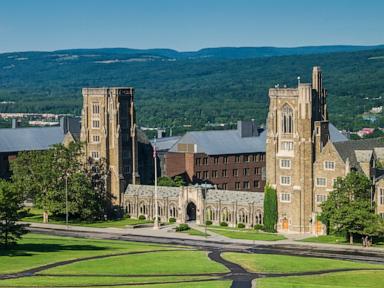
When explosive allegations of sexual assault hit an Ivy League campus, the immediate reaction from accused individuals often involves a frantic scramble for self-preservation. At Cornell University, leaked records, text message transcripts, and secretly recorded phone calls revealed a chilling coordinated effort by several students to manage, minimize, and contain serious allegations. Rather than facing institutional accountability head-on, internal communications showed fraternity members attempting to control the narrative
How Cornell Students Tried to Contain Rape Allegations Behind Closed Doors
news
When sexual assault allegations surface on a college campus, the instinct of institutions is often damage control. But what happens when the students themselves take containment into their own hands? Records, phone logs, and internal communications from Cornell University reveal a troubling dynamic where student networks moved quickly to manage the fallout of sexual misconduct accusations, prioritizing social protection and institutional reputation over transparency.
It is a messy reality of modern campus culture. Students aren't just reacting to crises; they are organizing responses, monitoring narratives, and attempting to insulate peer groups from public exposure. You don't hear about these mechanics in glossy university brochures. You find them in subpoenaed phone records and hastily deleted group chats.
The Anatomy of Campus Containment
When an allegation hits a tight-knit community like a Greek organization, a sports team, or a selective club, information becomes currency. The immediate reaction is rarely an open discussion about justice or support for the survivor. It is a scramble.
According to records surfacing from investigations involving Cornell students, communication channels light up within minutes of an incident becoming known. Texts fly. Calls are logged between key student leaders, witnesses, and organizational officers. The goal is simple: map out who knows what, minimize liability, and keep the situation quiet.
This isn't necessarily happening because every single person involved is malicious. Often, it is driven by a warped sense of loyalty. People protect their friends. They protect their social standing. They protect the house, the team, or the brand they've spent years building.
Why the Digital Paper Trail Betrays Them
Kids today grew up online, yet they still act like transient text messages disappear forever. They don't. Phone records and metadata are stubborn things.
When investigators or journalists piece together how allegations get smothered, they look at the gaps. They look at sudden silences. They look at coordination. A series of rapid phone calls between fraternity officers right after a party isn't proof of a crime on its own, but it paints a vivid picture of crisis management.
Students try to police their own circles because they distrust official administrative channels, but they also distrust the police. The irony is sharp. By attempting to handle severe accusations internally to avoid outside interference, they end up creating a separate paper trail of obstruction and complicity.
The Institutional Failure Beneath the Student Response
You cannot look at student containment efforts without examining the environment that breeds them. Why do students feel the need to bury allegations?
Because universities have spent decades treating sexual assault as a PR crisis rather than a human crisis. When students see how administration handles Title IX complaints—slow-walking investigations, protecting big donors or star athletes, and prioritizing legal defense—they learn the rules of the game. The unofficial rule is clear: keep your head down and handle your own problems.
Cornell is far from the only campus with this pathology. Elite universities across the country cultivate hyper-competitive environments where image is everything. When an allegation threatens that image, the social immune system kicks in. It attacks the victim's credibility and seals the cracks in the narrative.
What Happens When the Smoke Clears
Eventually, the containment fails. It almost always does. Someone keeps a screenshot. A victim refuses to be silenced. A phone record gets subpoenaed.
When the truth finally breaks out of the echo chamber, the fallout is devastating. The original allegation is compounded by the revelation of a cover-up. Careers are derailed, organizations face sudden suspensions, and the university scrambles to issue damage-control statements about zero tolerance.
Stop pretending campus culture is just about classrooms and campus traditions. It is also about power dynamics, institutional self-preservation, and the dark side of peer loyalty. Until universities build transparent systems that people actually trust, students will keep trying to manage crises themselves—and they will keep making things infinitely worse.