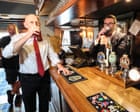
No 10 has vowed to block local authorities from outlawing "vertical drinking", drawing a hard line against council overreach as Westminster officials attempt to force table-service-only mandates on historic nightlife districts like Soho. Downing Street’s intervention highlights a widening cultural fracture between hyper-local municipal bureaucrats and central government over the economic survival of British pubs. At its core, the dispute exposes how planning committees weaponize dry bureaucratic jargon like "high-volume vertical drinking" to sanitize urban centers at the expense of communal heritage.
For decades, the physical layout of the British pub has remained stubbornly democratic. You walk in, squeeze past your neighbors to reach the mahogany bar, catch the bartender's eye, and hold your ground. That physical friction is the exact mechanism of social cohesion that sets British drinking culture apart from its more rigid continental or North American counterparts. In other news, read about: Inside the Deadly Realities of the Syria Bus Bombing Crisis.
Yet, local governance has drifted into an administrative mindset that views spontaneous human congregation as a public nuisance vector.
The Anatomy of Municipal Creep
Municipal planning departments across major urban centers are increasingly staffed by risk-averse technocrats who treat nightlife as an operational hazard rather than a cultural asset. When Westminster City Council drafted its updated licensing framework, the language revealed a deep anxiety about uncontained bodies. The text explicitly targeted open bar space, pushing instead for mandatory waiter-or-waitress service and an artificial ceiling on operating hours in legendary enclaves like Soho. The Guardian has provided coverage on this fascinating issue in extensive detail.
The official justification follows a familiar playbook. Planners argue that restricting patrons to seated areas minimizes noise leakage, curbs street-level disorder, and encourages orderly dispersal.
On paper, clean data points and quiet residential streets sound like good governance. In practice, forcing a traditional drinking establishment to operate like a sit-down bistro fundamentally breaks its business model.
Pubs survive on high-turnover volume and efficient floor plans. Strip away the standing room around the taps, and you slash capacity overnight.
Economic Realities of the Pint
Independent landlords are already navigating an unforgiving storm of spiraling energy overheads, aggressive business rates, and shifting consumer habits. Dozens of neighborhood institutions close their doors every single month across England and Wales. Adding a layer of localized micromanagement that dictates how a customer interacts with a pint of bitter feels less like regulation and more like economic vandalism.
Consider a hypothetical independent tavern in the West End attempting to comply with these proposed seating quotas. To meet the baseline criteria, the licensee must remove half of their floor space, replace custom-built standing ledges with cumbersome tables and chairs, and hire additional front-of-house staff to handle waiter service. The capital expenditure alone could sink a small operator within a quarter.
The council's dream of a quiet, continental plaza experience ignores the financial reality of running a wet-led British pub.
The Cultural Cost of Containerized Socializing
Beyond the balance sheets lies a deeper cultural erosion. Legal experts and cultural historians have pointed out that restricting patrons to assigned tables traps them inside insular bubbles.
The beauty of standing at a bar is accidental interaction. You strike up a conversation with a complete stranger over a spilled packet of crisps. You debate politics, football, or the weather with someone from an entirely different socioeconomic background.
When local authorities mandate table service and pre-booked seating, they destroy the social mobility of the room.
Downing Street recognized this dynamic when a government spokesperson bluntly noted that busy rooms filled with talking citizens represent normal life rather than an actionable offense. Mayor of London Sadiq Khan similarly condemned the initiative, labeling the restrictive push a product of a small-minded administrative culture.
Yet, fiery press statements from national politicians do not automatically rewrite local licensing acts.
The Battlegrounds Ahead
The real test will be whether incoming legislative powers genuinely allow regional authorities to claw back overzealous municipal rulings. Central government intends to grant mayors the authority to call in contested local decisions, setting up a constitutional tug-of-war between town halls and higher offices.
Councils defend their turf by arguing that central authorities are detached from the reality of policing late-night disorder and protecting local residents from sleep deprivation.
This tension creates a messy, fragmented regulatory landscape where landlords are caught in the crossfire between municipal killjoys and national politicians playing populist defense.
The British pub has survived plagues, world wars, industrial shifts, and smoking bans because it adapts to the pulse of society. It should not have to survive the people whose job is supposed to keep the lights on. If local authorities succeed in turning the historic pub into an orderly, seated, reservation-only parlor, they will preserve the silence while killing the soul.