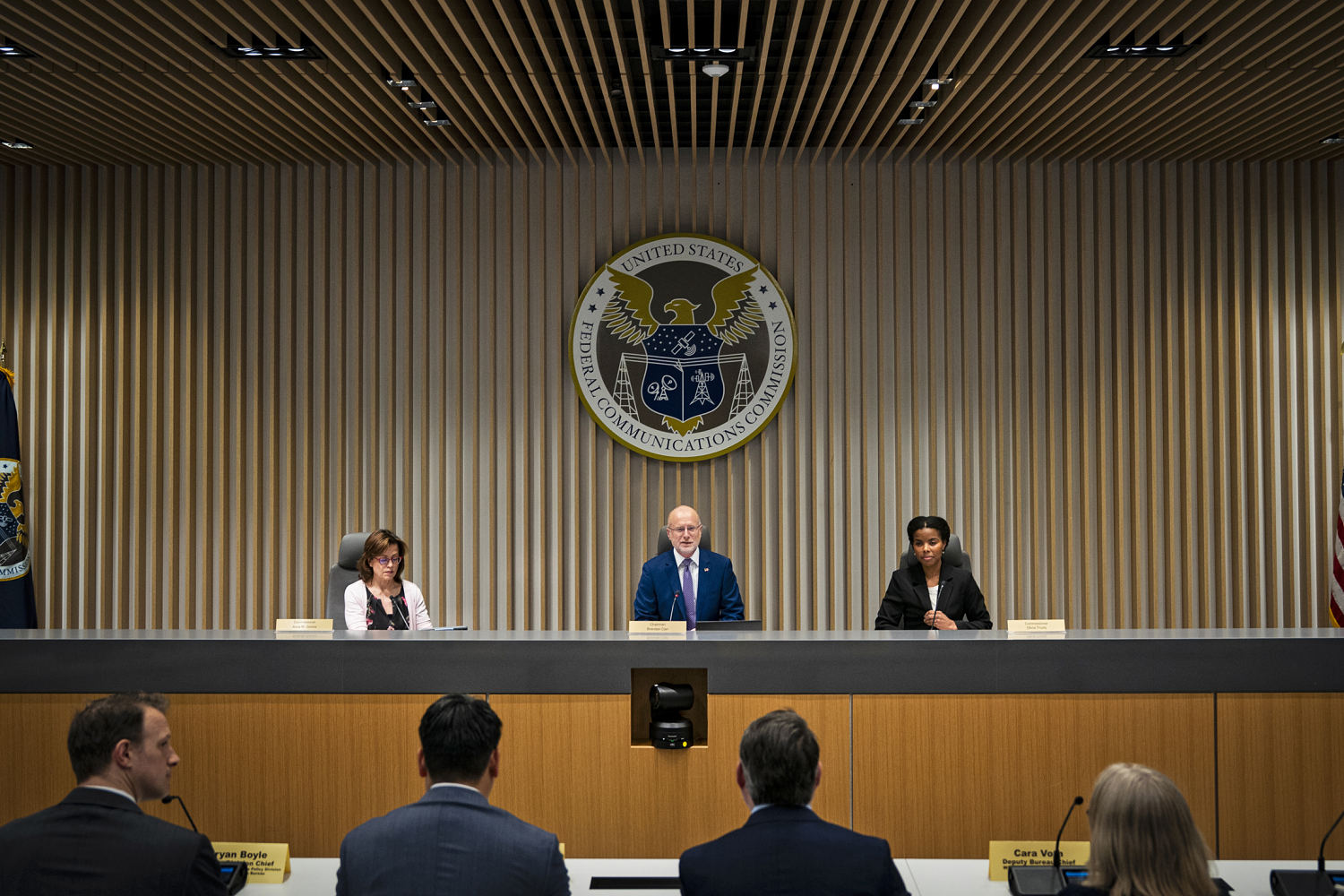
The Federal Communications Commission recently scrapped the long-standing national cap limiting broadcast TV ownership, upending a rule that prevented a single corporate entity from owning stations reaching more than 39 percent of American television households. This 2-1 party-line decision immediately clears a massive regulatory hurdle for mega-broadcasters seeking massive scale, but it sparks an intense legal battle over executive overreach and the future of local journalism. For decades, the 39 percent ceiling served as a firewall against total corporate consolidation of local news. Now, that firewall is gone.
The Weight of History
To understand why this choice matters, we must look backward. The original intent of federal media limits was simple prevention. Regulators wanted to ensure that no single boardroom could dictate the news, sports, and emergency information consumed across a majority of American living rooms.
The cap evolved over generations. Congress codified the national limit, pushing it from 35 percent to 39 percent back in 2004 during a legislative compromise. That number was never arbitrary. It represented a political and economic equilibrium designed to keep national syndicators from swallowing local programming whole.
When the FCC decides to bypass Congress and dissolve that boundary via administrative fiat, it marks a profound break from statutory precedent. The lone dissenting commissioner pointed out the obvious truth. Congress wrote the cap into federal law, and basic administrative law dictates that only Congress can rewrite it.
The Real Driver Behind the Change
Proponents of the repeal argue that traditional broadcasters face an existential threat. Streaming platforms, digital video networks, and massive tech conglomerates vacuum up ad dollars without being tied to local transmitters or public interest obligations.
Traditional station groups claim they need massive scale to survive this digital migration. They argue that pooling resources allows them to sustain costly local reporting operations that would otherwise wither away.
That argument sounds pragmatic on paper. In practice, corporate expansion rarely trickles down into better investigative reporting for small towns. Instead, it triggers sweeping newsroom layoffs, centralized news production from distant hubs, and homogenized broadcasting.
Consider a hypothetical example. A massive media conglomerate acquires dozens of local affiliates across multiple time zones. To trim overhead, management shuts down individual newsrooms, replacing local anchors with a single pre-recorded broadcast piped into twenty different cities. The local flavor vanishes. The community watchdog disappears.
The Corporate Winners
The immediate beneficiaries of the FCC vote are clear. Major station groups saw their stock values surge immediately following the announcement.
Deals that were previously stalled by federal limits now have a clear path forward. Large corporate operators can aggressively expand their footprints without running into regulatory roadblocks.
This environment favors aggressive capital accumulation over public service. When financial metrics dictate station acquisition strategies, the primary metric of success becomes operational efficiency through centralization. Localism becomes a secondary concern, referenced in press releases but starved of capital on the ground.
The Legal Quagmire Ahead
This regulatory shift does not arrive in a vacuum. It triggers immediate litigation from public interest advocates and media watchdogs who view the decision as an illegal power grab.
Courts will now have to decide whether an administrative agency possesses the authority to erase a limit embedded within statutory law by Congress. This creates a period of intense legal uncertainty for media companies attempting to finalize pending mergers.
Even if the policy survives court challenges, the administrative shift toward case-by-case reviews introduces subjective decision-making into federal oversight. Deals will be evaluated individually, opening the door to political favoritism where friendly station groups secure waivers while independent outlets face hostile scrutiny.
The Cost to Local Communities
Local television remains one of the last trusted sources for real-time emergency updates and municipal accountability. When ownership consolidates into fewer hands, the diversity of editorial viewpoints shrinks.
Communities rely on local stations to cover school board meetings, local elections, and regional infrastructure crises. Mega-corporations focused on quarterly earnings reports rarely prioritize costly, deep-dive local investigative reporting. They optimize for profit margins.
The airwaves belong to the public, licensed to private entities under the explicit condition that they serve the public interest. Stripping away the final structural limits on national ownership signals a definitive abandonment of that principle.
The television landscape is fracturing into a handful of massive corporate fiefdoms. The consequences will play out across newsrooms, courtrooms, and living rooms nationwide as the true cost of unchecked media consolidation becomes reality.