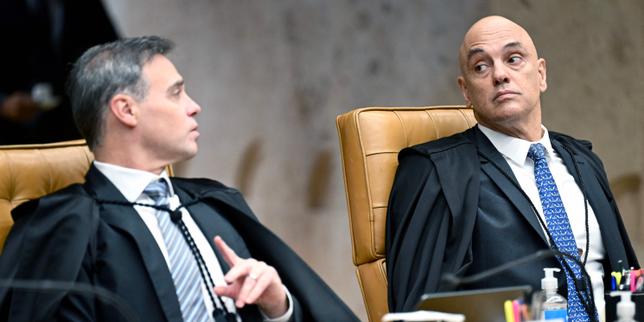
Power in Brasília rarely breaks with a clean explosion; it fractures quietly behind mahogany doors and through encrypted message leaks. Brazil is once again staring into an institutional abyss as its highest court, the Supremo Tribunal Federal (STF), reels from explosive allegations of corruption and overreach that have pitted the judiciary directly against public demand for accountability. President Luiz Inácio Lula da Silva has demanded an objective, impartial inquiry, but the rot runs deeper than any single magistrate or political faction. This is a structural crisis born of unchecked judicial power colliding with historical impunity.
For decades, the Brazilian state has struggled to build an independent referee that citizens and corporations alike can trust. Instead, the pendulum has swung wildly between executive dominance and a politicized robeocracy. To understand why the current controversy surrounding leaked messages and high-level wheeling-dealing threatens the republic, we must examine how the mechanics of power operate in South America’s largest democracy.
The Anatomy of a Judicial Breakdown
The judiciary was once heralded as the ultimate anticorruption bulwark. Operation Car Wash promised a clean break from a history of backroom kickbacks, sweeping up corporate titans and political heavyweights. Yet, that very crusade collapsed under the weight of its own procedural overreaches and backchannel conspiracies. Prosecutors and judges collaborated in ways that violated basic constitutional norms, turning the courtroom into a theater of political warfare.
When those convictions unraveled on technicalities and evidence of bias, public faith in the legal architecture fractured. Trust vanished. The system did not correct itself; it simply shifted the players on the board. Magistrates who had previously styled themselves as national saviors found their text messages exposed, their rulings scrutinized, and their institutional integrity dragged into the mud.
When leaked communications expose cozy relationships between high court justices and powerful financial actors, the damage is immediate. Citizens look at the supreme arbiters of the law and see another elite cabal protecting its own interests.
The Political Calculus Behind the Investigation
President Lula finds himself in a precarious balancing act. As a leader who spent 580 days behind bars due to judicial proceedings later nullified for bias, he understands the weaponization of the courts better than anyone. Yet, calling for an impartial, sweeping probe into the latest scandals is not merely a defense of justice. It is a calculated political maneuver.
By demanding that investigators spare no one—regardless of robe or title—Lula attempts to position himself as the guardian of institutional stability. If the investigation targets political enemies while shielding judicial allies, the executive loses credibility. If it stalls entirely, the state looks entirely captured.
Consider how financial scandals historically mutate in the Brazilian capital. A banking irregularity or a questionable loan surfaces. Investigative journalists uncover a digital trail. Federal police draft a preliminary report. Then, the political class circles the wagons. The friction between the Federal Police, the Prosecutor General's office, and the Supreme Court creates a perpetual gridlock where transparency is sacrificed for self-preservation.
The Cost of Impunity
Institutions do not collapse overnight. They erode through a thousand compromises, procedural shortcuts, and unpunished abuses. When the Supreme Court becomes the subject of the investigation rather than its overseer, the separation of powers ceases to function.
Foreign investors watch these developments with growing apprehension. Capital requires legal certainty. If contracts can be overturned by judicial whim and investigations can be manipulated through backroom messaging, risk premiums skyrocket. Economic stagnation follows political instability as night follows day.
The average Brazilian worker feels the brunt of this decay. While elites trade accusations in air-conditioned courtrooms in Brasília, public services languish, inflation bites, and the promise of a fair society feels increasingly distant. The social contract is fraying at the edges.
True reform requires more than rhetorical flourishes from the executive palace. It demands structural transparency within the high court, strict enforcement of ethical boundaries for magistrates, and an end to the culture of institutional untouchability. Until those changes take root, the specter of corruption will continue to haunt every verdict delivered in the nation's capital.
Brazil's Lula testifies against corruption allegations
This archival footage provides historical context on how long-standing corruption probes have repeatedly dragged Brazilian heads of state into high-stakes courtroom confrontations.
http://googleusercontent.com/youtube_content/1