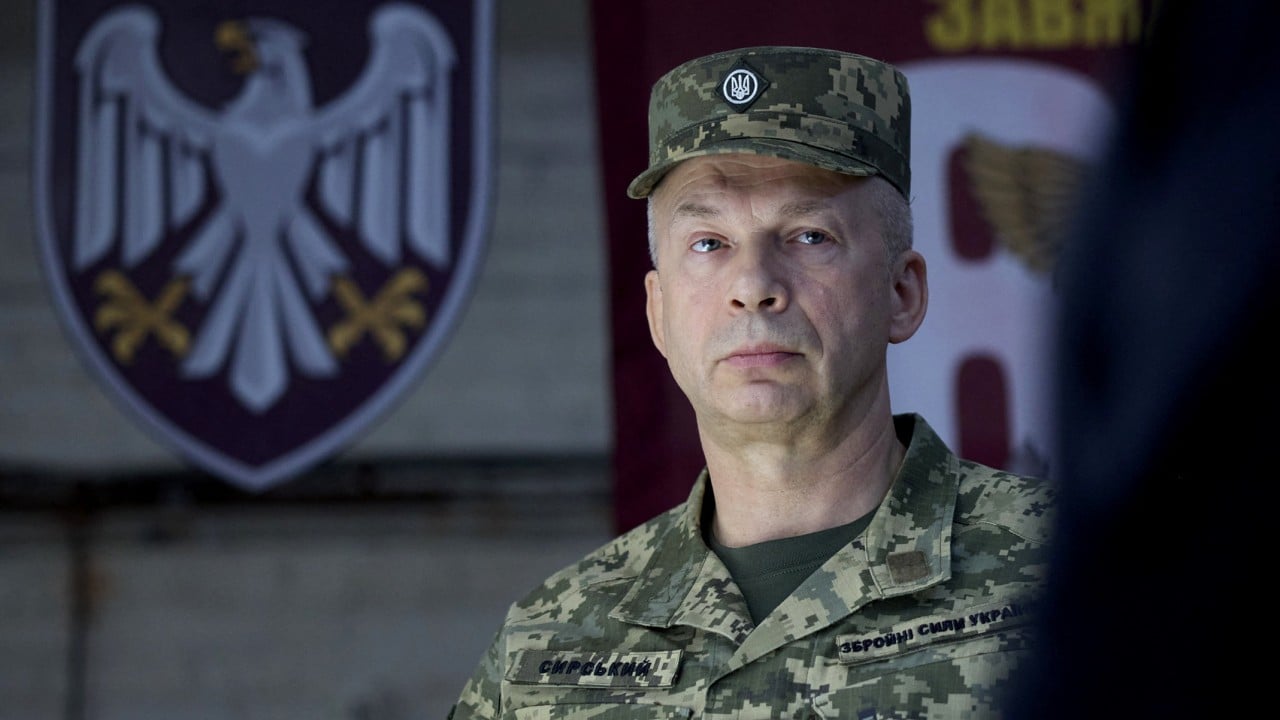
Ukrainian President Volodymyr Zelensky has made a high-stakes gamble in the upper echelons of Ukraine military leadership, sacking Commander-in-Chief Oleksandr Syrsky. The move follows escalating political fallout over the earlier removal of Mykhailo Fedorov, former Minister of Digital Transformation and key architect of Ukraine's battlefield tech strategy. While Kyiv official messaging frames the shuffle as a routine command rotation to revitalize strategy, political insiders and military analysts recognize a far deeper crisis. The rift stems from severe disagreements over mobilization tactics, frontline resource allocation, and a growing clash between civilian political authority and high-ranking defense officers.
The immediate removal of General Oleksandr Syrsky marks the second time within a relatively brief window that President Zelensky has replaced his top war chief. Syrsky took the helm after the highly publicized departure of Valerii Zaluzhnyi, stepping into a role burdened by immense tactical strain and chronic supply deficits along the eastern front. However, Syrsky’s tenure rapidly ran into systemic friction.
Kyiv’s political administration, centered within the Presidential Office on Bankova Street, increasingly questioned the high personnel costs associated with Syrsky’s attrition-heavy defensive maneuvers. At the same time, military officers complained that political directives were overriding tactical reality on the ground.
The boiling point arrived alongside the dismissal of Mykhailo Fedorov.
Fedorov was widely seen by Western partners and Ukrainian troops as an indispensable bridge between civil tech innovators and frontline units. Under his leadership, the Ministry of Digital Transformation bypassed traditional defense procurement bureaucracy, rapidly scaling autonomous drone capabilities and digital troop management systems. When Fedorov was removed, backlash reverberated throughout the military tech sector and political military circles. Key personnel inside defense innovation teams viewed his departure as a political purge aimed at consolidating administrative power rather than optimizing combat effectiveness.
The Friction Between Civil Leadership and Military Realities
Military reshuffles during active wartime are rarely simple matters of performance metrics. They reflect deep ideological split points regarding how a state manages human and material capital under prolonged stress.
Mobilization Deadlocks and Public Pushback
One of the largest wedges between Zelensky’s political staff and Syrsky was the contentious execution of troop mobilization.
- Tactical reality required hundreds of thousands of fresh personnel to rotate exhausted frontline brigades.
- Political advisors feared that overly aggressive recruitment methods would fracture domestic public support and destabilize the civilian economy.
- Syrsky repeatedly pushed for predictable, large-scale conscription targets to reinforce crumbling positions along the Donbas line.
When the political apparatus hesitated to enforce broader conscription mandates, military commanders were left attempting to execute complex defense operations with understaffed platoons. The friction degenerated into mutual blame.
The Innovation Gap After Fedorov
Fedorov's firing compounded these structural issues.
By removing the primary champion of decentralized defense procurement, the administration created immediate anxiety across military logistics. Fedorov’s digital initiatives had allowed frontline commanders to request supplies, integrate commercial drone fleets, and utilize real-time tactical software with minimal bureaucratic interference.
"When you strip away the administrative buffer protecting military innovation, you force commanders back into rigid, Soviet-style procurement chains," noted one senior Ukrainian defense analyst based in Kyiv.
Without Fedorov maintaining a protective political umbrella over defense-tech start-ups, military leadership faced an immediate resurgence of red tape. Syrsky reportedly voiced intense frustration over these institutional hurdles, arguing that military command was being starved of the precise technological tools needed to offset Russia’s artillery and manpower superiority.
Power Consolidation on Bankova Street
To understand why these personnel changes happened simultaneously, one must look at the internal political dynamics within the Presidential Office. Wartime governance naturally centralizes authority. Over time, that centralization creates intense pressure points when operational results on the battlefield plateau.
Political strategists inside Zelensky’s inner circle have become increasingly sensitive to international perception and domestic morale. Sustained static warfare, coupled with heavy casualty reports, erodes diplomatic leverage abroad. The administration needed to demonstrate active leadership and strategic adaptation to both NATO allies and the Ukrainian public.
Removing senior leadership serves as a rapid mechanism to reset narrative control.
Yet, this strategy carries severe risks. Replacing top commanders during intense operational stress disrupts established chains of command, slows decision-making cycles, and creates uncertainty among coalition partners who rely on stable points of contact within the defense ministry.
| Key Area of Disagreement | Military Command (Syrsky / Defense Staff) | Political Executive (Zelensky / Bankova) |
|---|---|---|
| Mobilization | Demanded aggressive, steady personnel replacement pipelines to hold fixed positions. | Preferred flexible, staged recruitment to minimize political and economic shock. |
| Tech Integration | Prioritized rapid battlefield deployment via Fedorov's streamlined systems. | Sought greater centralized oversight over procurement budgets and minister allocations. |
| Frontline Strategy | Focused on attritional defense and holding strategic nodes regardless of cost. | Demanded visible tactical breakthroughs to maintain Western aid momentum. |
Structural Risks and the Path Forward
The decision to sack Syrsky while managing the fallout of Fedorov’s removal places immense strain on the incoming military leadership. Tactical problems on the ground do not disappear when leadership changes hands.
- Restoring Unit Cohesion: Frontline brigades require clear operational continuity. Frequent changes at the top breed skepticism among junior officers who are executing daily combat missions.
- Rebuilding the Tech Pipeline: The new defense leadership must quickly reassure software developers, drone manufacturers, and civil tech volunteers that procurement channels will remain open and unencumbered by political interference.
- Aligning Strategy with Manpower: Kyiv must bridge the gap between political willingness to mobilize citizens and the military’s urgent need for combat-ready formations.
The dismissal of Oleksandr Syrsky is not merely an isolated personnel adjustment. It is a stark symptom of a war effort struggling to balance domestic political survival, long-term strategic resources, and the grueling reality of modern attritional warfare. Changing commanders offers a brief political reset, but it leaves the underlying, brutal arithmetic of the battlefield entirely unchanged.