Deep beneath the glacial expanse of the South Pole, a cubic kilometer of ancient ice waits in absolute darkness. Every second, trillions of subatomic particles stream through this frozen desert, carrying messages from the most violent corners of the universe. For decades, these particles passed through humanity completely unnoticed. They left no trails in standard telescopes, interacted with virtually nothing, and mocked conventional astronomy. Traditional instruments rely on photons—light and X-rays and gamma rays—which scatter and absorb over cosmic distances. Neutrinos do not care about dust clouds, magnetic fields, or galactic barriers. They travel in straight lines from their points of origin, refusing to be deflected or delayed.
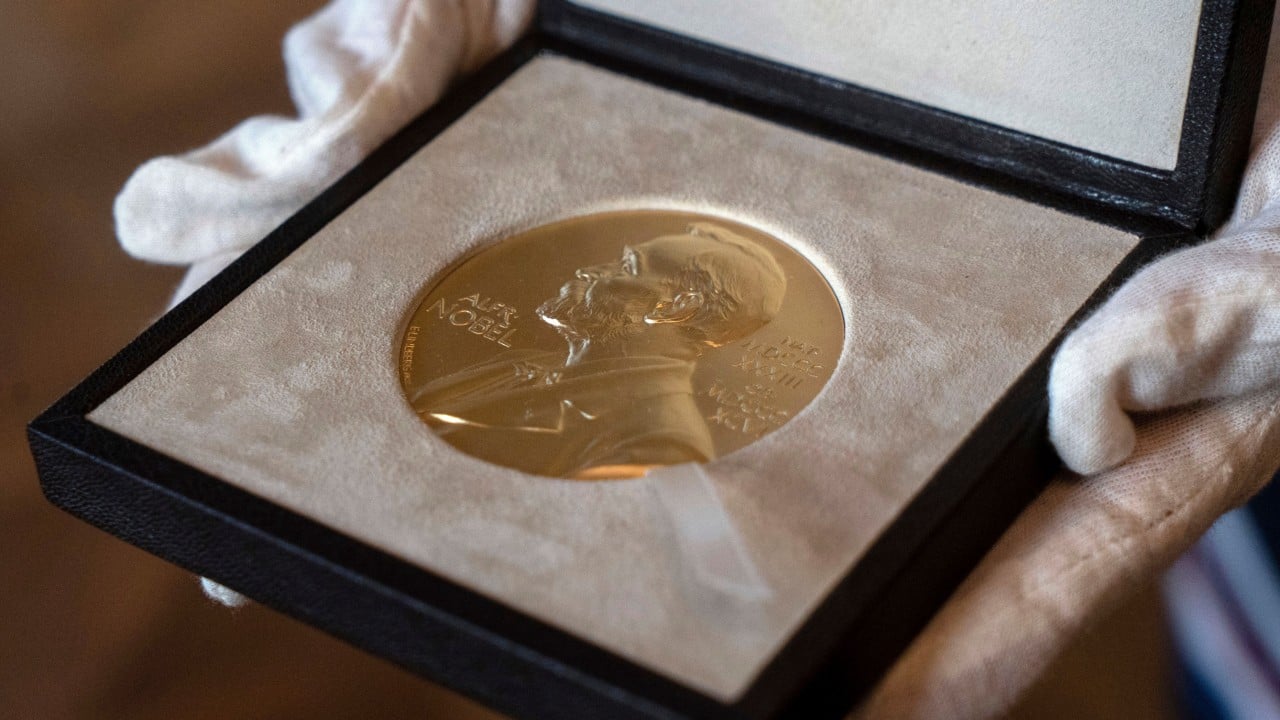
Recognizing the immense potential of these ghostly messengers, the Royal Swedish Academy of Sciences awarded the Nobel Prize in Physics to Francis Halzen for his decisive contributions to the IceCube Neutrino Observatory and the discovery of high-energy neutrinos of astrophysical origin. It is an honor that crowns a career spent convincing a skeptical scientific community that looking through solid ice was the only way to see the edge of the cosmos. Halzen did not build a conventional laboratory with clean rooms and laser benches. He built a detector inside a glacier.
The story of IceCube is rooted in an improbable fusion of theoretical particle physics and extreme field engineering. In the late nineteen-eighties, astrophysics faced a brick wall. Cosmic rays bombarded Earth with energies millions of times higher than anything particle accelerators could produce, but their origins remained completely mysterious. Because charged cosmic rays bend under the influence of magnetic fields, tracing their paths backward was impossible. Neutrinos offered the only solution. If high-energy cosmic rays were generated by cataclysmic events like collapsing stars or feeding supermassive black holes, those same cataclysms should produce an accompanying flux of high-energy neutrinos.
Finding them required capturing a needle in a haystack the size of a continent. Neutrinos interact with normal matter so rarely that a single neutrino could pass through a light-year of lead without striking an atom. To catch even a handful of them, physicists needed a massive volume of transparent detection medium. Water was the initial candidate. Early proposals imagined submerging sensors deep in the ocean off Hawaii. Halzen looked at those oceanic plans and recognized the insurmountable logistical hurdles. Saltwater corrodes equipment, bioluminescent organisms create constant background noise, and ocean currents shift cables out of alignment.
Then came the conversation that changed modern physics. During a conference presentation in Kansas, a glaciologist mentioned that Antarctic ice was some of the clearest material on Earth. Halzen immediately understood the implications. Deep Antarctic ice is compressed over hundreds of thousands of years until all trapped air bubbles vanish, turning it into a crystalline medium of astonishing optical clarity. It is dark, geologically stable, silent, and completely free of biological interference. If you could sink sensors deep into that ice, you possessed a ready-made detector a cubic kilometer in size.
Theory is cheap. Drilling through two and a half kilometers of solid ice at the South Pole is extraordinarily expensive and brutal. The mechanics required inventing an entirely new technology stack. Hot water drills capable of melting holes two kilometers deep in hours were engineered specifically for the project. Engineers pumped pressurized water heated to near boiling down specialized hoses, boring through ancient strata of compressed snow before the surrounding ice could freeze shut again. Into each freshly melted column, workers lowered long strings of digital optical modules. These modules operated like reverse lightbulbs, engineered to capture faint flashes of blue light and convert them into electrical signals.
By the time construction finished, five thousand one hundred and sixty optical sensors were frozen permanently into the Antarctic ice cap. They formed a three-dimensional grid spanning a full cubic kilometer. When a high-energy cosmic neutrino finally crashes into an atomic nucleus within that grid, it produces a cascade of secondary charged particles. These particles travel through the ice faster than the speed of light in that medium, emitting a faint cone of blue Cherenkov radiation. By measuring the arrival times and intensities of light across multiple sensors, computers reconstruct the trajectory and energy of the original neutrino with breathtaking angular precision.
The journey from construction to discovery was fraught with institutional resistance. Mainstream experimentalists viewed the concept as a gamble with too many single points of failure. If the ice clouded up or the hot water drilling failed to keep holes straight, an entire season of deployment would be lost. Furthermore, Halzen was primarily a theorist. Traditional academic politics frowns upon theorists driving megaprojects, viewing them as outsiders who lack engineering pedigree. Yet Halzen maintained a relentless momentum, securing funding from the National Science Foundation and building an international collaboration that spanned dozens of institutions.
The first validation came from AMANDA, a smaller precursor array that proved the optical transparency of the deep ice was even better than predicted. Buoyed by that success, IceCube scaled up the concept by an order of magnitude. The detector began taking partial data while construction was still underway, slowly accumulating statistics. Years passed as researchers filtered through petabytes of data, weeding out the overwhelming background noise of atmospheric muons created by cosmic rays striking the upper atmosphere.
The breakthrough arrived in two thousand thirteen when the collaboration announced the first definitive detection of high-energy neutrinos of extraterrestrial origin. They named the initial candidate events after Sesame Street characters, identifying particles dubbed Bert and Ernie. These were not low-energy neutrinos from the Sun or a nearby supernova; these carried petaelectronvolt energy levels, signifying origins far beyond our solar system. They were relics of cosmic engines operating at physical extremes that defy human comprehension.
Subsequent years turned IceCube from a discovery instrument into an active telescope. Researchers began correlating neutrino arrivals with observations from gamma-ray observatories and optical telescopes. In two thousand eighteen, IceCube traced a high-energy neutrino directly to a distant active galaxy known as NGC 1068, marking the first time humanity had localized a specific extragalactic source of cosmic neutrinos. Multi-messenger astronomy was born. Scientists could now combine light, gravitational waves, and neutrinos to observe the universe through three distinct channels simultaneously.
The operation at the South Pole is harsh and unforgiving. The IceCube Laboratory sits on the surface above the array, enduring months of complete darkness, fierce winds, and temperatures that drop far below minus sixty degrees Celsius. Technicians cannot simply walk outside to fix a broken sensor when a string is frozen two kilometers below the surface. Every component must be built for extreme reliability because maintenance windows are measured in brief polar summers. The electronics must survive the crushing pressure of settling ice sheets that slowly deform the drill holes over decades.
Despite these hurdles, the scientific appetite for higher resolution has only grown. Planning is already underway for IceCube-Gen2, an ambitious expansion that will dwarf the current footprint. By deploying radio antennas and optical sensors across a much wider area of the ice sheet, researchers hope to capture ultra-high-energy neutrinos that occur even more rarely. This next iteration will push the detection threshold higher, opening a window into the universe's most violent infancy and testing the limits of fundamental particle physics under conditions that cannot be replicated in any terrestrial laboratory.
The path from a chalkboard sketch in nineteen eighty-eight to a Nobel Prize in twenty twenty-six is a testament to stubborn persistence in the face of structural skepticism. Francis Halzen trusted the math and trusted the ice. When conventional particle physics looked inward at accelerators and colliders, he looked outward and downward into the frozen crust of the Earth. The universe is constantly screaming messages through the dark, and humanity finally built an ear large enough to listen.