Central bankers have spent the last thirty years worshipping at the altar of the 2% inflation target. It has become the most expensive obsession in modern history. The consensus view—the one your favorite "market analyst" parrots on every cable news segment—is that 2% is the "Goldilocks" zone. They tell you it's the perfect balance between a stagnant economy and a runaway price spiral.
They are wrong. You might also find this connected story useful: The Middle Power Myth and Why Mark Carney Is Chasing Ghosts in Asia.
This arbitrary number wasn't handed down on stone tablets. It was birthed in New Zealand in the late 1980s as a casual comment during a television interview. It wasn't the result of a rigorous, multi-decade study. It was a PR move. And yet, the Federal Reserve, the European Central Bank, and every other major institution have turned this fluke of history into a dogmatic ceiling.
The Myth of the Goldilocks Zone
The competitor's view is that we need to treat the 2% target as a hard limit. They argue that once we drift below it, we risk a deflationary death spiral. Once we drift above it, we risk hyperinflation. This binary view of the economy is for people who want to manage a spreadsheet, not a living, breathing market. As reported in latest coverage by Harvard Business Review, the results are significant.
Inflation is not a monster under the bed. It's a thermometer.
When you force a 2% target, you are artificially cooling the engine. You are telling every laborer that their wage growth must be capped to satisfy a statistical average. You are telling every entrepreneur that the price signal they see—the one screaming for more supply—must be suppressed by higher interest rates.
I've watched companies incinerate billions in potential R&D because a slight tick in the Consumer Price Index (CPI) sent the Fed into a rate-hiking frenzy. We have sacrificed decades of real growth on the altar of "price stability" that isn't stable at all—it's just suppressed.
Why 2% is Actually a Growth Tax
When the "experts" talk about inflation targets becoming ceilings, they act as if the ceiling is a safety feature. It isn't. It's a cage.
Think about the mechanics of the modern economy. We are in a period of massive technological deflation. Software, automation, and AI are naturally pushing prices down. If the natural state of a high-tech world is 0% or even -1% inflation, forcing it up to 2% through massive liquidity injections (QE) isn't "stabilizing" anything. It's distorting the signal.
Conversely, when the economy is actually booming—when people are working, spending, and building—inflation naturally rises. By capping it at 2%, the central bank is effectively saying, "Stop growing so fast. You're making the numbers look messy."
Imagine a scenario where the US economy is capable of 5% real GDP growth, but that growth comes with 4% inflation. Under the current regime, the Fed would hike rates until that growth was strangled back down to 2%. They would rather have a slow, dying economy with "stable prices" than a roaring, productive one with slightly higher costs.
That is economic malpractice.
The Hidden Cost of the Inflation Ceiling
The real damage of the 2% ceiling isn't just slower growth; it's the destruction of the middle class. When inflation is capped but asset prices (stocks, real estate) are allowed to soar because of low-interest-rate policies used to "hit the target," the gap between those who own things and those who work for things widens.
- Wage Stagnation: In a 2% inflation environment, employers have the "moral" cover to offer 3% raises and call it a win for the employee. In a 4% or 5% environment, the labor market is tighter, the competition for talent is fiercer, and real wage power shifts back to the worker.
- The Debt Trap: Inflation is the only way for a debt-laden society to deleverage without a catastrophic collapse. By keeping inflation low, we ensure that the mountain of sovereign debt never gets smaller in real terms. We are effectively choosing permanent debt over temporary price increases.
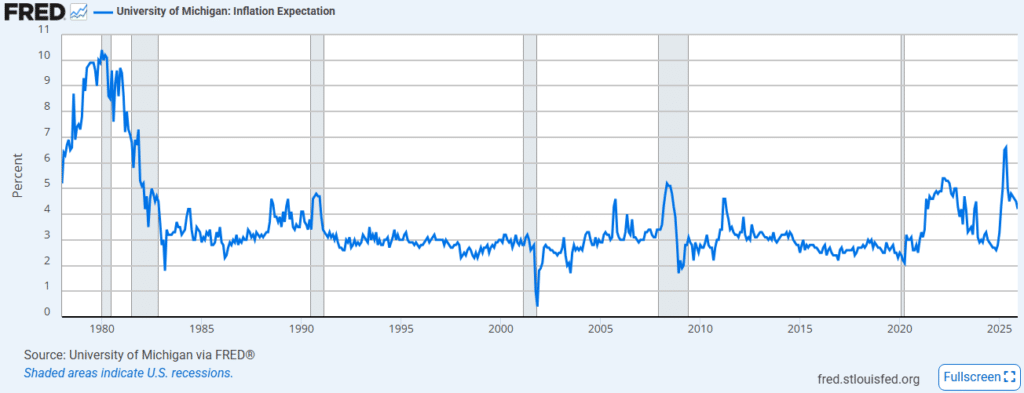
The "lazy consensus" says that higher inflation targets would "unanchor" expectations. They fear that if we aim for 4%, we'll end up at 10%. This is the slippery slope fallacy applied to macroeconomics. It assumes that central bankers are incapable of nuance—which, to be fair, their track record suggests might be true, but it shouldn't be the basis for global policy.
The New Reality: Embrace the Heat
The world has changed. The post-1945 globalization era is over. The "peace dividend" is gone. Supply chains are regionalizing. This is a structurally higher-inflation world. Trying to squeeze a 2026 economy into a 1990s 2% box is like trying to fit a gallon of water into a pint glass. You’re going to get wet, and the glass is going to break.
We need to stop asking "How do we get back to 2%?" and start asking "What is the productive level of inflation for a high-growth, high-tech society?"
If the answer is 4%, then we should aim for 4%. We should let the economy run hot. We should let wages rise. We should let the "creative destruction" of higher interest rates clear out the zombie companies that only survive because of the cheap money used to prop up the 2% target.
Stop Asking the Wrong Question
Most people ask: "When will inflation go back down?"
The better question is: "Why are we so afraid of a little heat if it means real prosperity?"
The "People Also Ask" sections are filled with questions about how to protect savings from inflation. The answer isn't to hope for lower inflation; it's to demand an economy that grows faster than the cost of living. You don't get that by having a central bank that treats every sign of life as a threat to be neutralized with a rate hike.
The 2% target is a relic. It is a psychological anchor that has outlived its usefulness. It has become a ceiling that prevents the roof from being raised.
If you're waiting for the "good old days" of 1.5% inflation and 0% interest rates, you're waiting for a ghost. That era was an anomaly, a fluke caused by the one-time entry of 800 million Chinese workers into the global labor force. That trick only works once.
The future belongs to the economies that can handle the heat, not the ones that try to stay in the freezer.
Burn the rulebook. Let the economy breathe. If the price of a vibrant, growing, high-wage society is a 4% CPI print, that is a bargain we should take every single day of the week.
The 2% ceiling isn't a target anymore; it's a tombstone.