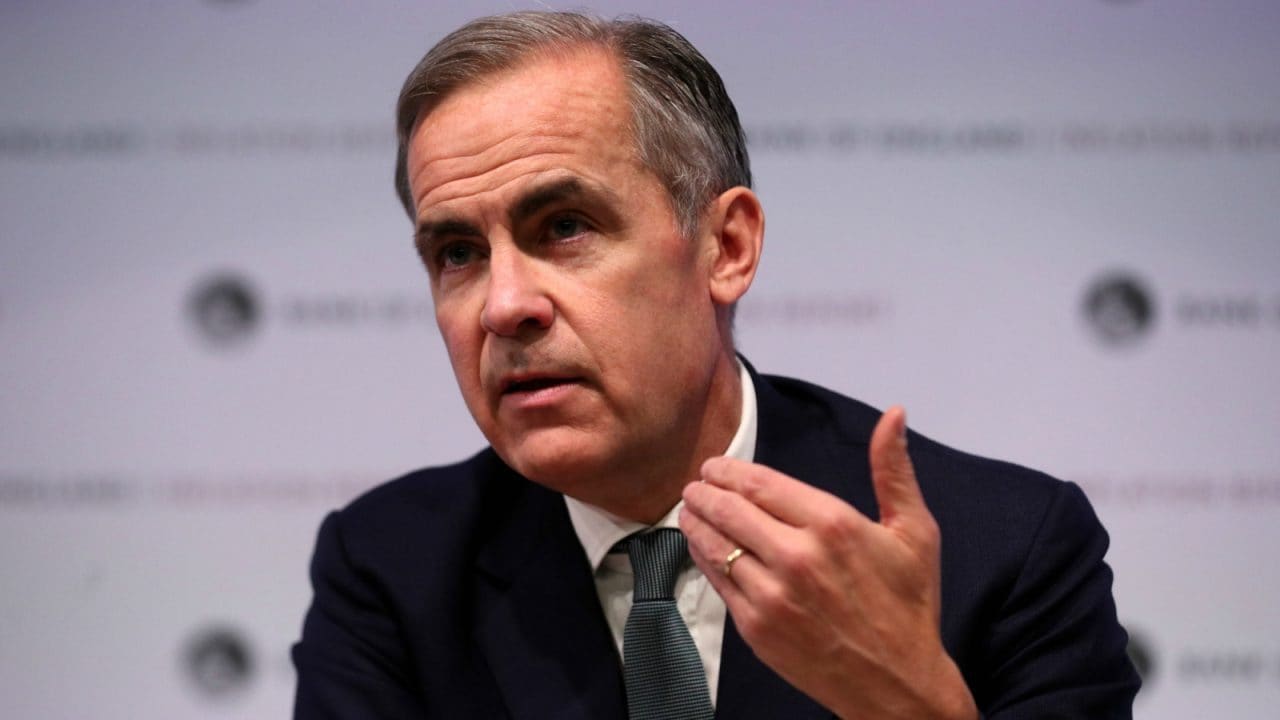
The arrival of Canadian Prime Minister Mark Carney in Mumbai on February 27, 2026, signals a structural decoupling of Canadian foreign policy from diaspora-centric grievances toward a hard-coded economic realism. This four-day official visit is not merely a diplomatic thawing; it is a calculated hedge against North American trade volatility and a pursuit of "middle-power" autonomy. By prioritizing the Mumbai financial corridor over the traditional political symbolic stops, Carney is signaling that the era of moralizing diplomacy has been superseded by a focus on capital flows and energy security.
The visit operates across three primary strategic vectors: the diversification of Canadian export markets, the stabilization of Indian energy inputs via nuclear and critical mineral agreements, and the formalization of a "constructive and balanced" partnership that ignores the friction points of the 2023-2024 period.
The Economic Dependency Function: Beyond the US-Trade Monopoly
The primary driver for the Carney-Modi engagement is the collapse of the "automaticity" of the North American trade relationship. With the United States imposing significant tariffs on Canadian exports and questioning the 51st state status of its northern neighbor, Canada is forced into a rapid diversification strategy. India, as the world’s fastest-growing major economy, represents the most viable high-volume alternative.
The trade relationship between the two nations is currently valued at approximately $30.8 billion (2024 figures), with a targeted escalation to $70 billion by 2030 through the proposed Comprehensive Economic Partnership Agreement (CEPA). The shift in Canadian posture is underscored by the deliberate exclusion of Punjab from the itinerary, a move that surgically removes the most sensitive political irritant from the agenda and prioritizes the $73 billion already invested by Canadian pension and wealth funds in the Indian market.
The Trade Imbalance and Complementarity Framework
Current trade dynamics are characterized by high complementarity rather than competition, which increases the probability of a successful CEPA.
- Canadian Exports (Supply Side): Primarily pulses, timber, pulp, paper, and mining-related products.
- Indian Exports (Demand Side): Pharmaceuticals, gems and jewelry, textiles, and machinery.
- The Strategic Gap: The missing link in this trade loop is the formalization of services and high-tech talent mobility, which are central to the New Delhi discussions.
The Energy-Security Pillar: The Uranium and Nuclear Nexus
A core deliverable of the visit is the anticipated conclusion of a long-term uranium supply agreement. This is not just a commodity sale; it is a foundational component of India's SHANTI Act, 2025 implementation. India's nuclear expansion requires a dependable, non-adversarial fuel source to scale its advanced reactors and Small Modular Reactors (SMRs).
For Canada, the deal provides a locked-in, long-term export market for its uranium reserves, insulating the sector from potential US policy shifts. For India, it secures the energy inputs required for its 2050 decarbonization and industrialization targets.
The Security and Technology Triad
Beyond commodities, the "Three Pillars of the Indo-Pacific Tour" (India, Australia, Japan) are anchored in a new trilateral technology and innovation partnership. This framework is designed to create a "dense web of new connections" that bypasses traditional Western-centric supply chains.
- AI and Digital Standards: Developing a shared regulatory language for artificial intelligence to ensure inter-operability between Canadian software engineering and Indian scale.
- Critical Minerals: Canada’s abundant lithium and cobalt reserves are the necessary inputs for India’s burgeoning EV and battery manufacturing sector.
- Transnational Security: Recent high-level discussions between National Security Advisors in Ottawa have pivoted toward "online and on-time" cooperation. This addresses cybersecurity, illegal immigration fraud, and transnational organized crime—effectively "burying the ghost" of previous allegations by focusing on shared systemic threats.
Identifying the Risk Thresholds
The pivot is not without its structural bottlenecks. Public sentiment in Canada remains cautious; only 18% of the population supports an immediate, accelerated trade deal, while 58% advocate for a cautious re-engagement. The "Carney Approach" assumes that economic outcomes will eventually drag public opinion along, but this relies on the rapid realization of tangible trade gains.
The second limitation is the legacy of diplomatic friction. While the Canadian federal government has officially stated that it no longer views India as a link to domestic violent crimes, the trust deficit between the security apparatuses remains a friction point that could delay the deeper "security and defense" cooperation mentioned in official communiqués.
The Strategic Recommendation: Institutionalizing the Reset
To move the relationship from a "thaw" to a "structural partnership," the final stage of the March 2 meetings in New Delhi must achieve the following:
- Establish a Multi-Year Roadmap for CEPA: Move beyond "negotiations are ongoing" to a defined timeline for sectoral deals (beginning with agri-food and energy).
- Operationalize the Uranium Pact: Move from a memorandum of understanding (MoU) to a binding commercial contract with volume guarantees.
- Formalize the Technology-Talent Corridor: Create a simplified visa regime specifically for the high-skilled technology workers required to support the bilateral AI and innovation initiatives.
The Carney visit is the first step in a "middle-power" outreach strategy that treats India as an indispensable economic anchor. The success of this strategy will be measured not by the press statements at Hyderabad House, but by the volume of Canadian pension capital that moves into Indian infrastructure over the next 24 months.
Would you like me to analyze the specific sectors within the $73 billion Canadian pension fund portfolio currently invested in India to identify future growth areas?