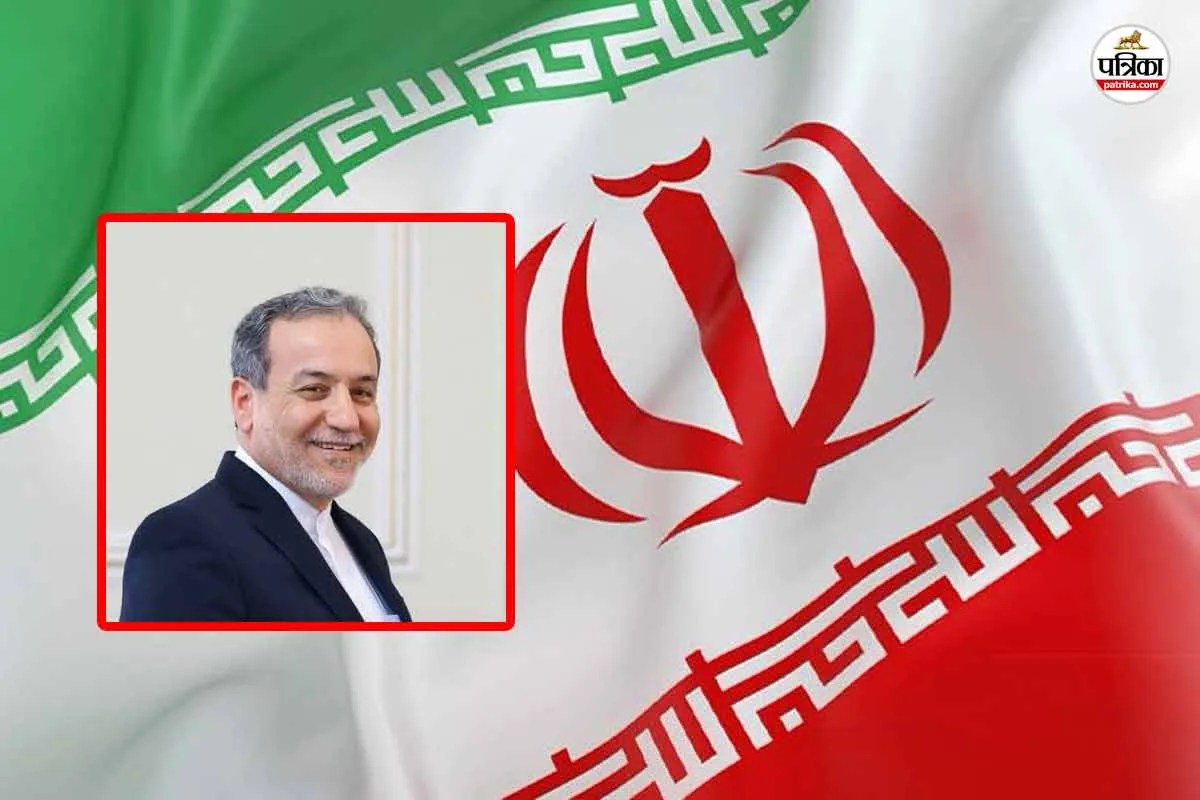
The teahouse in central Tehran smells of cardamom, boiled sugar, and old anxieties. Outside, the midday traffic crawls through streets lined with murals of past martyrs, their painted eyes staring into a future that feels perpetually stalled. Inside, an old man named Reza watches the television mounted in the corner. The news anchor speaks with the practiced gravity reserved for geopolitical stalemates. The words flashing across the screen are firm: no negotiations with Washington until a "strategic victory" is achieved.
Reza sighs, his fingers tracing the rim of his glass. He has heard versions of this speech for decades. Across the ocean, in a dimly lit briefing room in Washington, a mid-level analyst stares at the same declaration translated into sterile English intelligence reports. Two different worlds, separated by thousands of miles and an ocean of mutual distrust, yet entirely bound together by a single, dangerous concept: the belief that peace can only be negotiated from a position of absolute dominance.
When a nation declares that it will not talk until it wins, the definition of winning becomes the most terrifying question in the world.
The Anatomy of a Cold Stand-off
Geopolitics often sounds like a game of chess played by grandmasters who never have to live on the board. When the Iranian leadership signals that diplomatic efforts will only begin after securing a strategic advantage, it is not just a tactical statement. It is a psychological shield. For decades, the relationship between Iran and the United States has been defined by this pendulum of pride and pressure.
Consider the mechanics of leverage. One side believes that economic sanctions will eventually force a collapse or a concession. The other side believes that expanding its regional influence and defiance will force the superpower to blink first. It is a math problem where both sides are using different formulas, yet both expect the same result: total capitulation from the adversary.
But the real problem lies elsewhere. While the strategists calculate throw-weights, drone capabilities, and enrichment percentages, the reality on the ground morphs into something far more volatile. A policy built entirely on achieving a "strategic victory" before talking means that the runway for accidental escalation shrinks every single day. When talking is framed as a sign of weakness, every minor skirmish, every intercepted shipment, and every cyberattack carries the weight of a potential spark in a powder keg.
The Human Weight of Abstract Terms
What does a "strategic victory" look like to an ordinary family?
Imagine a young mother in Isfahan named Shirin. To her, strategy is not measured in centrifuges or regional proxy networks. It is measured in the price of milk, the availability of imported cancer medication for her mother, and the quiet, nagging fear that the sky might one day fill with foreign aircraft. When governments refuse to sit at the table, the citizens are the ones who pay the non-negotiable cover charge of existence under siege.
The economic isolation designed to pressure the leadership ends up reshaping the daily rituals of the middle class. The currency fluctuates like a erratic heartbeat. Shops that once sold European appliances now display domestic imitations or empty shelves. Yet, the political resolve at the top rarely cracks under these conditions; historically, external pressure often provides a convenient narrative to consolidate domestic control.
On the other side of this equation are the families of service members stationed in the Persian Gulf or at remote outposts across the Middle East. For them, the lack of a diplomatic channel means living in a constant state of high alert. A single miscalculation by a young naval officer on a patrol boat, or a rogue drone strike by a local militia, could instantly drag their loved ones into a conflict that no one explicitly wanted but everyone prepared for.
The Myth of the Perfect Leverage
There is a fundamental flaw in the doctrine of waiting for the perfect moment to negotiate. History shows that the perfect moment is a mirage. When one side feels it is winning, it sees no reason to make concessions. When it feels it is losing, it fears that negotiating will look like surrender.
Let us look closely at how this loop functions:
- The Escalation Spiral: To achieve the desired "strategic victory," a state must continuously raise the stakes. This might mean increasing regional military posture, advancing technological capabilities, or forming tighter alliances with rival global powers.
- The Counter-Pressure: The opposing bloc responds in kind, increasing deployments, tightening economic restrictions, and drawing its own red lines.
- The Deadlock: Both sides eventually find themselves locked in an expensive, exhausting posture where neither can retreat without losing face domestically and internationally.
This is the trap of modern brinkmanship. The rhetoric of victory becomes a prison. Once a leadership tells its people that they are on the verge of a historic triumph, accepting a compromised peace becomes politically hazardous. The narrative demands a climax that reality rarely provides.
Breaking the Mirror of Projections
The tragedy of the US-Iran conflict is that both nations frequently misread each other’s internal drivers. Washington often views Iran through the lens of a monolithic regime driven solely by ideology, ignoring the complex factional politics and the pragmatic survival instincts that govern its decisions. Conversely, Tehran often views American policy as a grand, unchanging conspiracy aimed at total regime destruction, failing to see the chaotic, reactive, and often deeply divided nature of Washington’s domestic political cycles.
When communication drops to near zero, these misperceptions harden into concrete realities. Every move is interpreted through the worst possible interpretation. If Iran signals a condition for peace, Washington views it as a stall tactic. If Washington offers a partial waiver, Tehran views it as a trap designed to weaken their resolve.
We are left with a dangerous theatrical production where the actors are trapped in their roles, reading scripts written during the crises of 1979, 2003, and 2020. The language changes slightly—sometimes it is about nuclear deals, sometimes about regional militias, sometimes about maritime corridors—but the underlying melody remains an ominous drumbeat.
The Unseen Horizon
The sun begins to set over Tehran, casting long shadows across the teahouse where Reza sits. The news broadcast has shifted to local sports, but the tension in the room hasn’t entirely dissipated. People here know that words spoken in high-security chambers have a habit of turning into metal on the streets.
The demand for a strategic victory before diplomacy can begin is an attempt to rewrite the rules of conflict resolution. It assumes that history has a clean ending, a moment where one side stands victorious on the field and dictates terms to a defeated foe. But in the modern world, especially in the volatile theater of the Middle East, such endings are fantasies.
True strategy is not about waiting for the perfect hand to play; it is about recognizing when the game itself has become too dangerous to continue. Until both sides realize that the seat at the negotiating table is not a prize to be won, but a tool to prevent catastrophe, the citizens of both nations will remain hostages to a victory that may never come.
Reza leaves a few coins on the table, steps out into the cooling night air, and blends into the crowd, just another soul waiting for the winds to change.