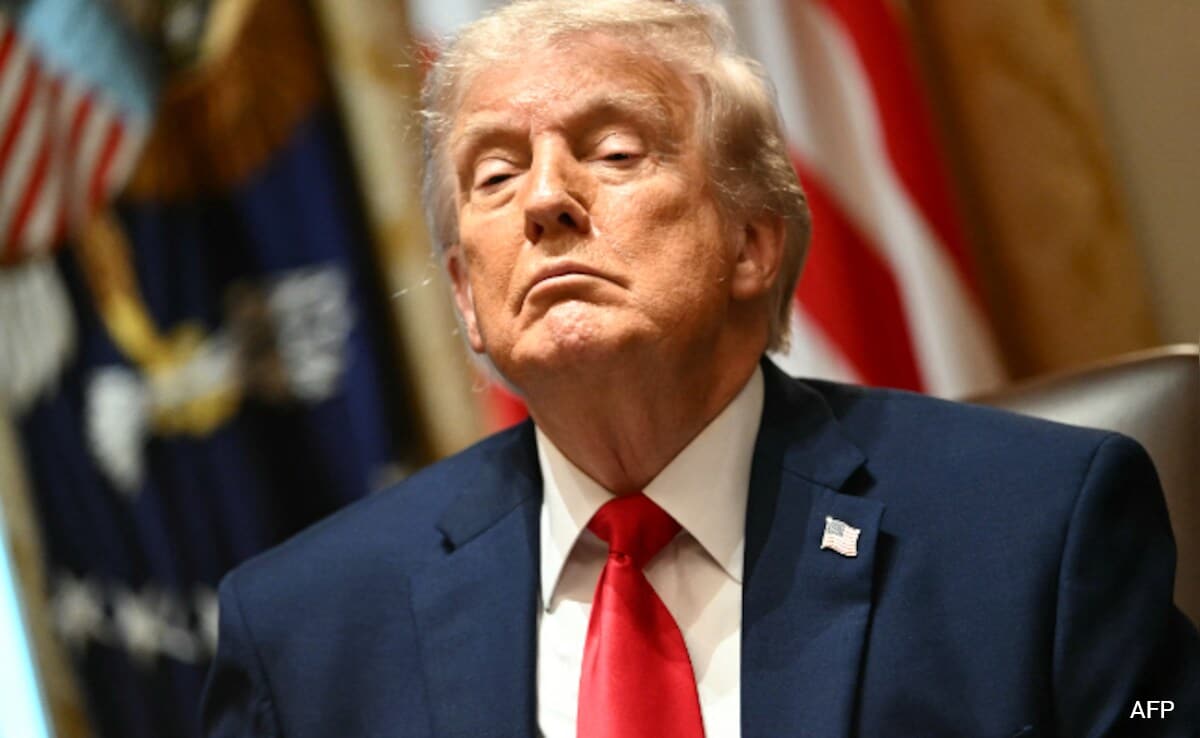
The declaration from the Oval Office arrived with characteristic bravado. Donald Trump announced that he secured ironclad guarantees from Iran that the Islamic Republic will never develop nuclear weapons. Characterizing the development as "very interesting" during a weekend broadcast, the administration presented this rhetorical concession as a historic breakthrough, signaling an imminent resolution to a bruising military conflict that has choked global energy corridors.
The reality on the ground resists such easy theatricality. While the White House projects the image of a definitive diplomatic triumph, the view from Tehran, the Pentagon, and the maritime shipping lanes of the Persian Gulf reveals a fragile, deeply contested theater. What the administration frames as a settled concession is actually a highly fluid, dangerous game of geopolitical brinkmanship where both sides remain fully mobilized for war. If you enjoyed this piece, you might want to look at: this related article.
The Disconnect Between Rhetoric and Reality
The core of the current diplomatic friction lies in a profound disagreement over what has actually been negotiated. In his public statements, Trump outlined a sweeping memorandum of understanding that would essentially dismantle Iran's nuclear architecture, lift the crushing American naval blockade, and secure toll-free, unrestricted transit through the Strait of Hormuz.
Tehran quickly pushed back against this narrative. Iranian Foreign Ministry officials and state-aligned media outlets like Tasnim routinely dismiss these triumphalist declarations as unilateral messaging rather than bilateral consensus. While acknowledging that back-channel communications through regional mediators remain active, Iranian negotiators insist that no final agreement exists. For another angle on this development, refer to the latest coverage from The New York Times.
The structural gap between the two positions involves a fundamental clash of national interests.
- The Nuclear Stockpile: The White House demands the complete excavation and destruction of highly enriched uranium, buried deep underground following a major U.S. B-2 bomber strike nearly a year ago. Tehran rejects this demand as a baseline condition.
- Asset Liquidation: Iranian negotiators are demanding the immediate release of $12 billion in frozen assets as a prerequisite for substantive talks on their nuclear infrastructure. The U.S. position maintains that no financial relief will occur until verification is complete.
- Sovereignty Over Hormuz: While Washington demands an open, toll-free waterway, the Iranian parliament is actively moving to codify its absolute sovereignty over the Strait, proposing bans on hostile foreign vessels.
The Mirage of the Non Nuclear Concession
The administration's focus on securing an Iranian promise not to build a nuclear bomb ignores a fundamental historical reality: Iran has technically claimed for decades that it has no intention of building a weapon.
Throughout the duration of the 2015 Joint Comprehensive Plan of Action (JCPOA) and its subsequent collapse, Tehran consistently maintained that its nuclear program was designed exclusively for civilian energy and medical research. Supreme Leader Ali Khamenei even issued a religious fatwa declaring nuclear weapons forbidden under Islamic law.
Consequently, when Iranian negotiators nod along to the abstract principle that they will not pursue a nuclear bomb, they are not offering a fresh concession. They are repeating a long-standing diplomatic talking point. The real leverage lies not in the philosophical concession, but in the verifiable metrics of enrichment, centrifuge counts, and international inspection access.
By framing a standard Iranian talking point as a breakthrough, the White House risks miscalculating the adversary's actual compliance threshold. A verbal agreement to eschew nuclear weapons means nothing if the underlying infrastructure to enrich uranium to weapon-grade levels remains intact, buried beneath layers of reinforced concrete.
The Shadow of the Strait
The economic stakes of these negotiations are visible along the coastlines of the Persian Gulf. The American naval blockade has severely throttled Iranian commerce, but it has also sent shockwaves through global energy markets, driving up shipping insurance and destabilizing fuel prices worldwide.
Trump suggested that the naval blockade could be lifted rapidly once a framework is formalized. Yet, the Pentagon appears far more cautious than the Commander-in-Chief. Defense Secretary Pete Hegseth explicitly warned that American military forces maintain massive stockpiles of advanced munitions and are fully prepared to resume active hostilities if negotiations falter.
U.S. Demands vs. Iranian Positions
┌──────────────────────────────────────┬──────────────────────────────────────┐
│ United States Position               │ Iranian Position                     │
├──────────────────────────────────────┼──────────────────────────────────────┤
│ Total destruction of enriched material│ Separate negotiation on stockpiles   │
│ Toll-free transit through Hormuz    │ Asserted sovereign control of Strait │
│ No release of frozen funds upfront   │ Precondition of $12B asset release   │
└──────────────────────────────────────┴──────────────────────────────────────┘
This military posturing is driven by recent violence that exposes the fragility of the current ceasefire. Just weeks ago, U.S. forces launched direct strikes against the Iranian port of Bandar Abbas following maritime provocations, drawing retaliatory fire from Iranian coastal batteries. This is not an environment ripe for easy diplomatic breakthroughs; it is an active combat zone operating under a temporary truce.
The Regional Complications
Any prospective bilateral understanding between Washington and Tehran is deeply entangled with the broader regional war. In Lebanon, Israeli forces have pushed past the Litani River, intensifying operations against Hezbollah despite nominal ceasefire frameworks.
Iranian officials maintain that any permanent peace agreement with the United States must include structural security guarantees for its regional proxies, including Hezbollah in Lebanon. Conversely, Israeli Prime Minister Benjamin Netanyahu has maintained direct communication with the White House, reinforcing a hard red line: any final deal must completely dismantle Iran's enrichment capacity, not merely monitor it.
This conflicting network of alliances creates a diplomatic paradox. The United States cannot easily sign a peace agreement that its primary regional ally, Israel, views as insufficient. Iran cannot sign an agreement that abandons its forward defensive partners without triggering a massive loss of influence across the Levant.
The Art of the Prolonged Deal
Recognizing the immense friction, the White House has recently adjusted its timeline. After initially signaling an immediate breakthrough, the administration is now adopting a less urgent posture, sending a revised, tougher framework back to Tehran through mediators.
This shift to a slower pace reflects a calculation that the economic pain of the naval blockade gives the United States sustained leverage. It also acknowledges that the difficult technical questions—specifically the fate of Iran’s remaining enriched material and the exact mechanism of international inspections—cannot be resolved through social media announcements.
The danger of this protracted approach is the volatility of the status quo. With Israeli forces advancing in Lebanon, domestic political pressure mounting in Tehran, and warships operating in close proximity within the narrow confines of the Strait of Hormuz, the window for a managed diplomatic resolution is narrow.
A single miscalculation by a ship captain in the Gulf or an uncoordinated missile strike in the Levant can instantly collapse the current back-channel talks, turning a verbal agreement on nuclear ambitions into a footnote of a wider war.