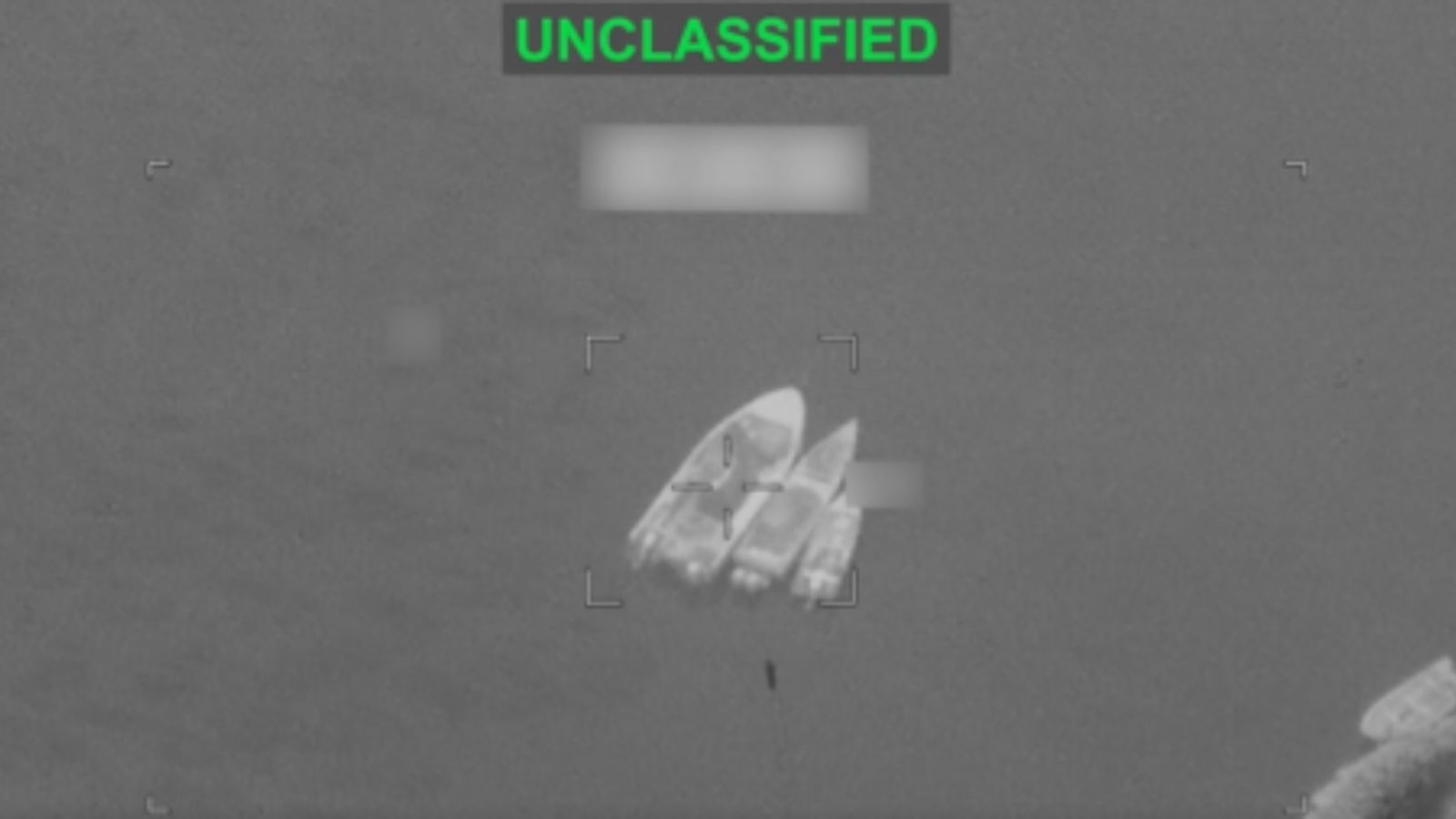
The fragile diplomatic understanding between Washington and Tehran disintegrated entirely over the last twenty-four hours, exposing the fundamental flaws of an interim ceasefire that was never designed to hold. Following intensive American airstrikes on more than eighty targets inside Iran, the Islamic Revolutionary Guard Corps responded by launching a massive coordinated wave of missiles and drones against United States military installations in Bahrain and Kuwait. Tehran claims its forces targeted eighty-five distinct sites, including the strategic naval infrastructure in Bahrain and the Ali Al Salem Air Base in Kuwait, while also bringing down an American MQ-9 Reaper drone in the southern sector of the country. This rapid exchange of heavy ordnance marks the definitive end of the brief pause in hostilities brokered just last month, dragging the region back into an open conflict that diplomats in Qatar spent weeks trying to prevent.
For anyone who has watched the decades-long friction between the United States and Iran, this specific flashpoint offers no surprises. The assumptions underlying the recent memorandum of understanding were built on quicksand. Washington believed it could offer temporary economic breathing room while maintaining total freedom of navigation through the Strait of Hormuz on its own terms. Tehran, conversely, viewed the agreement as an acknowledgement of its regional influence, assuming that domestic American political pressures would prevent any resumption of direct military action. Both sides miscalculated the tolerance thresholds of their opponent, resulting in the current escalation that threatens the flow of global energy supplies.
The Breakdown in the Strait of Hormuz
The immediate catalyst for this military deterioration began in the narrow transit lanes of the world's most critical energy corridor. Over the past several days, three commercial vessels—the Marshall Islands-flagged M/T Al Rekayyat, the Saudi Arabia-flagged M/T Wedyan, and the Liberian-flagged M/T Cyprus Prosperity—were struck by projectiles while navigating the Strait of Hormuz. United States Central Command immediately attributed these actions to Iranian forces, characterizing them as a direct violation of the ceasefire agreement. Iranian state media defended the actions obliquely, reporting that vessels like the Al Rekayyat had altered their courses into unauthorized Omani shipping channels under the protection of American naval assets, disregarding instructions from local maritime authorities.
The geographic reality of the strait means that any deviation from established shipping lanes is treated as a security threat by Tehran. The Iranian military operates under a doctrine that dictates absolute oversight of the waterway, demanding that all commercial traffic conform to routes designated and monitored by its coastal radar networks. When American warships began actively escorting tankers outside these designated channels, a collision was inevitable. The tactical friction on the water quickly translated into strategic commands in Washington, prompting an immediate and severe military response.
The American Strikes and Economic Retaliation
United States Central Command executed a wide-ranging offensive operation targeting Iranian military infrastructure along the southern coastline. More than eighty precision targets were struck, focusing on assets that directly threaten maritime traffic. These included coastal surveillance radars, surface-to-air missile batteries, drone launch facilities, and command installations. Crucially, the strikes also targeted more than sixty fast-attack boats operated by the Revolutionary Guard Corps Navy, aiming to degrade Tehran's asymmetrical naval capabilities before they could deploy into the shipping lanes.
Explosions rolled through critical coastal zones, including Qeshm Island, Sirik, and the major port city of Bandar Abbas. Iranian officials confirmed that port facilities sustained damage and several civilians were wounded by shrapnel near the fishing piers in Sirik, though no immediate military fatalities were declared.
Simultaneously, Washington weaponized its economic options by revoking the temporary sanctions waiver that had allowed Iran to export crude oil under the terms of the June agreement. This waiver, originally scheduled to remain active until August 21, was abruptly modified to require an immediate wind-down of all international transactions by July 17. By removing the primary financial incentive for Tehran to remain compliant with the ceasefire, the United States effectively signaled that the diplomatic track was closed. The reinstatement of these restrictions represents a major blow to an Iranian economy already struggling with structural inflation and isolation, forcing the political leadership in Tehran to opt for total resistance rather than accommodation.
The Revolutionary Guard Response in Bahrain and Kuwait
Tehran did not wait to evaluate the long-term damage before executing its counter-strike. The Revolutionary Guard Corps Navy and Aerospace Forces launched a joint operation utilizing ballistic missiles and low-flying attack drones aimed directly at the heart of the American military presence in the Persian Gulf. Air raid sirens sounded across Bahrain and Kuwait as local air defense batteries engaged incoming targets. The choice of targets was deliberate and highly symbolic, hitting the exact nodes that sustain American power projection in the theater.
In Bahrain, the focus was the Fifth Naval District and facilities associated with the United States Fifth Fleet, the organizational hub for all American maritime security operations in the region. In Kuwait, the primary target was Ali Al Salem Air Base, a facility that hosts American strike aircraft, logistics wings, and reconnaissance assets. By striking these locations, Iran demonstrated that its missile arsenal possesses the range, accuracy, and volume to overwhelm the sophisticated air defenses protecting primary American hubs.
The Kuwaiti General Staff confirmed that its defensive systems were actively intercepting hostile projectiles, advising the domestic population to remain calm while explosions rattled the night sky. While the exact level of damage to American installations remains unconfirmed by independent observers, the sheer scale of the attack confirms that Tehran is no longer seeking to avoid direct confrontation with American forces stationed in neighboring Gulf states.
+--------------------------+------------------------------------+---------------------------------------+
| Location                 | Strategic Significance             | Iranian Asset Deployed                |
+--------------------------+------------------------------------+---------------------------------------+
| Bahrain Fifth Naval Dist | Main hub for US Fifth Fleet        | Coordinated drone & missile strikes   |
| Kuwait Ali Al Salem Base | Key logistics & strike aircraft    | Ballistic missiles & loitering drones |
| Southern Coast of Iran   | Air defense & fast-attack boats    | Target of initial US precision weapons|
+--------------------------+------------------------------------+---------------------------------------+
Political Deadlocks and the Failure of Doha
The rapid slide into violence follows the quiet collapse of indirect negotiations that took place in Qatar last week. Those discussions, intended to transform the temporary memorandum of understanding into a durable diplomatic framework, stalled over verification mechanisms and the sequence of sanctions relief. The American delegation demanded ironclad guarantees regarding regional missile proliferation and maritime conduct before making any permanent economic concessions. The Iranian negotiators, mindful of previous agreements that withered under shifting political winds in Washington, refused to accept structural limits without immediate, legally binding sanctions elimination.
The domestic political situation inside Iran added further volatility to these calculations. The political establishment in Tehran has been focused on the state funeral processions for the late Supreme Leader, an event that drew massive crowds and reawakened hardline rhetoric across the capital. President Masoud Pezeshkian was forced to cut short his official visit to Iraq to return to Tehran to manage the spiraling security situation. The political costs of appearing weak or accommodating in the face of renewed American pressure are currently too high for any faction within the Iranian government to bear.
This sentiment was made clear by Parliament Speaker Mohammad Baqer Qalibaf, who took to social media to state that the era of intimidation had concluded and that Iran would not capitulate to economic or military pressure. This public stance reflects an internal consensus among senior leaders that any retreat under fire would compromise the long-term deterrence posture of the state.
Regional Contagion and Global Energy Shockplanes
The immediate concern for global markets is the physical security of the energy infrastructure lining both sides of the Persian Gulf. While international oil benchmarks initially showed minimal volatility, trading flat below seventy-three dollars a barrel, the persistence of missile exchanges will inevitably strain the patience of international maritime insurers and shipping conglomerates. If commercial vessels cannot guarantee safe passage through the Strait of Hormuz without encountering sea-mines, drone strikes, or retaliatory naval blockades, the economic consequences will extend far beyond the Middle East.
Furthermore, the involvement of Bahrain and Kuwait changes the geopolitical math for the neighborhood. For years, the smaller Gulf nations have attempted to balance their reliance on American security guarantees with the necessity of maintaining working diplomatic relations with their powerful neighbor across the water. By utilizing its missile inventory against targets within these host countries, Iran has demonstrated that no state providing logistical support or basing access to the United States military will be immune from the consequences of a wider war. This reality puts immense pressure on local governments to restrict how the United States utilizes its bases during offensive operations, potentially fracturing the unified front that Washington has spent decades trying to build.
The tactical situation on the ground remains highly fluid as both sides assess the results of the initial salvos. The United States has reinforced its regional air defense footprint, deploying additional naval groups and interceptor units to protect vulnerable installations, while Iran maintains its high-readiness posture along its entire southern coastline. The diplomatic channels that previously functioned as shock absorbers have been severed by the re-imposition of sanctions and the reality of kinetic strikes, leaving no clear mechanism for deceleration. The conflict is no longer a localized dispute over maritime terminology or temporary licenses. It is an active regional war, driven by competing definitions of security that cannot be reconciled through the current diplomatic architecture.


