Paper agreements don't stop bombs. If you thought the U.S.-backed ceasefire deal signed last October meant the killing in Gaza had actually ended, the latest precision airstrike in Gaza City just shattered that illusion.
The Israeli military confirmed the assassination of Izz al-Din al-Haddad, the chief of Hamas’s military wing. He wasn't just another fighter. Al-Haddad was the highest-ranking military commander left in the Gaza Strip and one of the final surviving architects of the October 7, 2023 attacks. He took the reins after Israel killed his predecessor, Mohammed Sinwar, in May 2025.
This targeted killing marks the most significant escalation since the ceasefire went into effect. It exposes a brutal reality that diplomatic talking heads keep trying to minimize. The war never really stopped.
The Illusion of Peace by the Numbers
Politicians love to praise the October agreement as a massive diplomatic breakthrough. But if you look at the actual data coming out of the enclave, the word "ceasefire" feels like a dark joke.
According to the Gaza Health Ministry, over 850 Palestinians have been killed in near-daily Israeli strikes since the truce was officially implemented. These figures don't differentiate between combatants and civilians, but local medics confirmed that Friday's strike on a Gaza City apartment building killed seven people, including al-Haddad’s wife and their 19-year-old daughter.
On the flip side, Hamas militants have killed four Israeli soldiers during this same "peaceful" window.
The baseline numbers of this entire conflict are staggering. Total deaths in Gaza have surpassed 72,700 since late 2023. International observers generally view the health ministry's detailed records as reliable, and they paint a picture of non-stop attrition. It's an active conflict zone disguised as a diplomatic success story.
Inside the Hunt for al-Haddad
Israel didn't just stumble into this operation. This wasn't a chance encounter like the routine patrol that ended Yahya Sinwar’s life in Rafah back in late 2024. This was a highly orchestrated, intelligence-heavy hit.
According to the Israel Defense Forces (IDF), the Air Force launched the strike after years of intelligence gathering by the Southern Command and the Military Intelligence Directorate. Israeli government officials greenlit the strike roughly 10 days before the jet actually dropped the bomb. They waited for the perfect window to strike without alerting Hamas networks in the western Negev or Gazan airspace.
Al-Haddad's Timeline in Hamas:
- 1980s: Joins Hamas at its inception.
- Early Years: Serves in the Qassam Brigades' Majd section, hunting internal collaborators.
- 2023: Helps plan the October 7 attacks as a Military Council member.
- 2025: Takes over the military wing after Mohammed Sinwar is killed.
- 2026: Assassinated in Gaza City.
The IDF claims al-Haddad spent the war moving between underground bunkers and deliberately surrounding himself with Israeli hostages to serve as human shields. Former hostages, including Liri Albag and Emily Damari, explicitly named al-Haddad as their direct captor, describing him as a brutal figure who managed the hostage network through the tunnel system.
Why the Disarmament Deadlock is Ruining Everything
So why is this happening during an active ceasefire? Because the underlying diplomatic framework is completely broken.
The current deal, heavily pushed by the U.S. administration, has entirely stalled over one massive, unresolvable issue: the disarmament of Hamas.
"He refused to implement the agreement led by U.S. President Trump to disarm Hamas and demilitarize the Gaza Strip," Prime Minister Benjamin Netanyahu and Defense Minister Israel Katz stated in a joint message following the strike.
Israel insists it won't stop striking until Hamas is completely dismantled and stripped of weapons. Hamas views total disarmament as a death sentence and absolute surrender. Because neither side will budge on this core premise, the ceasefire is effectively a piece of paper that allows both sides to trade accusations of violations while continuing to shoot.
IDF Chief of Staff Lt.-Gen. Eyal Zamir called the assassination a "significant operational achievement" and made it clear that Israel has no intention of slowing down its pre-emptive strikes. The official state policy isn't containment; it's total elimination of the remaining October 7 leadership.
The Boiling Point Outside Gaza
Don't assume this violence stays confined to the Gaza Strip. The ripple effects are tearing through the region, proving that localized truces can't fix a systemic wildfire.
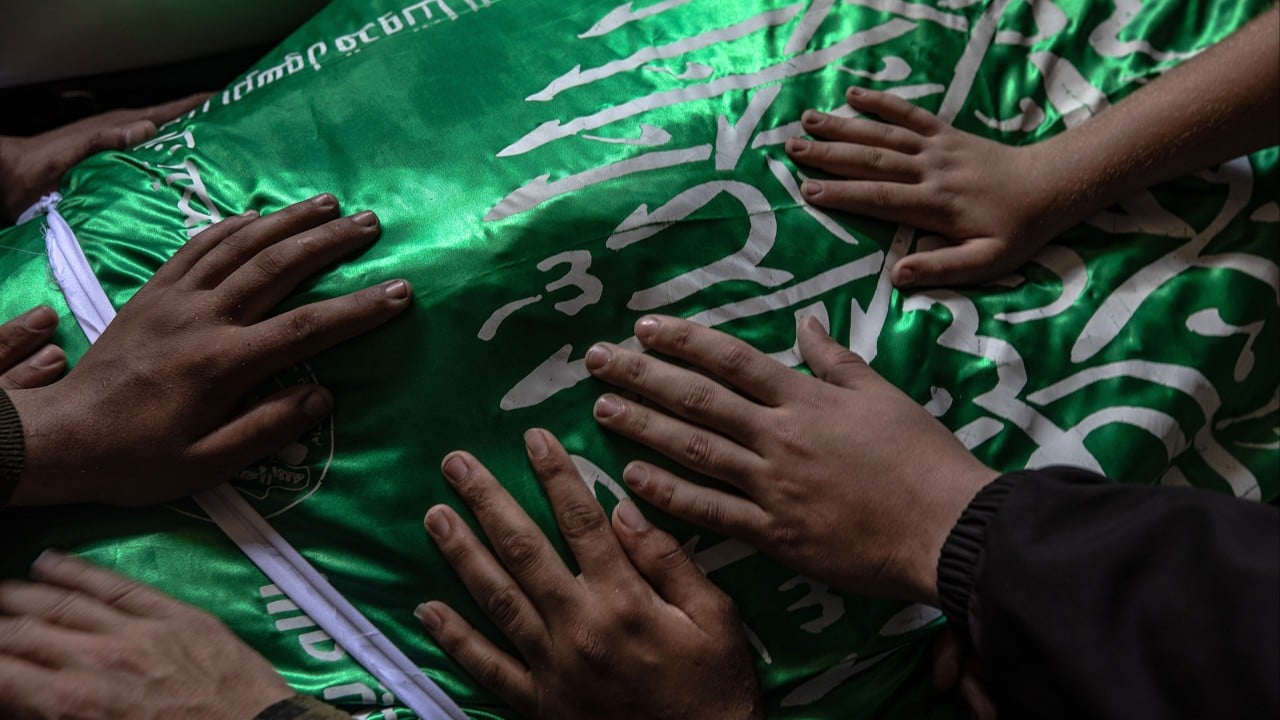
Just hours after al-Haddad's funeral in Gaza City—where his body was carried through the streets wrapped in Palestinian and Hamas flags—violence flared up in the occupied West Bank. Israeli troops shot and killed 34-year-old Hassan Fayyad in the Jenin refugee camp. The Palestinian Red Crescent stated he was shot in the thigh, while the IDF claimed troops fired warning shots at an infiltrator who refused to comply.
At the same time, religious tensions are peaking. The Ministry of Awqaf and Religious Affairs recently blasted what they called "cowardly terrorist acts" by Jewish settler groups targeting Muslim and Christian holy sites, accusing the international community of absolute inaction.
What Happens Next
If you are tracking this conflict for security, investment, or humanitarian reasons, look past the diplomatic press releases. The killing of al-Haddad signals a dangerous shift in the conflict's dynamics.
- Anticipate Hamas Retaliation: Hamas is down, but they aren't entirely out. The assassination of their top military commander will likely trigger rocket fire or guerrilla ambushes against IDF positions, further straining the technical definition of the truce.
- Watch the U.S. Diplomatic Reaction: The Trump administration has staked significant political capital on this demilitarization plan. Watch for whether Washington pressures Israel to hold back, or if they double down on forcing Hamas's hand.
- Monitor West Bank Escalations: Jenin is a powder keg. Watch the local flashpoints in the West Bank, as regional operations often ramp up when Gaza hits a boiling point.
The reality on the ground is simple. You can't have a functional ceasefire when one side is actively hunting the other's leadership, and the other side is holding hostages in tunnels. Until the core deadlock over disarmament is broken, expect the body count to keep climbing.