The release of a president’s medical summary is a carefully staged political ritual, not an exercise in transparency. When the White House released the three-page medical memo for Donald Trump following his examination at Walter Reed National Military Medical Center, headlines instantly focused on a familiar narrative: the president has gained weight and needs to slim down. Doctors noted he now weighs 238 pounds, putting his Body Mass Index at 29.7, just a fraction below the technical threshold for obesity.
Fixating on the scale missed the deeper story. The real issue is not the 14 pounds the president gained over the past year, nor is it his well-documented affinity for fast food. The true revelation lies in what these official summaries consistently minimize or omit altogether. By focusing public attention on routine weight management and celebrating a perfect score on a basic dementia screening, the official narrative obscures the systemic realities of aging executives, the true impact of chronic vascular conditions, and the curated nature of presidential medical disclosures.
The Art of the Controlled Medical Disclosure
Every White House physician faces an inherent conflict of interest. They are military officers or designated doctors serving the commander-in-chief, but they are also part of a political communications apparatus. The primary goal of a presidential health report is to project stability, strength, and uninterrupted governance.
The latest memo from White House physician Dr. Sean Barbabella follows this historical precedent. It uses glowing, definitive language to declare the president in "excellent health" with "strong cardiac, pulmonary, neurological, and overall physical function." Yet, buried beneath the superlatives are indicators of chronic conditions that require daily pharmaceutical management.
Trump currently takes rosuvastatin and ezetimibe to manage a history of high cholesterol, along with a daily low-dose aspirin regimen for cardiac prevention. While these are common treatments for an individual approaching his 80th birthday, the report frames them as minor details rather than a lifelong cardiovascular management strategy. The public receives a sanitised summary rather than a comprehensive health record, leaving independent medical experts to read between the lines of what is actually being disclosed.
The Vascular Reality Behind the Bruises and Swelling
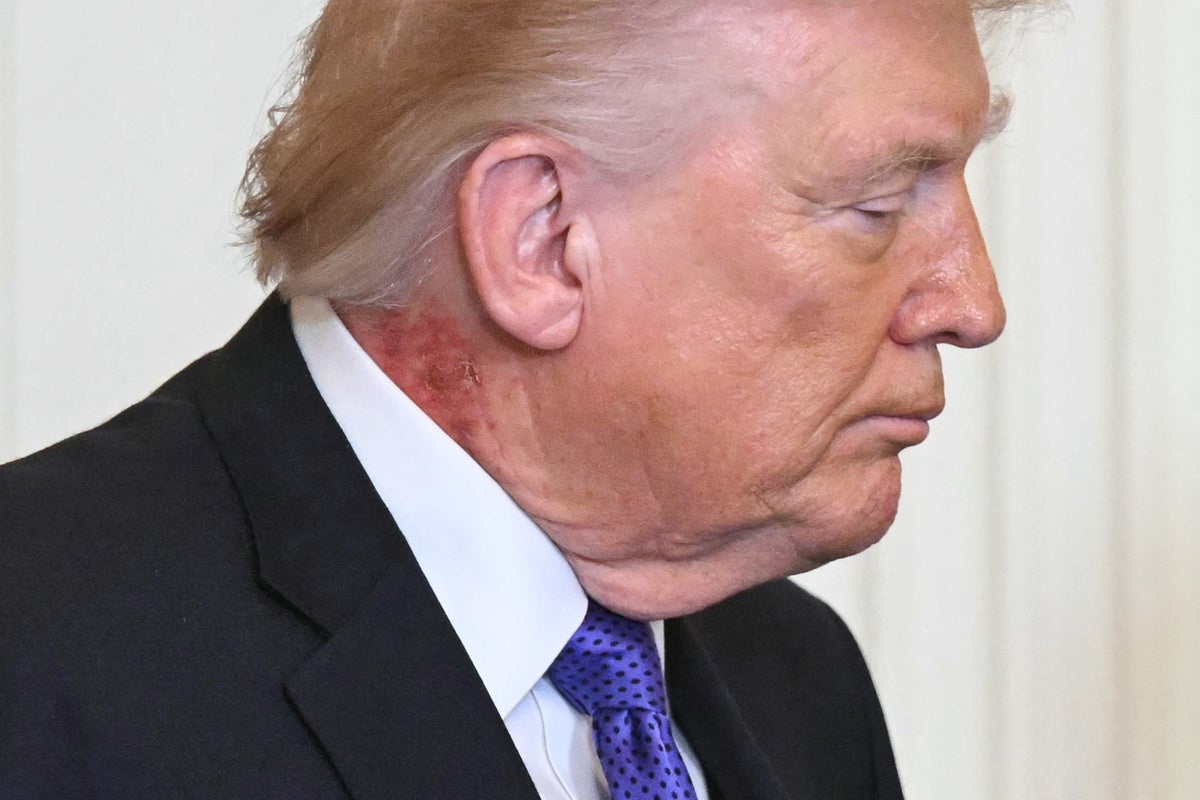
One of the most telling aspects of the recent report is how it addresses visible physical symptoms that have sparked public speculation. Over the past year, observers noticed distinct bruising on the president's hands and occasional swelling in his lower legs. The medical summary addresses these issues, but minimizes their clinical significance.
The report attributes the hand bruising to "minor soft tissue irritation related to frequent handshaking," exacerbated by daily preventive aspirin use. While aspirin does thin the blood and increase susceptibility to bruising, focusing entirely on handshaking downplays the underlying vascular fragility common in older patients.
More significant is the mention of "slight lower leg swelling," which the memo notes has improved since last year. This swelling stems from a previous diagnosis of chronic venous insufficiency.
[Image of chronic venous insufficiency]
Chronic venous insufficiency is not a temporary ailment; it is a progressive vascular condition where the veins in the legs struggle to send blood back to the heart. When the tiny valves inside these veins weaken, blood pools in the lower extremities.
- Symptoms: Can include heaviness, swelling, skin changes, and discomfort during prolonged periods of standing.
- Management: Requires active intervention, such as compression therapy, regular movement, and elevation.
- The Executive Challenge: Managing a condition like this is uniquely difficult for a president whose daily schedule involves long hours of sitting in meetings, standing at podiums, or traveling on flights.
By framing this diagnosis as a minor, improving issue, the report shifts the conversation away from how a chronic vascular condition impacts a leader’s daily stamina and physical comfort during high-stress campaigns and state duties.
The Cognitive Test Misdirection
Following the release of the report, Trump took to social media to celebrate a perfect 30-out-of-30 score on the Montreal Cognitive Assessment (MoCA), claiming it demonstrated "extreme intelligence" and calling for mandatory testing for all presidential candidates. This response highlights a profound misunderstanding of what cognitive screenings actually measure.
The MoCA is a brief, ten-minute screening tool designed to detect mild cognitive impairment, early-stage dementia, or Alzheimer’s disease.
What the MoCA Evaluates
- Basic memory recall: Remembering a short list of words after a brief delay.
- Visuospatial skills: Drawing a clock face showing a specific time or copying a cube.
- Executive function: Connecting alternating numbers and letters in a sequence.
- Attention and language: Repeating simple sentences or identifying common animals.
A perfect score on the MoCA does not measure high-level executive intelligence, strategic vision, or the ability to process complex geopolitical data under extreme stress. It simply means the patient does not show signs of clinical dementia.
Using a dementia screening as proof of superior intellectual fitness is a classic political pivot. It satisfies the public demand for cognitive assurance while avoiding deeper, more nuanced evaluations of executive function, sleep deprivation, and the mental stamina required to run a superpower.
The Limits of Presidential Transparency
The United States has no constitutional or legal framework requiring a president to release any medical information to the public. The disclosure of these reports is entirely voluntary, a custom that began in the mid-20th century to reassure a jittery electorate during the Cold War.
Because these disclosures are voluntary, administrations retain absolute control over the data. They decide which specialists examine the president, which lab results are published, and how specific diagnoses are phrased. Historical precedent shows that White House medical reports routinely conceal serious illnesses to maintain the illusion of an invincible leader.
| President | Official White House Narrative | The Hidden Medical Reality |
|---|---|---|
| Grover Cleveland (1893) | Disappeared for a brief four-day vacation on a yacht. | Underwent secret surgery at sea to remove a malignant tumor from his jaw. |
| Woodrow Wilson (1919) | Suffering from nervous exhaustion and needed rest from public duties. | Suffered a debilitating stroke that left him partially paralyzed and isolated. |
| Franklin D. Roosevelt (1944) | Declared fit by his doctors prior to running for his fourth term. | Suffering from severe hypertension, congestive heart failure, and acute bronchitis. |
| John F. Kennedy (1961) | Projected a youthful image of vigor and athletic fitness. | Battled severe Addison’s disease, chronic back pain, and relied on a heavy cocktail of daily medications. |
Modern medical reports are undoubtedly more detailed than those of the past, but they operate under the same political philosophy. The focus on weight gain and a perfect MoCA score serves as an effective distraction, steering the public conversation toward manageable lifestyle topics and away from the complex realities of aging under the most stressful job in the world. Fitness to serve cannot be reduced to a number on a scale or a drawing of a clock.