The global automotive industry is looking at China with a mix of awe and terror. Headlines broadcast a relentless drumbeat of milestones. Xpeng rolls its first mass-produced Level 4 robotaxi off the assembly line. Tesla secures a critical nod for its supervised Full Self-Driving software. Nio posts structural profits while its leadership publicly slams the destructive nature of domestic price wars. It looks like a clear, definitive triumph of Chinese manufacturing and next-generation software deployment over a stagnant West.
The reality on the ground is far messier and significantly more fragile.
What is actually unfolding in the Chinese electric vehicle market is not a triumphant march toward fully autonomous profitability. It is a desperate, multi-front survival campaign. Automakers are burning billions on unproven autonomous driving architectures to escape a brutal domestic price war that is cannibalizing their core business. They are fleeing a race to the bottom in hardware pricing by jumping headfirst into a software race where the economics are entirely unproven, regulatory frameworks are shifting sand, and consumer willingness to pay remains dangerously low.
The Robotaxi Deflection
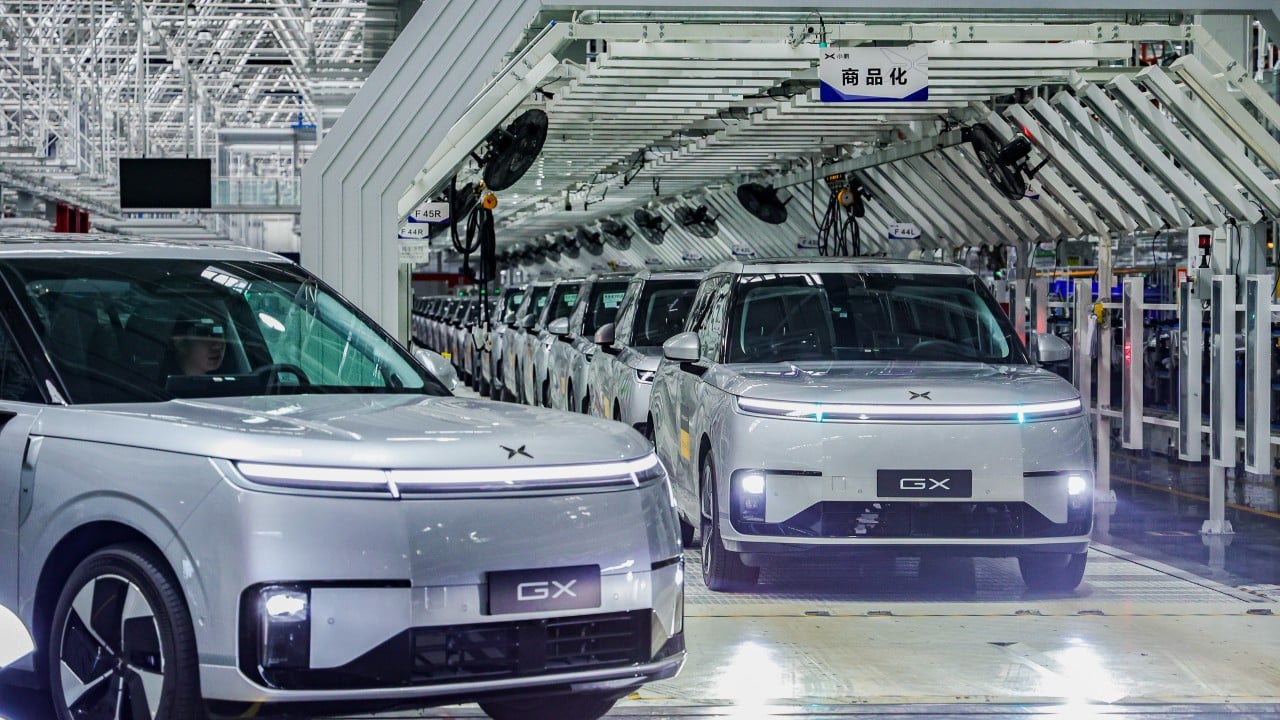
Xpeng made headlines by rolling out its first mass-produced robotaxi from its Guangzhou plant. Built on the massive GX platform and powered by its proprietary Turing AI chips, the vehicle boasts an impressive 3,000 TOPS of onboard computing power. Xpeng went out of its way to emphasize that the vehicle operates without expensive Lidar sensors or high-definition maps, pivoting instead to a pure-vision architecture controlled by its VLA 2.0 end-to-end model.
It is a masterful technical achievement. It is also an existential hedge.
The business case for a car manufacturer shifting into fleet operations is historically terrible. Xpeng has created a dedicated robotaxi business unit and partnered with Alibaba-backed Amap to aggregate rides, aiming for pilot operations later this year and completely driverless operations by early 2027. But look at the underlying math. The capital expenditure required to scale a captive robotaxi fleet is immense. If Xpeng acts as the operator, it shifts depreciating, high-cost assets onto its own balance sheet, destroying the asset-light advantage that technology companies enjoy. If it sells these vehicles to third-party fleets, it faces a highly fragmented, regionalized Chinese taxi market dominated by local state-backed entities that have little incentive to displace human drivers in a slowing economy where employment numbers are heavily scrutinized.
By ditching Lidar for a pure-vision approach, Xpeng is trying to aggressively drive down the bill of materials for autonomous hardware. But pure vision places an extraordinary burden on the software. Eliminating the language translation step in traditional architectures to bring latency down to under 80 milliseconds sounds revolutionary. Yet, edge cases on chaotic Chinese roads do not care about latency statistics. The moment an unmapped, localized construction site or an unpredictable delivery scooter confuses the vision model, the vehicle halts. In a pilot program, that is a minor software bug. In a commercial fleet operating at scale, it is a liability nightmare that can paralyze a city network and draw swift regulatory crackdowns.
Tesla and the Compromised Sovereign Data
While domestic players push hardware out of the factories, Tesla has finally broken through a multi-year regulatory wall. Its supervised Full Self-Driving system has been cleared to enter the mainland Chinese market. To comply with strict local active safety regulations, Tesla quickly updated the localized name of the software to "Tesla Assisted Driving" on its official Chinese channels.
The market celebrated this as a massive win for Elon Musk. The reality is that Tesla had to build a costly digital fortress to achieve it.
To gain this approval, Tesla spent over two years constructing a localized data compliance infrastructure. The center of this operation is the Shanghai Lingang AI training center, which handles data collection, localized storage, and domestic AI model training. Not a single byte of Chinese road-condition data is permitted to leave the country. This means Tesla cannot feed Chinese driving data directly into its primary US-based supercomputing clusters. It has effectively bifurcated its global AI brain.
Operating a separate, siloed AI training loop inside China drastically increases localized operational costs. Tesla plans to spend roughly $25 billion in capital expenditures globally, a massive surge compared to previous years, largely driven by this compute and localization push. Wall Street treats Tesla as a high-margin software business, but the infrastructure required to run a compliant, localized autonomous vehicle network in China looks remarkably like a heavy utility company.
Furthermore, the phrase "supervised FSD" is doing an immense amount of heavy lifting. Chinese consumers are already deeply accustomed to highly advanced, localized Advanced Driver Assistance Systems from Huawei, Li Auto, and Xpeng. Tesla is entering a market where its brand premium has already been eroded by aggressive local discounting. If Chinese drivers discover that Tesla’s "Assisted Driving" requires the same level of driver vigilance as the local systems they can buy for a fraction of the price, the expected flood of high-margin software subscriptions will look more like a trickle.
The False Refuge of Premium Margins
Nowhere is the structural strain of the market clearer than at Nio. The company reported a non-GAAP operating profit in the first quarter, fueled by a recovery in vehicle margins to 19 percent. Management used the milestone to publicly criticize the destructive price wars tearing apart the mass market, positioning Nio’s premium model line and its luxury sub-brands like Onvo as insulation against the chaos.
This premium defense is a mirage.
Nio’s margins recovered because of a temporary product mix optimization, specifically front-loading high-end models like the ES9 and ET9. These vehicles are packed with proprietary tech, including their 5nm Shenji chips and exclusive battery-swapping compatibility. But an executive vehicle priced above 500,000 yuan operates in a tiny, highly vulnerable macroeconomic sliver.
Nio Forward Valuation Comparison (Price-to-Sales Multiple)
Tesla:     ||||||||||||||||||||||||| 4.5x
Li Auto:   ||||||||| 1.6x
BYD:       ||||||| 1.2x
Nio:       |||||| 1.1x
The broader market’s refusal to re-rate Nio’s stock, which trades at a meager 1.1 times forward sales compared to Tesla’s 4.5 times, tells the real story. Investors see the structural trap. To maintain those premium margins, Nio must continuously spend vast sums on R&D and the expansion of its asset-heavy battery-swapping network. The moment Nio tries to scale downward into the mass market with its Onvo brand to chase volume, it will walk directly into the same price war it is currently criticizing.
No automaker can subsidize an expensive, bespoke technology ecosystem forever on low-volume luxury sales. The price war isn't something Nio has escaped. It is an approaching wall that their current high-margin product mix is merely delaying.
The Hidden Cost of the Pure Vision Pivot
The industry-wide rush away from Lidar sensors toward pure-vision AI models is being framed as a technological leap forward, an elegant convergence toward how humans drive. This narrative conveniently hides a grim financial reality. Automakers are abandoning Lidar because they can no longer afford to put them on cars and remain price-competitive.
Lidar sensors provide an absolute, physical measurement of distance using light pulses. Pure-vision systems replace that physical certainty with statistical probability generated by a neural network. To make a pure-vision system safe, an automaker cannot simply install cheaper cameras; they must exponentially increase the computing power inside the vehicle to process those video streams in real-time.
This shifts the cost from a hardware component purchased from a supplier to an ongoing, massive capital expenditure in data centers and proprietary silicon development. Xpeng’s four Turing chips and Tesla’s Lingang AI cluster represent billions of dollars in fixed overhead that must be amortized over millions of vehicles. If vehicle sales slow down due to broader macroeconomic pressures in China, the per-unit cost of these autonomous software systems will skyrocket, destroying the very margins they were designed to protect.
The ultimate risk is a systemic fragmentation of the autonomous driving landscape. With Tesla operating a siloed Chinese model, Xpeng relying on its proprietary VLA 2.0 framework, and others tethered to localized tech stacks, the industry is losing the scale benefits that traditionally make automotive software profitable. Every company is building its own parallel universe of data collection, compliance, and chip architecture.
The race for the driverless future in China is turning into a war of attrition where the players are running out of open ground. The technology is undeniably impressive, but the economic foundations supporting it are built on shifting sand. Automakers are running out of track to prove that these autonomous systems can generate actual, sustained cash flow before the realities of a saturated, hyper-competitive hardware market catch up with them.