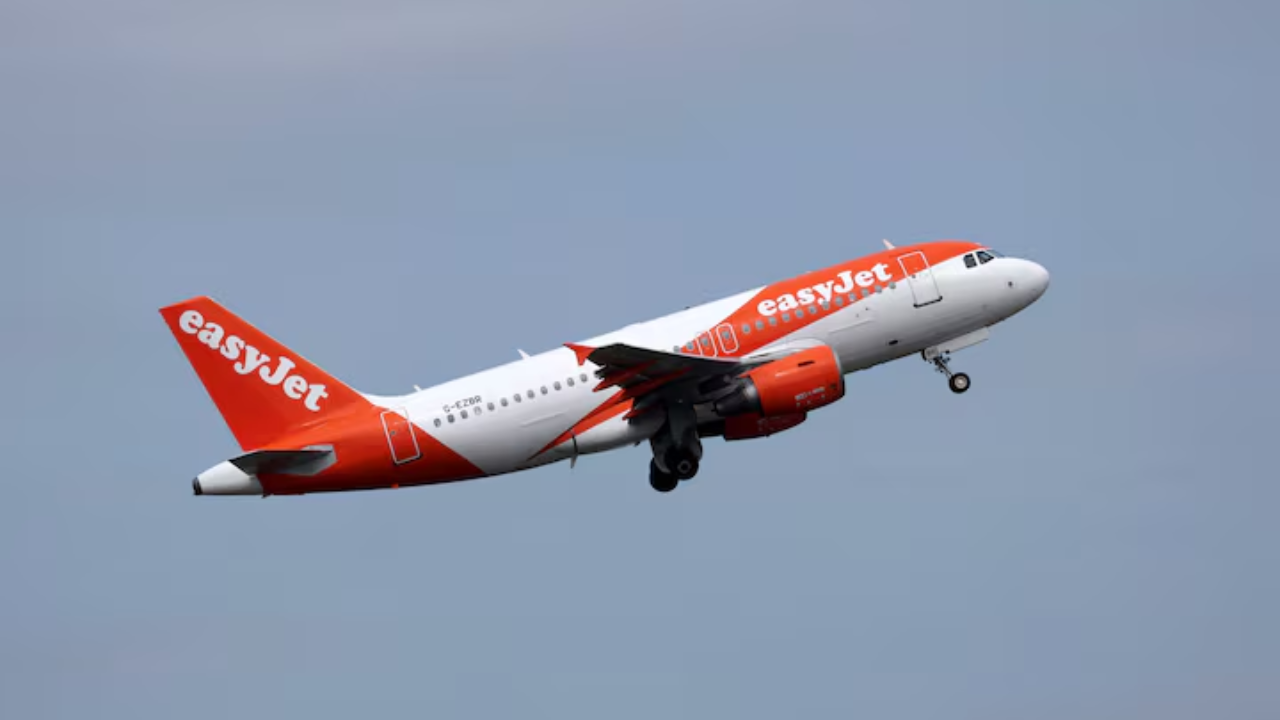
Low-cost carriers are making a bold promise to British holidaymakers this summer by guaranteeing that ticket prices are locked in, with absolutely no retrospective fuel surcharges coming to hijack their vacation budgets. EasyJet, Jet2, and TUI have coordinates set on consumer confidence, removing the small-print clauses that historically allowed airlines to demand extra cash if oil markets went wild.
It is a brilliant marketing masterstroke designed to get nervous travelers booking closer to departure. Meanwhile, you can explore similar events here: Why Benidorm is Actually the Safest Place on the Mediterranean If You Stop Acting Like a Mark.
But look beneath the glossy press releases and a far more volatile aviation environment emerges. While passengers who have already booked their flights are completely safe from surprise bills, the broader claim that rising fuel costs will not hurt consumers is an illusion. The aviation sector is currently absorbing a massive geopolitical shockwaves caused by the closure of the Strait of Hormuz, driving European jet fuel prices up to record highs of over $1,800 per metric ton. The price you pay at checkout is fixed, but the base fares for any tickets bought from this point onward are quietly ticking upward to cover the burning reality of the energy market.
The Hedging Wall Protecting Your June Getaway
To understand why some airlines can promise flat pricing while global oil markets burn, one must look at corporate hedging books. Airlines do not buy fuel at the airport pump; they buy financial derivatives months or years in advance to lock in predictable costs. To see the complete picture, check out the excellent report by The Points Guy.
Right now, the UK budget sector is running on a reservoir of cheap, pre-crisis oil.
- Jet2 holds the strongest position, entering the peak season with 87% of its summer fuel requirement hedged at roughly $707 per metric ton.
- EasyJet has insulated 70% of its summer capacity at a similar level of $706 per ton.
This explains why executive leadership can confidently rule out retrospective surcharges. They have already paid for the vast majority of the fuel their planes will burn between June and August.
The unhedged exposure is where the financial bleeding begins. For the remaining 13% to 30% of their fuel needs, these airlines must go out into the open spot market, where northwest European jet fuel is trading at more than double their hedged rate. Every upward tick in the oil market extracts millions of pounds in unexpected operational costs. EasyJet recently revealed in a financial update that every $100 movement in fuel prices adds an unhedged burden of roughly £40 million to its second-half balance sheet.
The Divided Runway of British Aviation
The promise of zero extra charges is not an industry-wide standard. It has created a sharp division at UK airport terminals, split entirely by airline business models.
While leisure-focused carriers use price guarantees to win over families managing tight household budgets, premium network carriers are taking a different approach. International Airlines Group, the parent company of British Airways, Iberia, and Aer Lingus, explicitly declined to offer identical across-the-board guarantees. They have confirmed that pricing adjustments are actively being made to counter the kerosene spike.
Legacy carriers rely on complex global networks and long-haul connections that consume massive quantities of fuel, making full-scale price insulation a far riskier gamble. Instead of eating the cost increases on the spot market, they are letting the open market adjust their fare structures dynamically.
Major European operators are taking even more drastic steps to protect their balance sheets by cutting capacity altogether. Lufthansa Group plans to ax roughly 20,000 short-haul flights across the season, while KLM and SAS have trimmed hundreds of intra-European services from their rosters. By pulling planes off the tarmac, these carriers are artificially lowering their fuel burn to protect their remaining fuel reserves.
The Hidden Cost of Late Booking Compression
The true impact of this crisis on travelers is not a surprise surcharge on an existing ticket, but the rapid escalation of the base price for new bookings.
Ever since Middle East tensions escalated and disrupted maritime fuel corridors, customer behavior has shifted. The typical booking timeline has compressed dramatically. Holidaymakers who historically finalized an August trip during the January sales are now waiting until May or June to pull the trigger.
This compressed booking window triggers a classic supply-and-demand trap. When millions of travelers try to book the remaining seats on a reduced pool of flights simultaneously, airline yield-management algorithms respond immediately. Prices spike.
So, while easyJet might trumpet an introductory fare of £22.99 to Faro or Palma, those baseline prices disappear the moment a flight begins to fill up. Travelers waiting until the last minute to secure a flight will end up paying a premium that far outstrips whatever a fuel surcharge would have cost them anyway.
The Approaching Horizon Line
The aviation industry can get through this summer because its current financial shields are holding. The Department for Transport has even relaxed airport slot allocation rules, meaning airlines will not lose their historic take-off and landing rights if local fuel logistics require temporary schedule tweaks. This gives the industry unprecedented flexibility to manage the immediate crisis.
The real reckoning arrives when these cheap hedges run out.
The structural cliff edge sits roughly twelve months away. If energy markets remain destabilized into the winter, airlines will be forced to execute their next major hedging cycles at current, inflated market rates. The $700-per-ton security blanket that is keeping ticket prices stable today will disappear, replaced by a baseline cost structure structured closer to $1,500 per ton.
Airlines have bought themselves exactly one summer of safety. Once the current contracts expire, the flying public will have to foot the bill for a permanently more expensive era of air travel.