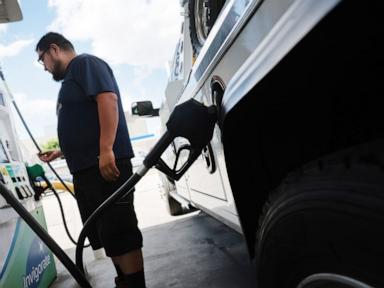
The narrative currently dominating mainstream financial news is as comforting as it is dangerous. We are told that despite the ongoing conflict with Iran and the paralyzed shipping lanes of the Strait of Hormuz, retail gasoline prices are defying historical precedent by stabilizing. Commentators point to recent diplomatic signals and a cooling of raw panic as proof that the modern energy market has somehow become immune to geopolitical shocks.
It is a comforting illusion. The reality is far more calculated, fragile, and volatile than a standard retail fuel chart reveals.
Retail gas prices are not falling because the world has solved the Middle East energy crisis. They are being artificially suppressed by a massive, unsustainable combination of Western emergency stockpile liquidation and a aggressive, quiet shift in China's state-directed commodities strategy. Below the surface of standard market analysis, a stark structural divergence is taking place. While gasoline remains temporarily manageable for the average commuter, the heavy industrial fuels that power global trade—specifically diesel and jet fuel—are suffering from severe structural deficits.
To understand why the price at the pump hasn't triggered a global economic collapse, one must look away from Washington and Tehran, and focus instead on Beijing.
The Silent Chinese Cushion
The primary reason the global oil market has not experienced a catastrophic supply failure is that the world’s largest crude importer has suddenly stopped buying. As the conflict neared its 100th day, Chinese crude imports plummeted from their traditional baseline of 13 million barrels per day down to just 7.5 million barrels per day.
This massive reduction of nearly 5 million barrels per day has effectively offset a huge portion of the 14 million barrels per day currently trapped behind the blocked Strait of Hormuz.
This is not a symptom of economic collapse, but a highly calculated geopolitical maneuver. For the past year, when crude prices were low, Beijing quietly amassed a gargantuan commercial and strategic inventory. Now, they are drawing down those domestic stockpiles at an estimated rate of up to 800,000 barrels per day. By draining its own reserves and ordering state refiners to cut production under the guise of "scheduled maintenance," China has single-handedly insulated the international market from a chaotic bidding war.
Furthermore, Beijing has banned its refiners from exporting diesel and jet fuel to the open market. This keeps domestic prices low and ensures internal security, but it shifts the economic pain outward to international trading partners who rely on Chinese fuel exports. This strategy is driven purely by national security, not market altruism. China is burning through its cushions to avoid paying a war premium, and that policy has an expiration date.
The Emergency Reserve Mirage
While China manages the demand side of the equation, Western governments are aggressively manipulating the supply side. The International Energy Agency coordinated a massive release of 400 million barrels from emergency reserves, with the United States committing 172 million barrels from its Strategic Petroleum Reserve.
This historic intervention has injected a steady stream of light, sweet crude into the market, giving the appearance of stability.
Global Emergency Oil Reserve Interventions (2026 Crisis)
┌──────────────────────────────────────┬─────────────────────────┐
│ Source / Entity                      │ Volume Released         │
├──────────────────────────────────────┼─────────────────────────┤
│ Total IEA Coordinated Release        │ 400 Million Barrels     │
│ U.S. Strategic Petroleum Reserve     │ 172 Million Barrels     │
│ Estimated Global Deficit (To Date)   │ 1+ Billion Barrels      │
└──────────────────────────────────────┴─────────────────────────┘
This intervention presents two distinct structural flaws:
- The Volumetric Deficit: The market has already suffered a cumulative loss of over 1 billion barrels. A 400-million-barrel intervention is a temporary patch, not a permanent cure.
- The Chemical Mismatch: The crude stored in Western emergency reserves is predominantly light and sweet. The crude currently trapped in the Persian Gulf is heavy and sour.
This chemical distinction is critical. Light crude is excellent for refining into retail gasoline. Heavy crude is essential for producing industrial diesel and aviation jet fuel. Consequently, while the consumer pump appears stable, the industrial machinery of global commerce is facing a severe supply crunch.
The Refined Product Split
The consumer sitting in an American suburb looks at a fuel sign and assumes the crisis is under control. But that perspective ignores the commercial trucking lanes, agricultural corridors, and international shipping lanes where diesel prices tell a very different story.
A barrel of domestic American shale crude yields a significantly lower percentage of distillates than a barrel of traditional Middle Eastern heavy crude. Because the war has choked off those heavier flows, the spread between the price of raw crude oil and the price of refined industrial products—known in the industry as the crack spread—has widened dramatically.
Industrial transport operators, public transit networks, and commercial airlines are absorbing massive price increases that have not yet fully cascaded down to consumer goods. It is a lagging economic fuse. When public transit lines hike fares by 25% and transatlantic cargo shipping lines add heavy fuel surcharges, inflation rebounds regardless of what a standard gasoline chart says.
The Fragility of a Diplomatic Resolution
Independent analysts are rightly skeptical of recent optimistic pronouncements regarding final-stage negotiations. The energy market has a habit of pricing in hope long before reality justifies it. Even if a comprehensive ceasefire were signed tomorrow, the logistical damage to the global energy supply chain cannot be undone with a pen.
Restarting production, repairing damaged infrastructure throughout the Gulf, and clearing the Strait of Hormuz for safe commercial maritime traffic will take months. Marine insurance syndicates will not instantly lower their war-risk premiums. Tanker fleets that have been rerouted around the Cape of Good Hope cannot simply pivot mid-ocean without massive scheduling disruptions.
The market is currently priced for a best-case scenario that ignores operational realities. Major energy producers like ExxonMobil and Saudi Aramco are generating tens of millions of dollars in windfall profits every hour because the baseline price of Brent crude remains structurally elevated near the $100 mark. These players have no commercial incentive to rush a price correction.
The current stability at the pump is an artificial equilibrium maintained by emergency stock depletion and aggressive Chinese demand management. It is an economic landscape built on borrowed time and borrowed barrels. When those strategic inventories run dry, the true cost of the conflict will finally hit home.