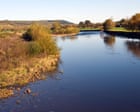
The water always looks inviting from the bank. On a warm afternoon, the River Wye snakes through the Welsh borders like a ribbon of cool relief, its surface glassy and slow. For generations of teenagers, this specific stretch of wilderness represents the ultimate test of independence. It is where the classroom ends and the real world begins, wrapped in the prestigious promise of the Duke of Edinburgh’s Award. You pack your heavy rucksack, check your map coordinates, and step into the wild with a group of your closest friends. You feel invincible.
Then, in a fraction of a second, the environment shifts from a backdrop for teenage bonding into something unforgiving.
When a young student lost their life in the waters of the River Wye during an organized school expedition, the shockwave rippled far beyond the immediate tragedy. It forced an immediate, painful confrontation with a truth that outdoor enthusiasts often minimize. Nature does not grade on a curve. It does not recognize the noble intentions of a youth achievement program, nor does it respect the meticulous planning of educators.
To understand how a routine gold or silver expedition transforms into a worst-case scenario, we have to look past the official press releases and standard police reports. We have to look at the psychology of the trail, the deceptive nature of moving water, and the fragile line between structured risk and outright catastrophe.
The Deception of the Moving Current
Imagine a hypothetical teenager named Sam. Sam is seventeen, reasonably fit, and has spent months preparing for this weekend. He knows how to pitch a tent in a downpour. He can navigate by compass when the fog rolls across the Brecon Beacons. He and his team-mates have checked their kits three times. They are responsible, bright, and deeply eager to earn their badges.
They reach the banks of the Wye. The sun is beating down on their heavy waterproof jackets. The water looks shallow near the edge. It glides past with a soft, rhythmic gurgle that sounds like an invitation.
What Sam cannot see from the bank is the shelf.
Riverbeds are living, shifting architectures. A river like the Wye carries thousands of tons of sediment, carving out deep trenches beneath seemingly placid surfaces. You take one step into ankle-deep water, find firm gravel, and feel secure. You take a second step, and suddenly the ground vanishes beneath you. The drop-off can be sudden, plunging a person into water well over their head before their brain can even process the change in depth.
Compounding this physical trap is the hidden physics of moving water. A current moving at just a few miles per hour carries immense, relentless kinetic energy. It does not simply flow past your legs; it exerts a constant lateral pressure. If a teenager is carrying a fully loaded thirty-pound rucksack, their center of gravity is already dangerously compromised. The moment the water rises past the knees, that backpack becomes a sail, catching the current and tipping the wearer off balance. Once a hiker goes down in moving water while strapped into a heavy pack, the fight for survival becomes terrifyingly unfair. The weight anchors them to the bottom, while the straps—painstakingly tightened on dry land for comfort—become a trap that is nearly impossible to shed in a panic.
The Group Mind and the Pressure to Proceed
Every outdoor educator understands the concept of heuristic traps. These are mental shortcuts our brains take to make quick decisions, and they become amplified when we travel in groups. On an independent expedition, students are expected to self-navigate and make their own risk assessments. This autonomy is exactly why the program is so highly regarded by universities and employers. It builds character. It proves resilience.
But that very structure creates an invisible pressure.
When a team of teenagers faces an obstacle—whether it is a swollen river crossing or a sudden drop in temperature—the desire to complete the objective can cloud their judgment. No one wants to be the person who calls for the support vehicle. No one wants to fail the expedition after months of training. If the leader of the group steps toward the water, the others will naturally follow, suppressing their instinctual doubts in favor of group cohesion.
Consider what happens next: the first student slips. The second reaches out to help. In an instant, a localized mishap escalates into a multi-person rescue situation. The human brain, when flooded with adrenaline and sudden panic, sheds its capacity for logical deduction. The training manuals fade into white noise. The only thing that remains is the desperate, exhausting struggle to breathe.
Statistics from water safety organizations repeatedly show that a shocking percentage of drowning victims never intended to enter deep water in the first place. They were waders, bystanders, or walkers who misjudged a slope or tried to assist someone else. The transition from dry safety to mortal peril takes less than five seconds.
Redefining the Boundaries of Youth Adventure
This loss brings us to an uncomfortable crossroads. The immediate reaction from worried parents and risk-averse institutions is often to call for a retreat. Lock the doors. Cancel the trips. Keep the children inside where the variables can be controlled, monitored, and mitigated by concrete walls and digital screens.
But that response misinterprets the true value of the wilderness. Danger is a liability, but risk, when properly managed, is an essential nutrient for growing up. Shielding a generation from the natural world because it possesses teeth does not make them safer; it leaves them unequipped to handle the unpredictable currents of life itself.
The solution lies not in abandonment, but in a radical reassessment of how we train for the unexpected.
We must teach young people that turning back is not a failure of character, but a triumph of leadership. The hardest decision an expedition leader can make is to look at a route, look at their team, and say, "No. We go back." We need to elevate the status of the retreat, transforming it from a disappointing disqualification into the ultimate demonstration of outdoor competence. If a student understands that aborting a mission due to safety concerns carries the same respect as finishing it, the invisible pressure to take dangerous risks evaporates.
Furthermore, our collective understanding of water safety requires a fundamental upgrade. Knowing how to swim in a heated, chlorinated indoor pool with clear lanes and tiled walls offers a false sense of security when facing a wild river. Cold water shock can paralyze a strong swimmer’s lungs the instant they submerge, causing an involuntary gasp that fills the airway with water. We must teach the reality of open water: the thermal dynamics, the undercurrents, and the brutal physics of a river system.
The Echo on the Riverbank
The River Wye continues to flow. It remains one of the most beautiful waterways in the United Kingdom, drawing thousands of kayakers, hikers, and young adventurers to its shores every year. It should continue to do so.
But the silence left behind by a young life cut short must serve as a permanent marker on our maps. It is a reminder written in the landscape itself. Adventure is a beautiful, necessary pursuit, but it requires an absolute, unyielding humility before the elements.
The next time a group of teenagers stands on the banks of a rural river, rucksacks heavy on their shoulders, looking at a shortcut across the water, the true measure of their training will not be found in their ability to forge ahead. It will be found in their willingness to stop, respect the quiet power of the current, and choose the long, safe way home.